
After 18 months of work, this strategic infrastructure is now fully operational. The intervention not only repaired the damage caused by the floods but also incorporated structural solutions to enhance the canal's safety and resilience against future extraordinary floods. The total investment reached 30 million euros.
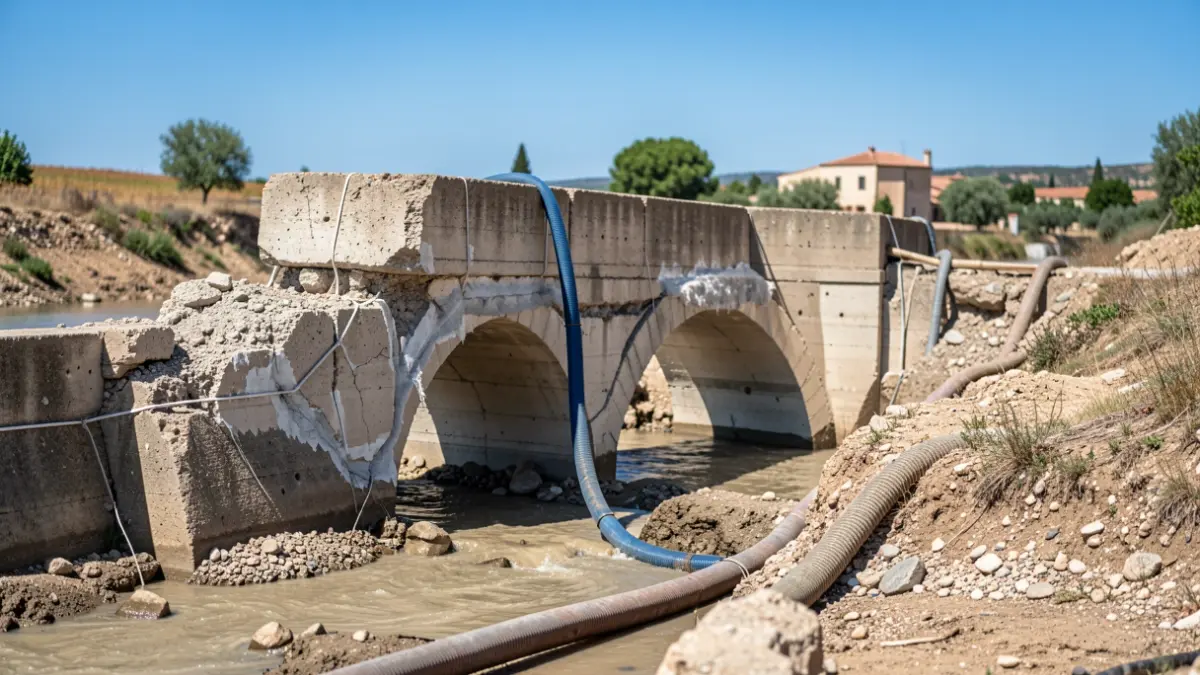
The damage was concentrated in three critical points. One of the most affected was the aqueduct over the Magro River, which sustained significant damage requiring stabilization work and repair of the existing bypass. Furthermore, the force of the water destroyed the aqueducts crossing the Poyo and Horteta ravines, crucial for ensuring the canal's continuity.
The CHJ acted swiftly to prevent supply disruptions. Within days, the infrastructure's continuity was restored by installing two temporary bypasses powered by pumps, a solution that allowed the service to continue functioning normally. Subsequently, two provisional aqueducts were constructed on lattice structures at the Poyo and Horteta crossings, maintaining the supply without interruption.
In parallel, actions were developed to strengthen the canal's response capacity to similar phenomena. Key improvements include gravity-fed underground bypasses built at both river crossings, which will ensure supply even in extreme situations. The intervention also involved upgrades to four drainage points and the definitive restoration of the affected aqueducts.
The new concrete aqueducts are installed on piers supported by deeper foundations, each with six piles, providing greater stability. The CHJ emphasizes that these works represent a definitive solution for a fundamental infrastructure in the integral water cycle of the Valencian Community, reinforcing the water security of millions of people.