Amidst urban tension and public transport issues in the city of València, Mexican artist Tania Candiani presents a counter-current proposal: an invitation to silence. Her new exhibition, Radix, which opens to the public at IVAM, seeks for visitors to take a pause to tune into an installation that transforms the museum into a kind of underground forest.
“"There is no other way to pay attention than to take a pause."
The exhibition, presented by the artist along with the regional secretary of Culture and the director of IVAM, is an ecological fabulation inhabited by beings that navigate between the animal, vegetable, mineral, and fungal worlds. The installation, conceived as an ecosystem, shifts the gaze towards the depths of history, culture, and the memories of the subsoil, offering a unique experience.
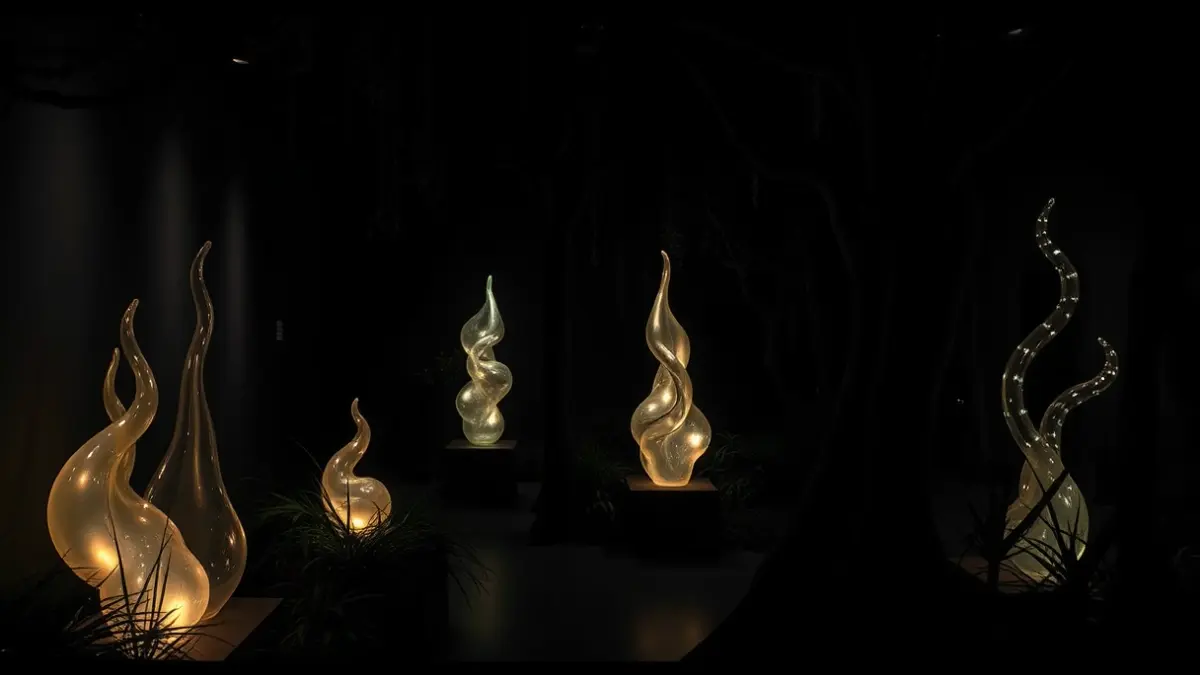
The exhibition requires time and visual adaptation, as the room is presented with minimal light, creating a dark chamber where dense vegetation and blown glass sculptures are the few points of illumination. This darkness allows that, once the eyes adapt, one can see what was invisible, like a metaphor for the roots that existed before humans.
“"When the eyes adapt to the darkness, they begin to see what was invisible; it is like the metaphor of the roots that have been there before humans and will remain when we have exterminated ourselves as a race."
In the center of the room, a rhizotron allows observing the real growth of roots, the pulsating heart of this space. The proposal is complemented by two audiovisual projections and a sound composition that envelops the environment. Each piece of this puzzle invites the viewer to be part of the ecosystem, posing a reflection between art, science, and craftsmanship, and the creativity present in scientific processes.
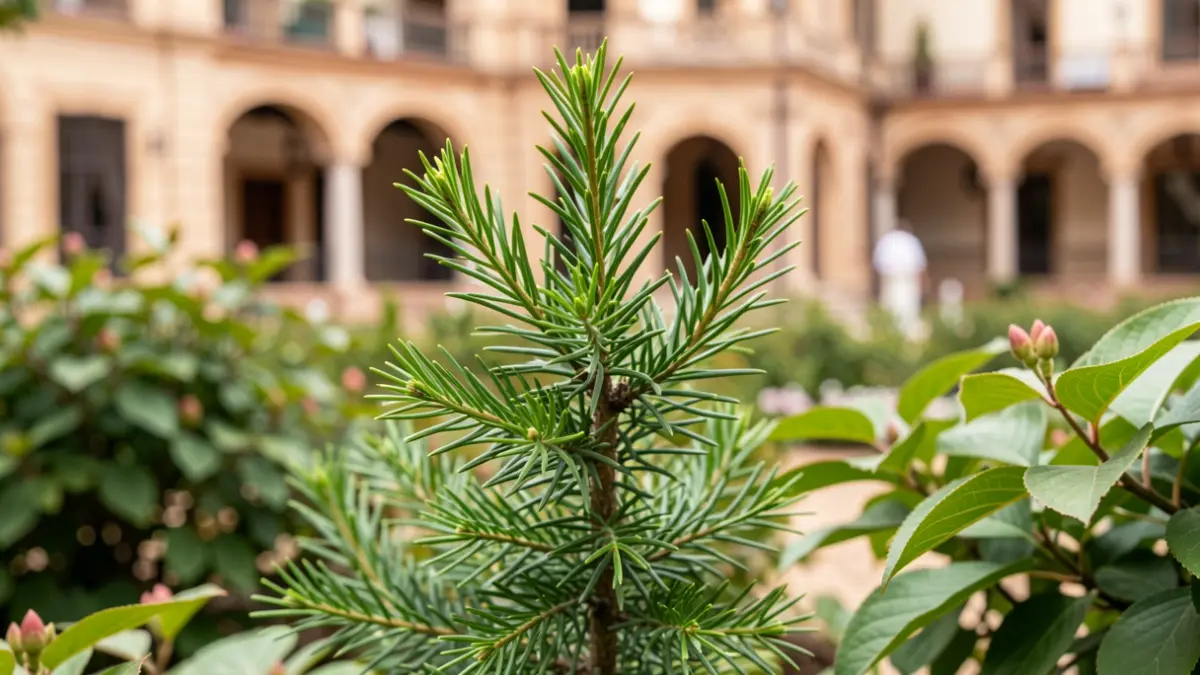
This work is an invitation to inhabit the world in a more empathetic and conscious way of the invisible forces that sustain life. The connection with the local sphere is manifested in the large imagined plant that occupies gallery 3, inspired by a cross-section of a plant structure that the artist found in a book from the Botanical Garden of València. The tour begins with an archive antechamber that combines historical prints from the Universitat de València with speculative illustrations by the artist herself.