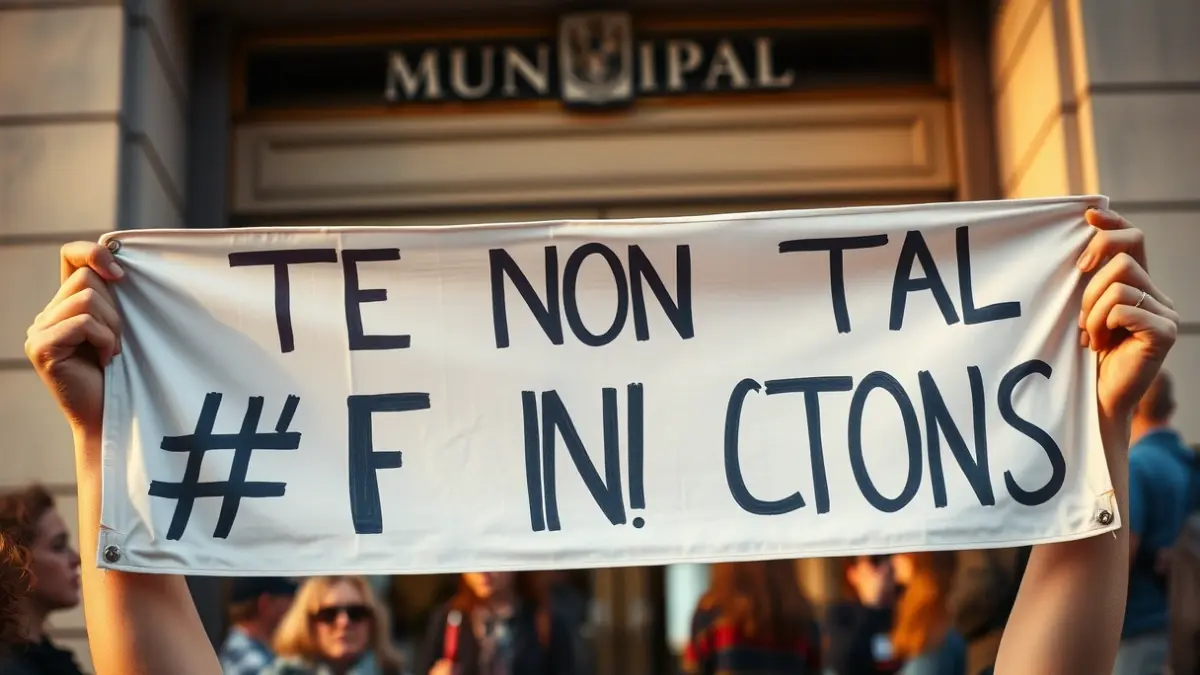
The protest, organized by the Valencian Business Association of Discotheques (AD) and the Association for Responsible Hospitality in Russafa (Al Balansí), follows the announcement of the imminent approval of a new ZAS that would include additional restrictions on the activity of entertainment venues. Attendees expressed their rejection of these measures, which they consider “unjustified” and the result of a “failed policy” in managing urban noise.
The sector accuses the councillor of making Russafa a “scapegoat” for a problem that, they argue, is structural in Valencia and affects over 400,000 residents. They also point out that three decades have passed since the first ZAS declaration in the city and criticize the lack of effective solutions implemented so far.
“"There is no real confrontation between residents and hospitality businesses in Russafa. We demand that all parties be considered before adopting measures that could significantly affect the economic activity of the neighborhood."
Nightlife venues assert that they have been “pioneers” in implementing coexistence measures, such as the use of “yellow vests” to control noise in the vicinity, staff training, and reducing music sessions. Furthermore, they question the noise measurement methodology used by the City Council, deeming it “deficient” for relying exclusively on sound level meters without other control systems.
According to data provided by the organizers, measurements taken on Tomasos Street between June 2022 and June 2023 showed that permitted noise levels were exceeded in only 2.2% of time slots, and an even smaller percentage coincided with the operating hours of discotheques.
The demonstrators have also requested a meeting with Valencia's mayor, María José Catalá, urging her to intervene directly in the conflict and review the application of the future ZAS. The sector insists that its goal is to reconcile leisure with neighborhood coexistence and calls on the City Council for a change in approach to urban noise management.