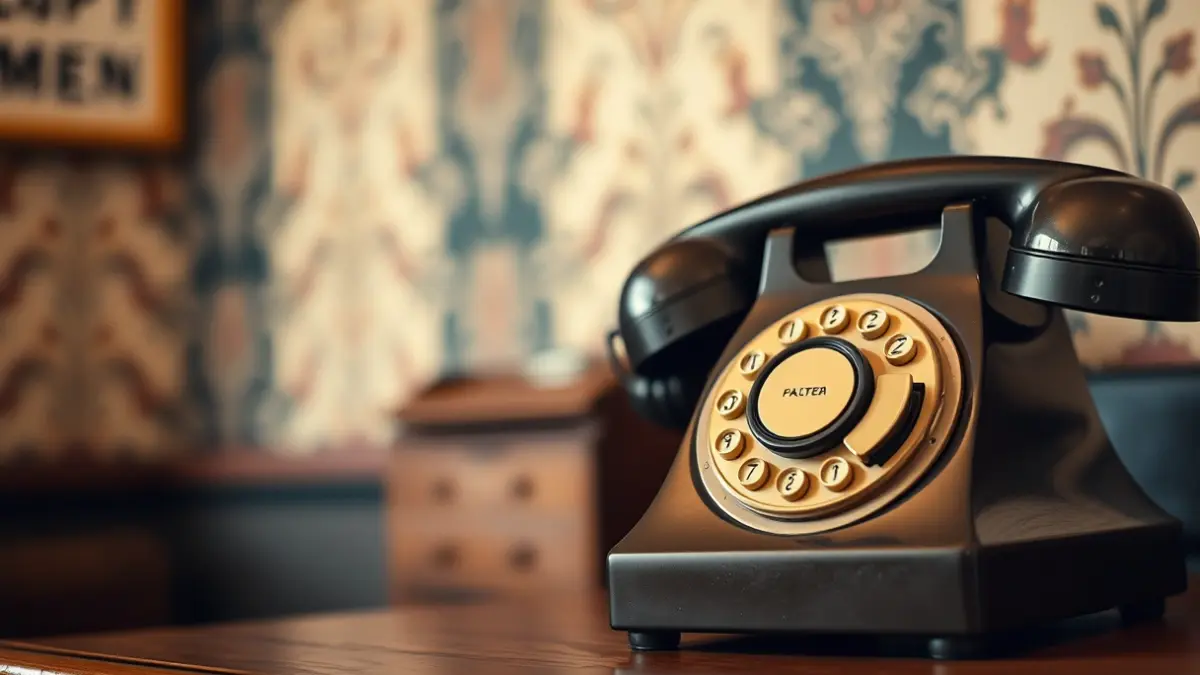
140 years ago, the first telephone calls marked the beginning of an era in communication. This invention, which entered people's lives without them imagining its future importance, has evolved from a luxury item to an indispensable element in today's society.
Initially, the telephone was a privilege accessible to few, often seen in period series and films as part of the decor. Gradually, it spread to public places for common use in special situations, and later became installed in homes. Today, it has transitioned from a family asset to a strictly personal item, carried in almost everyone's pockets.
“"The telephone became such a present element in our lives that the onomatopoeia of its sound —piticlín, piticlín— was the beginning of some of the most celebrated sketches of that Un dos tres, responda otra vez that marked several generations."
Its presence in popular culture is undeniable, from the onomatopoeia of its sound in television shows to the famous sketches of comedians like Gila. Songs, films, and books have featured the telephone as a protagonist, an earpiece that has now been integrated into the device itself.
Through telephone calls, people have learned about the most important events in life: births, deaths, awards, or test results. Here, in Valencia, the quintessential “call” is the one made by the mayor to the future Fallera Mayor of the year.
Today, mobile phones continue to be an essential part of life. Almost every adult owns one, and their access for minors is a frequent cause of family discussions. Although they are used for everything but traditional telephoning, messaging and social networks replace the function of telephony, maintaining communication between people beyond physical contact.