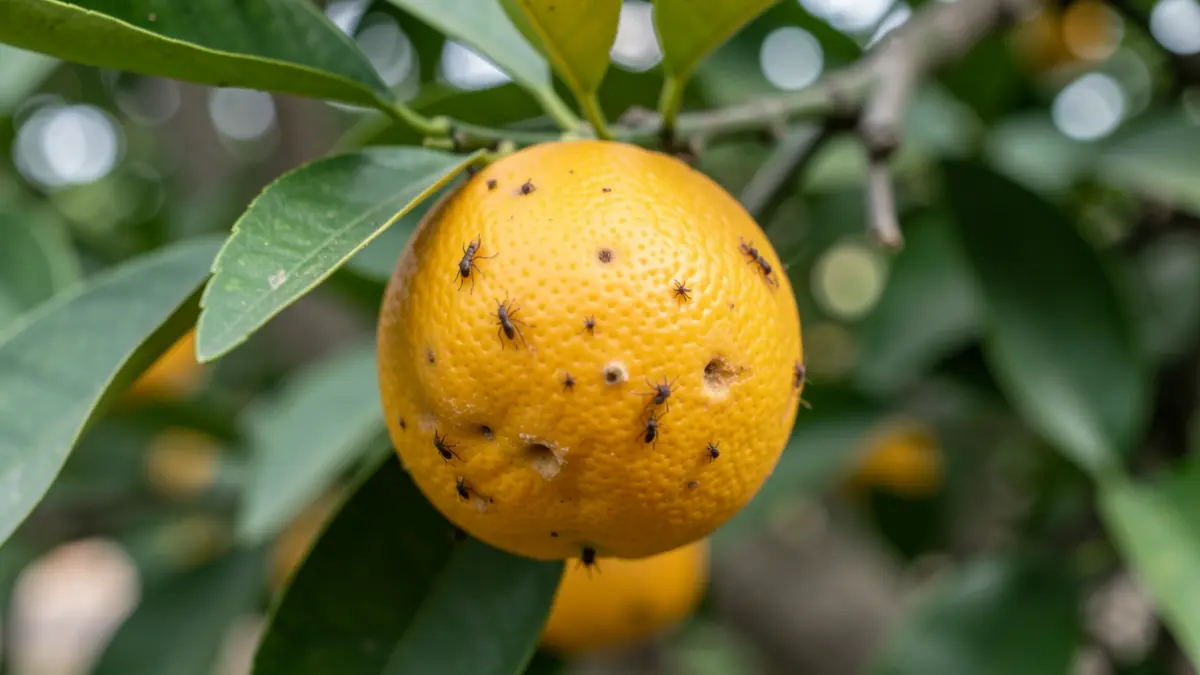
The Paracoccus burnerae, an insect from the pseudococcid family, has become a growing concern for Valencian citrus farming. Although its current incidence is considered low, the increase in detections in the provinces of Valencia and Castellón has raised the alert level in the sector.
Carlos Baixauli, director of the Paiporta Experimental Center of the Cajamar Group Foundation, has warned about this emerging threat. According to his article in Plataforma Tierra, Paracoccus burnerae is being detected more frequently in mandarin, lemon, and orange plantations along the eastern coast, including Murcia, Valencia, and more recently, Castellón.
While its damage potential is lower than that of the South African mealybug (Delottococcus aberiae), its spread, ability to colonize different crops, and difficulty in visual differentiation are concerning. Indicators of infestation include 'pinching' or deformation of young leaves, and on the fruit, depressions and deformities, especially between June and August.
The Conselleria de Agricultura (Regional Ministry of Agriculture) maintains active monitoring, although it lowers the level of concern. The Valencian Institute of Agricultural Research (IVIA) and the Polytechnic University of Valencia (UPV) have known about the species' presence for about four years and are researching its behavior. Native parasitoids that attack the pest have been identified, opening doors for biological control strategies.
From IVIA, while acknowledging deformations in fruits and leaves and potential production loss, they do not consider the pest to have an impact comparable to the South African mealybug. The Conselleria, through its Plant Health department, monitors its distribution and is considering promoting educational materials to facilitate early identification.
Carlos Baixauli points to the movement of harvesting crates, plant material, and logistics between plots and fruit and vegetable centers as dispersal routes. The Mediterranean climate allows for three to four annual generations, necessitating reinforced vigilance.
Recommendations include incorporating the pest into regular phytosanitary monitoring protocols, cleaning machinery and containers, prioritizing biological control, and reporting any outbreaks to regional plant health services.
Carles Peris, general secretary of the Unió Llauradora i Ramadera (Valencian Farmers and Ranchers Union), confirms an increase in damage compared to the previous season, although initial fruit deformities tend to disappear. The mealybug has been found in citrus crops in Betxí and Nules (Castellón), and deformities are expected to be more pronounced this year.
AVA-Asaja is aware of the pest but lacks specific incidence data. They urge the Conselleria de Agricultura to provide more information on control and eradication measures, lamenting that it is the third mealybug present in Valencian fields, which increases production costs and risks the value of citrus production.