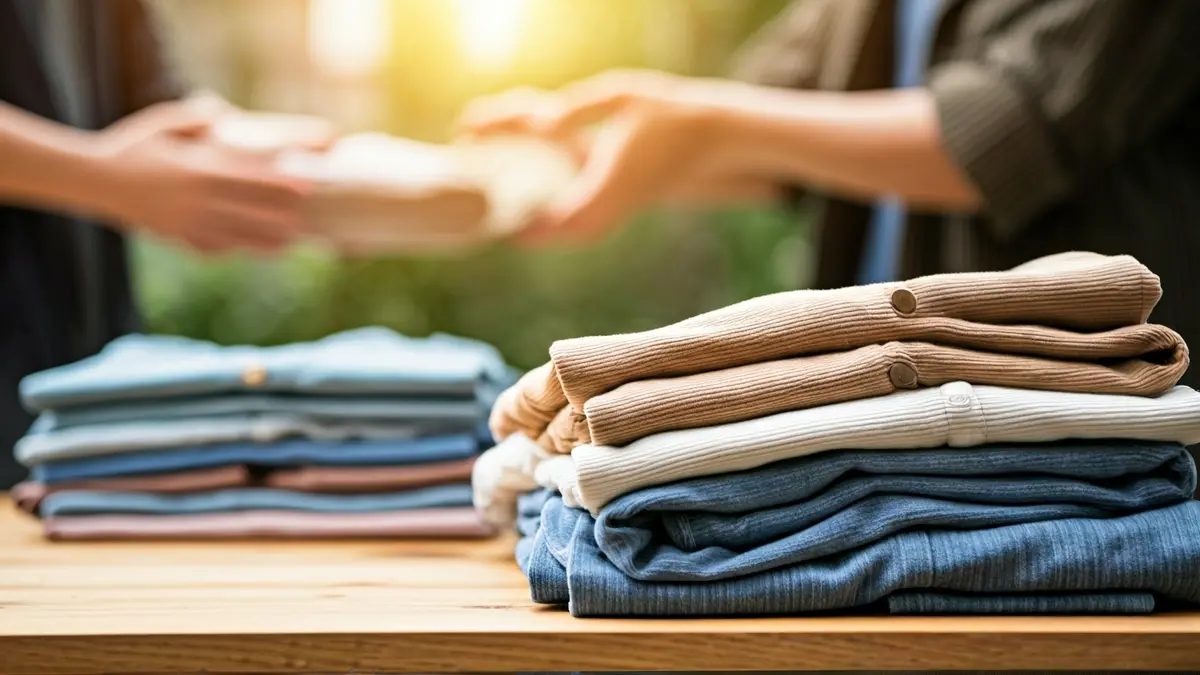
This initiative is part of her project 2222 Space is the place, developed with a mobility grant from the Goethe Institut and Creative Europe. The SWAP-Vermouth, successfully held last year, provides a space where clothes gain a second life, transforming from waste into a new opportunity for others.
The event, scheduled from 11:30 AM to 1:30 PM, is presented as a small act of defiance against the "fast fashion" logic prevalent in today's society. Herrán emphasizes the urgency of finding new ways to dress and relate to fashion, beyond rampant consumerism.
“"We live surrounded by clothes. Too many. Far more than we can use, need, or even imagine. Every year, around 100 billion garments are produced worldwide. Of these, a huge portion is born with an expiration date: they are used only a few times and then disappear. The result is devastating: 92 million tons of textile waste per year, equivalent to a garbage truck full of clothes burned or buried every second. Most of it is not recycled. In fact, only 1% of clothes are re-converted into textile garments. The rest ends up in landfills or incinerators, as waste, and does not disappear."
The textile industry is one of the most polluting, consuming 93 billion cubic meters of water annually and generating nearly 10% of global CO₂ emissions. Furthermore, it is responsible for approximately 20% of the planet's wastewater, and each wash releases microplastics that end up in the oceans.
In the face of this overproduction reality, the SWAP is configured not only as a sustainable practice but also as a form of collective resistance. It is a gesture that breaks with the logic of constant purchasing, fostering circulation, care, and conscious choice of clothing, without economic transactions or the pressure of trends.