Madelin de la Fuente, an 80-year-old resident of an intergenerational housing building in Alicante, expresses her surprise at the concept of loneliness. In this residential model, nearly a hundred neighbors combine independence with community life, a formula inspiring increasingly more 'cohousing' projects in the Valencian Community.
The search for new ways of living, especially among the elderly, is driving a housing model that aims to combat isolation without sacrificing privacy. Cohousing, typically developed through cooperatives, is based on independent homes complemented by common spaces.
From the Conselleria de Vivienda (Housing Department), they explain that this model emerged in response to the need for more communal living forms without compromising individual privacy. In 2024, the Generalitat (Regional Government) first regulated a specific line of subsidies for collaborative housing aimed at those over 65 years old, with the dual objective of offering housing alternatives and combating unwanted loneliness.
Two Valencian municipalities received funding: Castielfabib for a project of eight dwellings and Alcoy for nine residential units. Both will be designated for rent or use assignment for a minimum of 20 years. The Generalitat is also considering new calls to extend these models to other population sectors.
Collaborative housing, while still a minority, is gaining ground. Prudencio López, director of Vida Sostenible Cohousing, estimates that there are around a dozen initiatives in various stages of development spread across Alicante, Valencia, and Castellón.
The project in Godella stands out, considered the most advanced in the Valencian Community and nearing completion. A common characteristic is that "the homes cost what it takes to build them," without business profit or speculation, as the cooperatives themselves drive the projects.
Begoña Careaga, a member of the cooperative Sostre Cohabitatge in Alfara de la Baronia, notes that the national average from the start of a cohousing project in Spain until people move in is ten years. Her project, intended for individuals aged between 50 and 70, plans for around 30 homes and has 47 interested members. In Alicante, the cooperative Ágora is preparing to build 18 homes on a plot owned by the Generalitat in the Rabassa neighborhood.
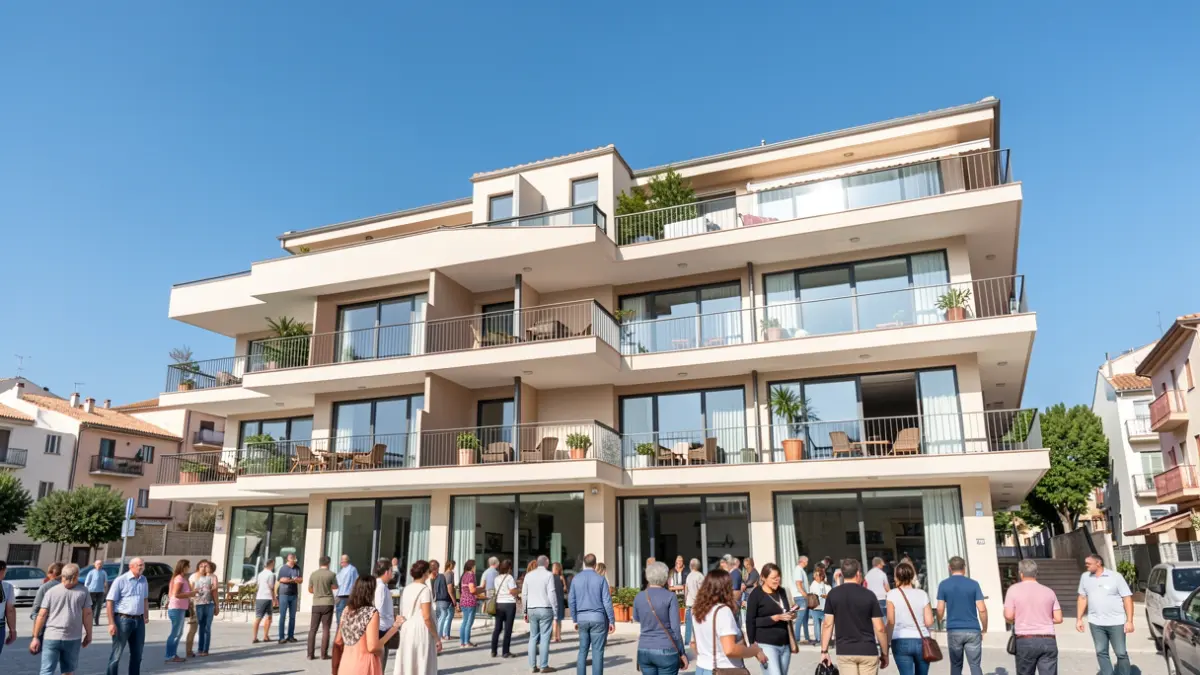
In Alicante, the intergenerational housing building in Plaza América, inaugurated in 2009 and managed by the Municipal Housing Board, is a consolidated example. It features 72 homes aimed at fostering coexistence between those over 65 and young people aged between 18 and 35 through a mutual support network.
Madelin moved into this building in 2015 seeking a smaller, more affordable home and found "the best thing that has happened to me in my entire life." Nathaniel Anaya, 29, a resident since 2024, summarizes it as "a village within the building." Younger residents offer workshops to seniors on diverse topics like yoga, history, or urban gardening.
In essence, cohousing is emerging as a model in the Valencian Community, aspiring to become a response to one of today's major social challenges: living accompanied without ceasing to live our own way.