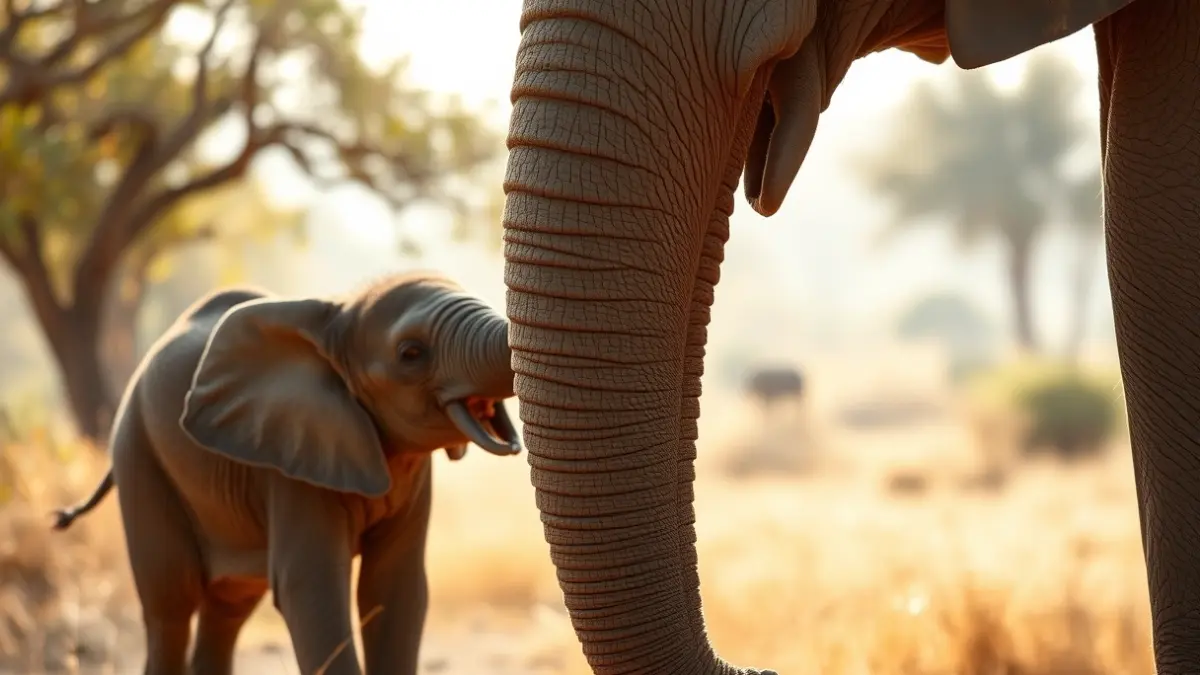
Bioparc Valencia offers a unique experience to observe wildlife, especially with the arrival of new calves. These births, such as those of Makena and Malik (elephants), Cala and Ekon (chimpanzees), or Kairu (rhinoceros), represent hope for the survival of threatened biodiversity.
The names of these calves, chosen by thousands of people, carry deep meanings in their languages of origin, such as “the one who is happy” or “king”. Many visitors consider these calves almost part of their family and regularly visit the park to observe their development and enjoy their playful antics.
“"The annual B! pass, in any of its modalities such as the Manada, makes it easy to take advantage of free time and turn it into “shared leisure”, knowing, furthermore, that we are contributing to the preservation of endangered species."
Beyond the births, Bioparc Valencia offers an immersive journey through various African habitats. The savanna hosts species such as zebras, giraffes, and antelopes, alongside predators like lions. In the jungle area, gorillas and leopards display their natural behavior in spaces adapted to their needs.
One of the most notable points is the Kitum cave, which allows visitors to observe hippos underwater, a unique experience in Spain. The recreation of Madagascar also stands out, where lemurs coexist in an open environment. The park houses over 6,000 animals from nearly 150 species, including some unusual ones like the aardvark or the northern bald ibis, a bird extinct in Europe since the 17th century.
The Bioparc model is based on “leisure with a cause”, combining the visitor experience with environmental awareness. The park offers daily free activities such as educational exhibitions, guided tours, or encounters with the technical team. Additionally, visitors can enhance their experience with technological proposals like the virtual reality projection “The Last Frontier”.
The trajectory of Bioparc, over its 18 years since opening, is marked by its commitment to the planet, combining ex situ conservation (within the park) and in situ conservation (through the Bioparc Foundation, which supports projects to sustain wild ecosystems both internationally and in Spain).