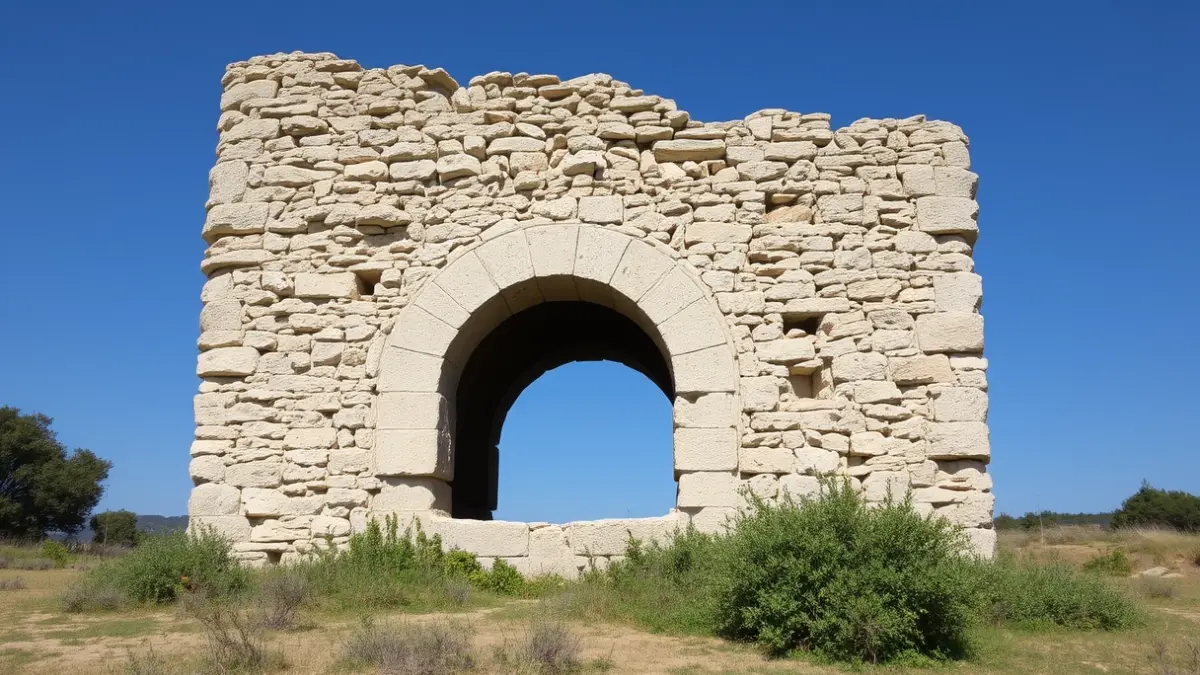
This cultural initiative, maintaining the tradition promoted from Puebla de Arenoso, will feature the participation of residents from this town and Villanueva de Viver. One of the main attractions of this edition will be a visit to an ancient lime kiln, a traditional artisanal construction of great relevance in its time.
Lime kilns were designed to maintain continuous fire and produce quicklime, an essential material for multiple traditional uses such as construction, disinfection of cisterns, fountains, and stables, as well as for whitewashing facades.
The day will also allow participants to discover other unique heritage elements, such as the so-called Navajo Blanco, a traditional infrastructure for collecting rainwater for storage in cisterns or reservoirs. This system ensured the supply of drinking water and its use for domestic, livestock, and wildlife purposes. In the municipal area, there are other navajos, among which the one known as 'Royo' stands out, characterized by the reddish color of the surrounding terrain.
The route will also include a section of an old cattle trail, in good condition, where wide margins delimited by stone walls can still be seen, testifying to the traditional use of the territory. Furthermore, participants will be able to observe the effects of the forest fire that occurred three years ago in the area of El Sabinar de Villanueva de Viver, a place where the footprint of the fire is still visible in the landscape.
As usual, the day will conclude with a communal meal among attendees. On this occasion, the main dish will be a paella made with organic rice traditionally cultivated on the banks of the Maimona River, a tributary of the Mijares River, at an altitude of over 700 meters.
These events seek to give visibility to a heritage often unknown and poorly protected, and are supported by the university extension program of the Universitat Jaume I, whose collaboration is key for their development and subsequent dissemination through specialized publications.