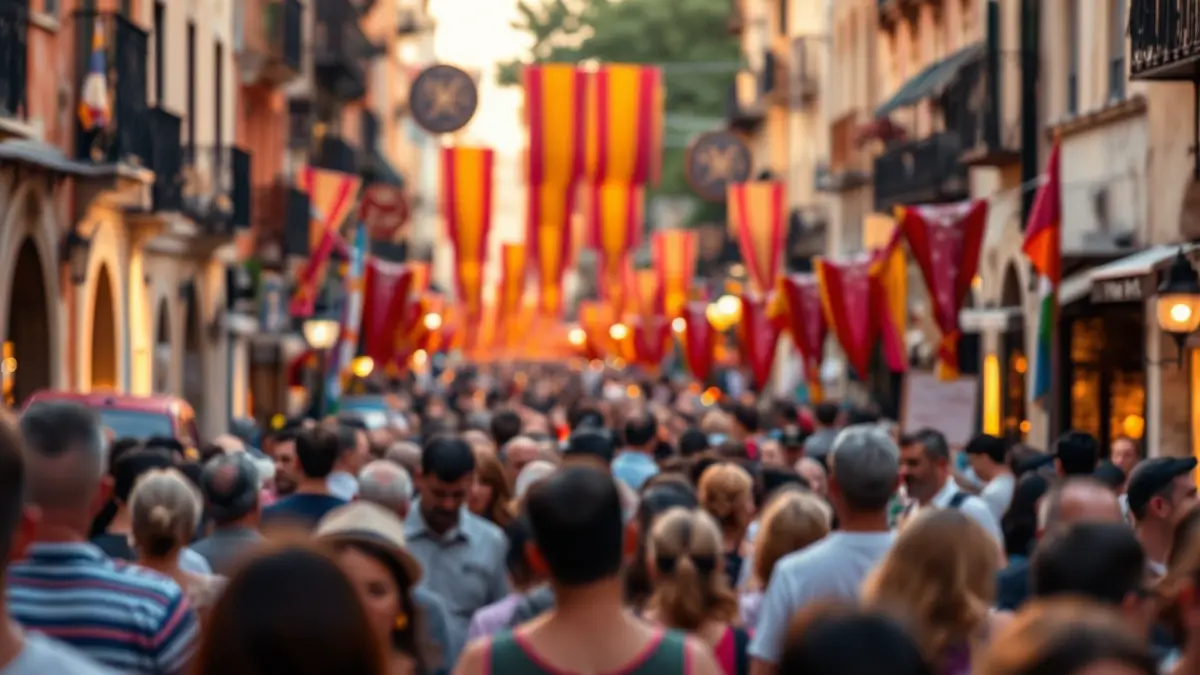
This event, one of the most emblematic moments of the festive trilogy, symbolizes the Christian victory and the capture of the town. The captain, from the Andalusos filà, paraded through the streets in a float inspired by an Andalusian patio, accompanied by his wife and children.
At the central moment of the parade, the captain received the city keys amidst the public's emotion, in a staging that is repeated year after year as a symbol of tradition. The Christian ensign of 2026 also played a prominent role, parading with his family.
The captaincy was marked by a lavish retinue that paid homage to the smuggler essence of the Andalusos, with characteristic elements such as tassels, transformed into choreographies, fans, and other details typical of the filà. Music and squadrons completed a staging that combined elegance and warrior character.
The parade also highlighted the increase in female participation in the festivities. For the first time, the Tomasines filà paraded with a double squadron, female and male, in an Entry where the presence of women is increasingly visible in various filaes.
“"When you finish, you say it went by very quickly, but in the moment of nervousness, preparation, music, or makeup, you live it intensely."
The day began at dawn with the diana, marked by rain, and continued with an Entry that recreates the concentration of James I's Christian troops in defense of Alcoy. The celebration was attended by political representatives, such as the president of the Generalitat, who highlighted the value of Valencian customs and identity.