
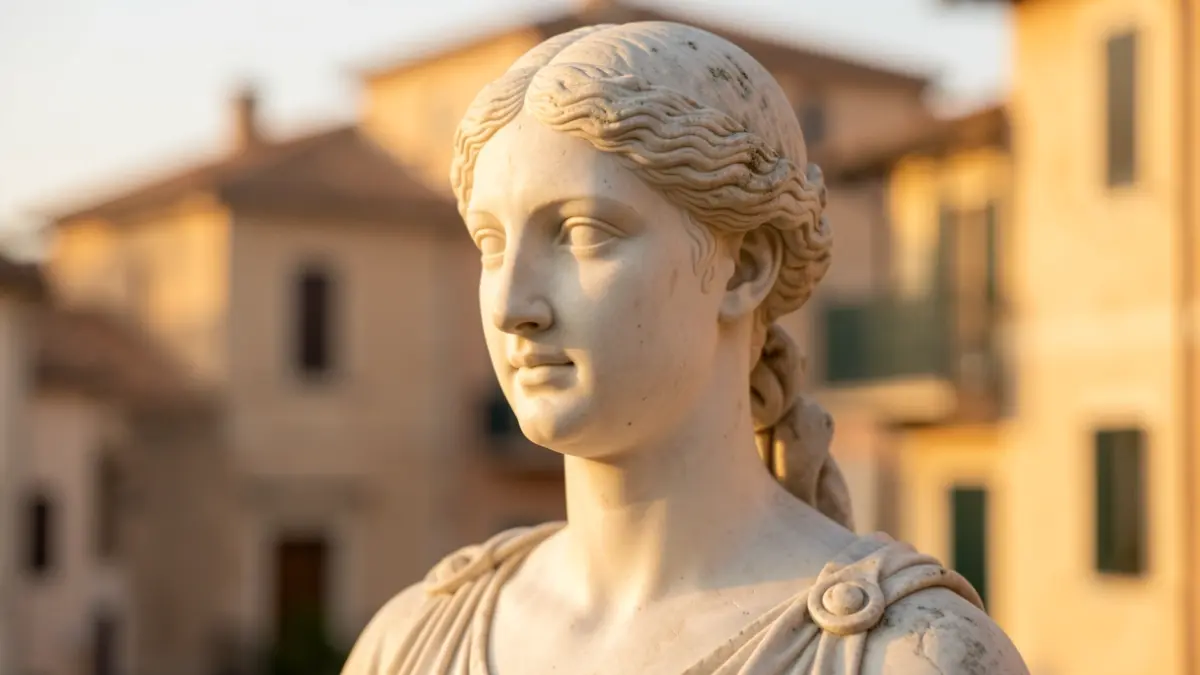
The mayor of Alicante, Luis Barcala, has presented the Venus of Alicante, a Roman sculptural head from the high imperial period that was found during the regeneration works on Almadraba beach. This discovery is being considered one of the most significant in the city's recent history.
Barcala highlighted that the piece, made of solid white marble, is in an exceptional state of preservation and will become part of Alicante's heritage, turning into one of the city's symbols.
The sculpture was found in an area near the Lucentum archaeological site, within an excavation of approximately 1,000 square meters linked to a Roman maritime villa. The works have uncovered materials dating from the 3rd century BC to the 5th century AD, including luxury ceramics, amphorae, coins, and a lamp depicting a gladiator.
The head of Integral Heritage of the City Council, José Manuel Pérez Burgos, described the find as "a miracle" and "a once-in-a-lifetime event," suggesting that the piece "very possibly represents the goddess Venus, due to its Hellenistic features".
The Venus of Alicante dates from the 1st and 2nd centuries AD, weighs 14 kilograms, and measures 22.22 centimeters in height and 19.78 centimeters in width. The City Council plans to commission a complementary analysis to learn more about its origin and context.
The municipal intention is to commission replicas for public display and reserve the original piece for an Alicante museum. It is expected to be shown to the public in about two months, once the relevant studies are completed. The archaeological director, José Ramón Ortega, emphasized that in nearly 40 years of his career, he had not found a similar piece.