During the most brutal years of the Civil War, Alicante became the last bastion of the Republic, enduring constant aerial siege. To survive, the population excavated kilometers of galleries, creating an underground network where thousands of people waited in silence, interrupted only by the distant hum of bombers. However, it is in this silence that some locate the true enigma.
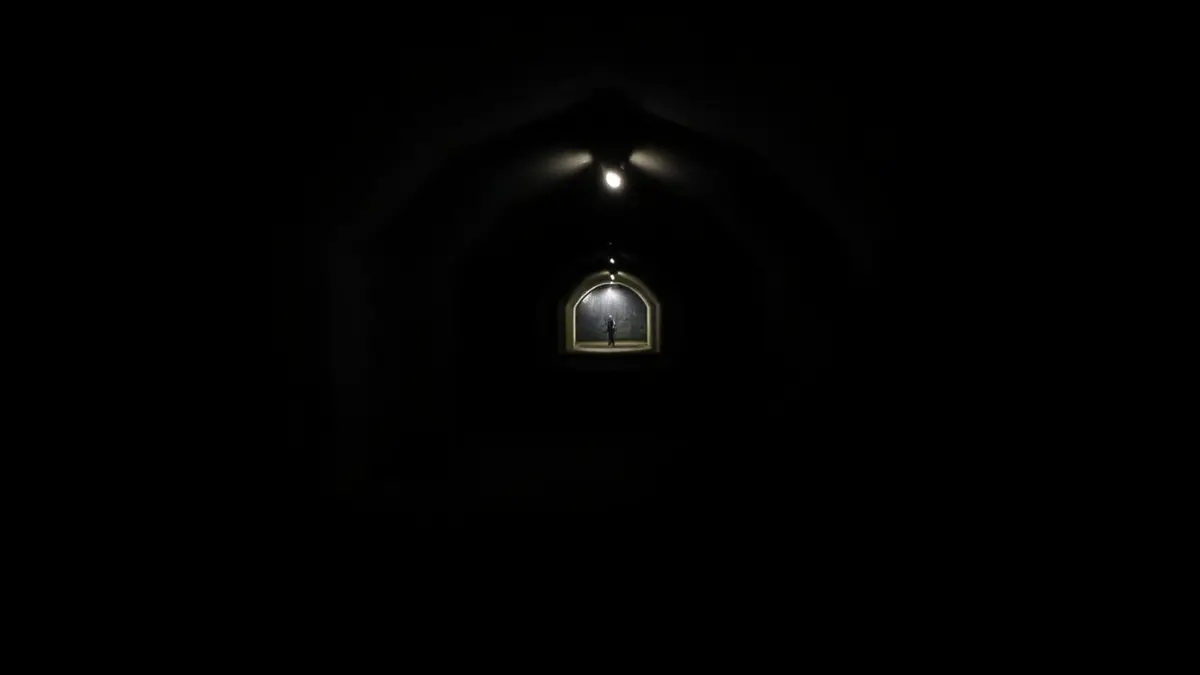
Those who today guard the Plaza de Séneca shelter, one of the most extensive in the network, describe an atmosphere that is not exhausted by history alone. They speak of sensations difficult to pinpoint: sudden changes in sound perception, echoes that seem to arrive late or precede movement itself. The design of these tunnels—with right angles to dissipate blast waves and low ceilings that force one to bend—generates peculiar acoustics. Some workers involved in their restoration reported hearing, in moments of complete isolation, what they identified as an air-raid siren, a diffuse signal as if it had been trapped in the material.
There are also unofficial records pointing to small anomalies during the works: tools that disappeared only to reappear hours later in already checked places, drafts in sealed sections, or the persistent feeling of not being completely alone in certain deep galleries. Nothing verifiable, but not easily dismissed by those who experienced it.
The darkest episode is linked to unregistered deaths. Chronicles record the victims of the bombings, but barely mention the so-called “invisible tragedies”: those who died during the construction of the tunnels, human stampedes in the dark when generators failed, or when panic spread faster than information. In those moments, the shelter, conceived as protection, could become a trap. Some current visitors claim to notice sudden drops in temperature at very specific points, always the same ones, as if the space retained an impossible thermal memory.
From certain perspectives, these experiences can be explained by physical phenomena such as complex reverberations or micro-air currents. However, other specialists in intangible heritage suggest something different: that places subjected to extreme collective stress can retain a kind of imprint, an emotional resonance inscribed in their architecture. Visiting these tunnels today is not just an exercise in historical memory; the functional precision of their design contrasts with the dense sensation that dominates the deepest areas, where the impression remains that the shelter has not been completely emptied.