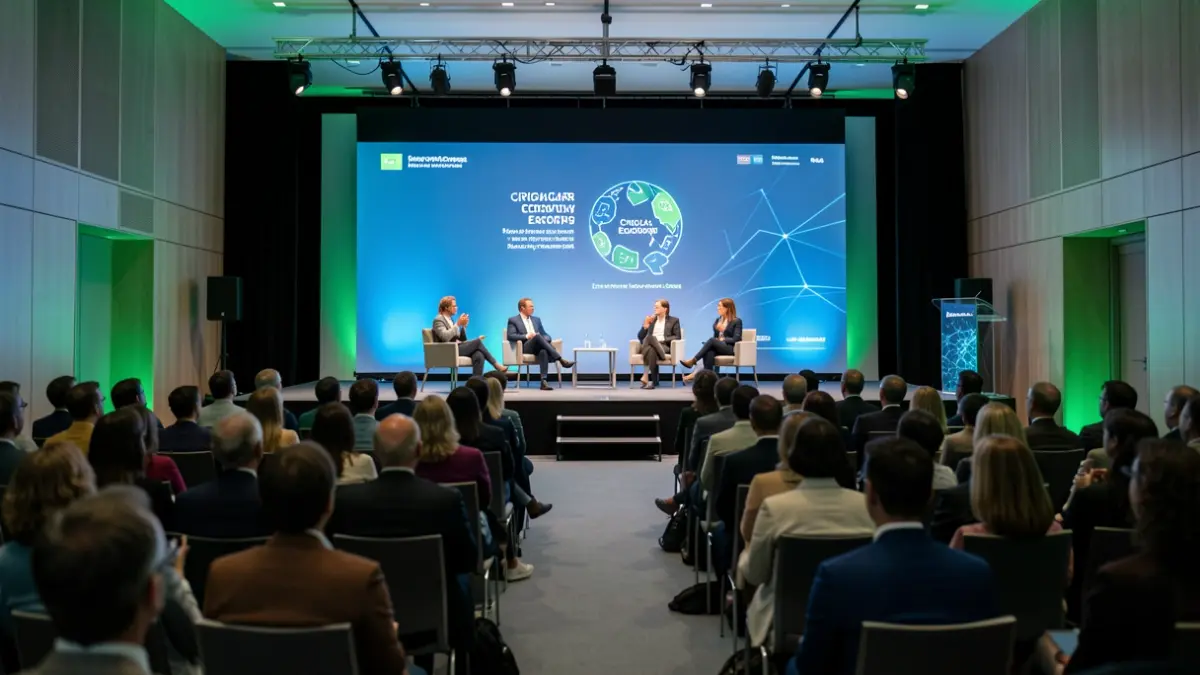
The 'Horizonte Verde: circularity and energy for a new era' forum, organized by Alicante Plaza in Alicante, emphasized that sustainability is no longer just an environmental issue but a strategic pillar for businesses. Representatives from various sectors agreed on the importance of coordination between administrations, companies, and citizens to achieve the ecological transition.
During the debate, moderated by Alicante Plaza's director, Miquel González, it was highlighted that the current challenge goes beyond waste management; it involves rethinking production, consumption, and resource utilization. The circular economy was presented as a transformative axis, despite existing significant regulatory, technological, and cultural barriers.
The attendees included Ateval's manager, Salomé Beneyto; CREA Consortium's president, Laura Estevan; Greene's ESG manager, Cristina Pérez; Silvoturismo's project director, Pedro Berenguer; FCC Medio Ambiente's director, Alfonso Sánchez García; and Noelia Almiñana.
Cristina Pérez stressed the urgency of moving towards more sustainable models, defining the circular economy as a "redesign of how we produce, consume, and use resources" for a more resilient industry.
A key consensus was the need to change the social perception of waste, viewing it as a potential resource for economic activity. Greene highlighted the potential of technologies to transform complex waste, while the CREA Consortium emphasized the importance of source separation and citizen collaboration.
Noelia Almiñana pointed out that the new treatment plant in Villena, despite being a technological leap, will be ineffective without citizen involvement, as each sorting error incurs additional costs. Pedro Berenguer advocated for a "just ecological transition" with coordination among all stakeholders and enhanced environmental education.
Regarding the energy transition, participants agreed on the need for significant investments in less carbon-intensive processes, while also acknowledging the resulting business opportunities and efficiency gains. The European Next Generation funds were mentioned as a crucial boost.
Alfonso Sánchez described the green economy as a growth opportunity, not merely an obligation. However, it was warned that the pace of regulation can outstrip companies' adaptation capacity, particularly in sectors requiring substantial upgrades.
The textile industry played a prominent role. Salomé Beneyto explained the sector's efforts to adapt to new regulations, such as textile waste collection, while calling for economically and technically viable legislation. She also questioned fast-fashion consumption habits and the competition from imported products with less stringent environmental standards.
It was noted that a significant portion of collected clothing arrives unworn, reinforcing the need for public awareness to reduce waste and promote reuse.
Finally, the discussion addressed the business sector's capacity to handle the technological and organizational changes required by the green economy. Despite existing talent, difficulties were noted in filling specialized technical roles in digitalization and automation. Vocational training and its alignment with industry needs were key points.
The overarching conclusion was that the new green economy requires shared responses. Cristina Pérez summarized that "major environmental challenges demand shared solutions," and Pedro Berenguer emphasized the administration's role as a catalyst, supported by businesses and an increasingly involved citizenry. Sustainability was reaffirmed as an unavoidable necessity dependent on collaboration.