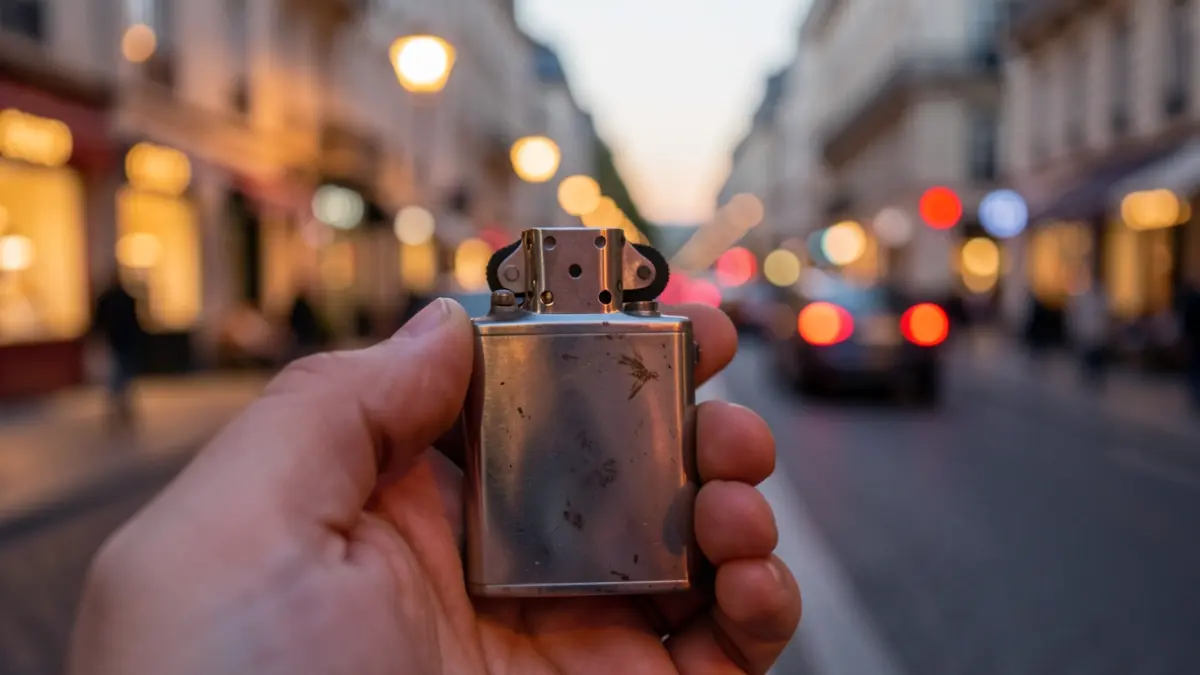
In the past, when smoking was common, it wasn't unusual for a stranger to approach you on the street and say: "Can you spare some fire, please?". Nor was it uncommon to be asked for the time: "Do you have the time?". And no one refused fire or the time, two things that aren't really things, as fire is a process and time an invention. In return, however, a fleeting connection was established, a sort of microscopic contract between strangers.
Giving fire was, in a way, admitting that one had a quantity of heat that could be shared altruistically. And giving the time was equivalent to recognizing that time, though belonging to no one, circulated through the social body like blood through the individual. It was an intimate and public event at the same time. Those requests functioned as a password to humanity. You don't ask a dog for fire. You ask a man or a woman, a presence with whom, for a few moments, you maintain an unusual intimacy.
By making the request, you broke your solitude (and perhaps the other's) for a breath. Today, no one asks for fire because hardly anyone smokes anymore. And no one asks for the time because time constantly asks us from our phones, like an animal that never stops demanding attention. We have gained accuracy and lost occasion, but we live in a darker and colder time. I imagine a near future where someone, by mistake or nostalgia, approaches someone on the street and asks: "Do you have time?". The phrase, slightly off, would cause confusion. The person asked would look at their phone as if the amount of available minutes could be measured there, and would respond with data, not philosophy. And yet, the question, deep down, would still be the same as before: will you grant me a second of your life? Will you allow me to check that we are still made of the same flammable and perishable matter? Because the real fire was that, and the real time too.