The DANA storm on October 29, 2024, caused widespread devastation in La Serranía, destroying bridges and roads. A year and a half later, the region has not only recovered these connections but has done so with a different approach: building with future extreme events in mind.
Municipalities like Pedralba, Bugarra, and Sot de Chera have seen their new infrastructures incorporate greater hydraulic capacity, improved structural resistance, and adaptation to extreme episodes. The response to the DANA has not been limited to replacing what was destroyed but reflects a change in the approach to public works.
Common elements in the various infrastructures include the elimination of intermediate supports in riverbeds to facilitate water flow, increased drainage capacity, reinforcement of foundations, and elevation of road levels to reduce flood risk. This approach has guided interventions promoted by the Generalitat Valenciana.
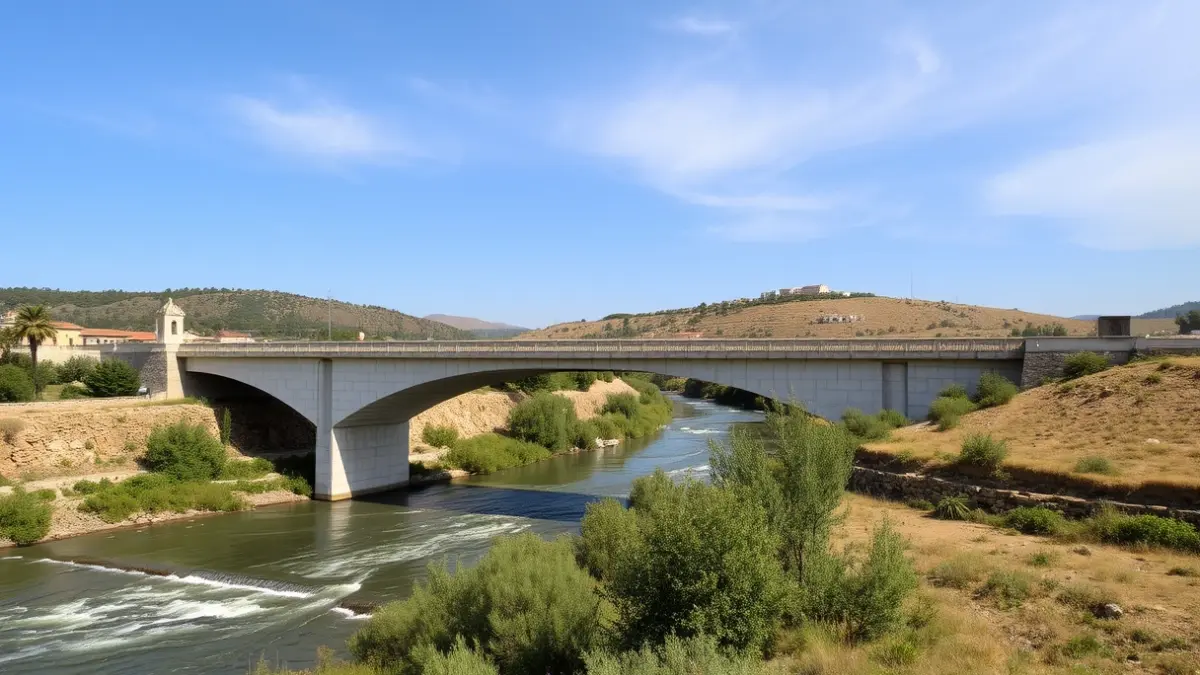
In Pedralba, the reconstruction of the Cerrito Royo road bridge, now open to traffic, is a clear example of this change in criteria. The original infrastructure collapsed during the flood, but the adopted solution has been to completely redesign it. The new bridge features greater length and superior drainage capacity, adapting to the modifications the DANA itself caused in the riverbed.
“"The new infrastructure offers greater levels of resistance and capacity, which reinforces passage safety."
The case of Bugarra demonstrates the technical complexity involved in some of the reconstructions. The new bridge over the Turia River, in its final phase, replaces an infrastructure that had to be completely demolished due to structural damage. The new structure incorporates ten prefabricated beams, 37 meters long, and a deck constructed with pre-slabs, all supported by deep foundations between 12 and 15 meters to ensure stability.
In Sot de Chera, the new Cerrao and Cemetery road pedestrian walkways, already in service, also follow this approach. Both eliminate intermediate supports in the riverbed, increasing water evacuation capacity. The Cerrao walkway quadruples its capacity compared to the previous one. The Tejería bridge, also in Sot de Chera, is nearing its opening after passing load tests, with a hydraulic capacity 50% greater than the original.
These actions in La Serranía are part of a broader reconstruction strategy promoted by the Generalitat, which has allowed for approximately 60 interventions in over 20 municipalities through the Endavant Plan, aiming for a territory better prepared for future climatic events.