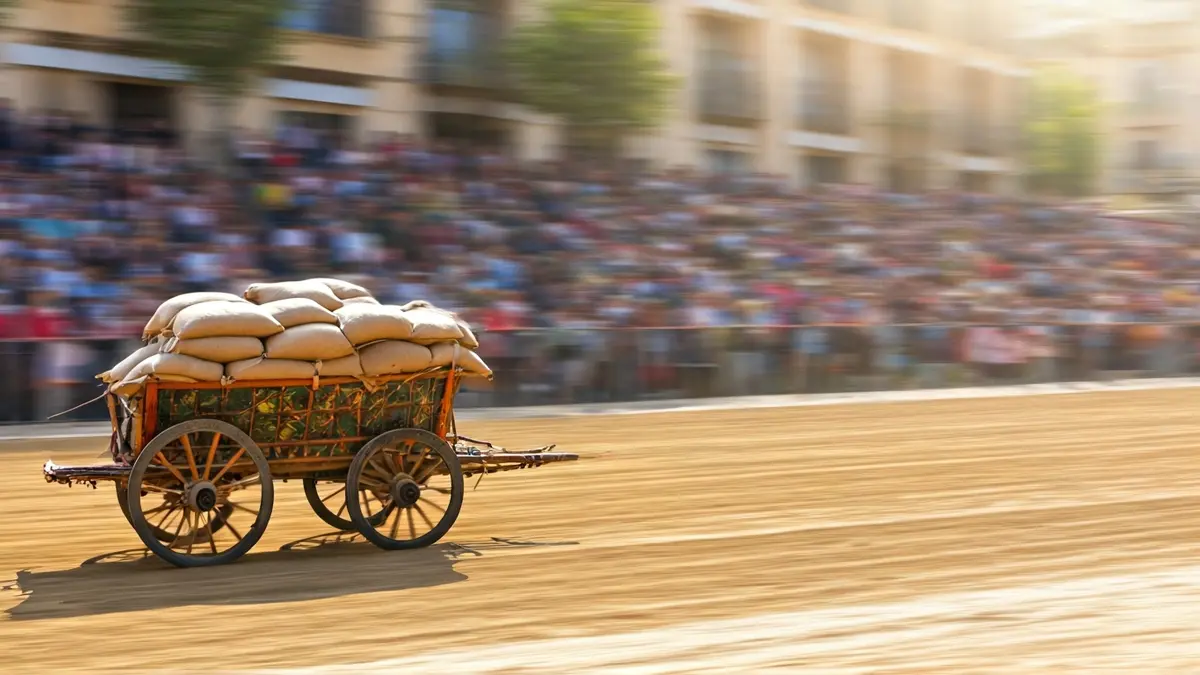
The current government team in Nàquera, led by Vox in coalition with the Partido Popular, has decided to revive this activity, which had not been held in the town for 20 years. This decision has sparked a strong response from the Animal Defense Platform, which considers it a direct attack on animal welfare and a setback in the ethical evolution of the municipality.
While the mayor of the town, Iván Expósito (Vox), has praised the return of this practice as a recovery of Valencian traditions, animal rights activists do not share this view. The organization has publicly denounced the “enormous suffering” endured by horses during these trials, calling it a “mockery” that this activity is officially classified as a sport.
The competition subjects the animals to extreme efforts, forcing them to drag carts loaded with sandbags that, depending on the category, can weigh between one and three tons.
According to the platform, horses must traverse non-compact sand tracks with mandatory stops that test their ability to start from a static position, which constitutes severe physical and psychological punishment. Diego Nevado, head of the platform, has been particularly critical of the Vox mayor's management, accusing them of using their position of power to set the town back and promote a “tradition” that had already been overcome by local society.
Nevado laments that this type of “perverse entertainment” only brings pleasure to a minority of society, while ignoring the climate emergency and the protection of sentient beings. Furthermore, they criticize the City Council for normalizing, for child audiences, the idea that animals are mere resources under human domination.
The controversy is not limited to tiro y arrastre, as the platform has also expressed its rejection of the upcoming exhibition of hunting dogs and activities aimed at children to introduce them to the world of hunting. Based on veterinary and biological reports, the entity emphasizes that horses, animals that tend to live in herds, suffer great stress when immersed in hostile environments of shouting and crowds.