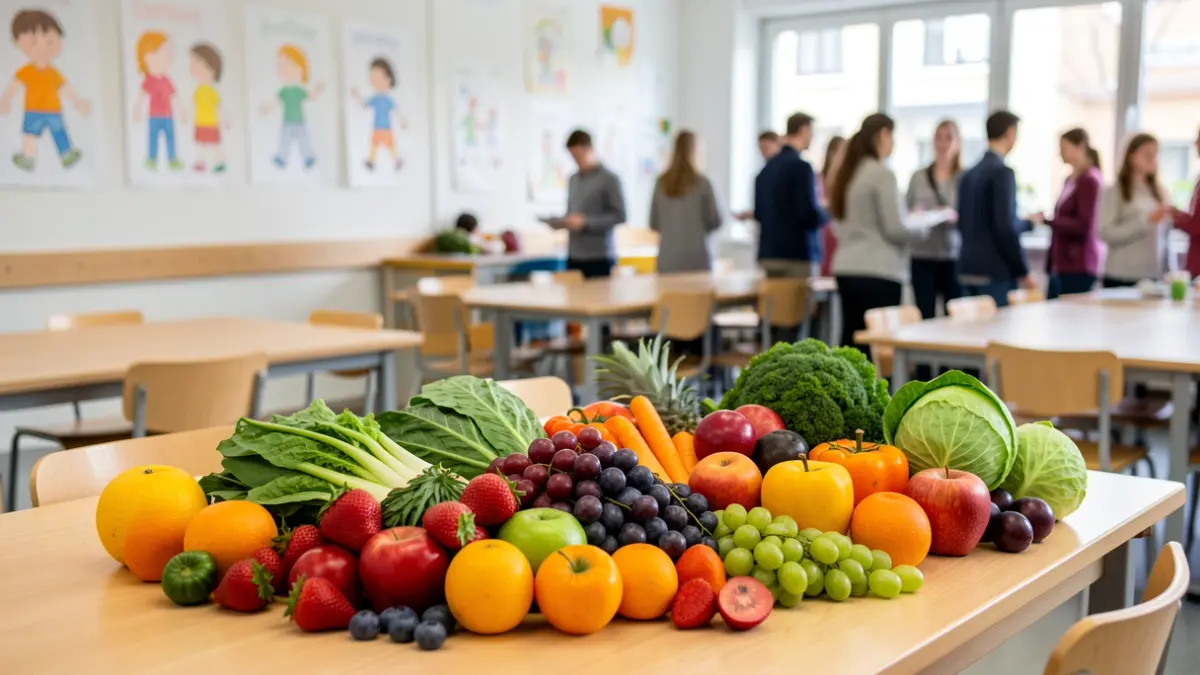
School canteens in Alicante are entering a new phase with healthier menus, prioritizing fresh produce and progressively reducing ultra-processed items. State regulations, effective since April 16, 2026, are driving changes in public, subsidized, and private schools to promote more balanced, sustainable, and seasonal eating.
This transformation coincides with World Nutrition Day, celebrated today, May 28. The new legal framework, which develops the Food Safety and Nutrition Law, aims to increase the consumption of fruit, vegetables, and fresh produce, reduce fried and pre-cooked foods, incorporate whole grains, and enhance nutritional education among students.
An example of this evolution is seen at the international school ELIS Villamartín, located in San Miguel de Salinas. The center had already been working towards a more balanced school diet linked to fresh, local produce, prioritizing local and organic ingredients whenever possible. The goal is to improve the quality and gastronomic value of school menus.
Reducing ultra-processed and pre-cooked foods is another key change. The center emphasizes culinary techniques like baking, steaming, and grilling, and includes more whole wheat pasta and rice in its menus. The aim is a healthier, more varied daily diet, recognizing the school canteen as a space for learning and social interaction.
Managing school canteens has become more complex, especially with in-house kitchens and students from diverse backgrounds. At ELIS Villamartín, with students from over 35 nationalities, management includes catering to allergies, intolerances, and cultural or religious needs, requiring constant coordination to ensure safe and appropriate menus.
“"On a daily basis, the school canteen is a very dynamic service that requires constant planning and adaptation. We work with fresh products and balanced menus, but each day is different due to the variety of student needs. The goal is always the same: to offer safe, varied meals that students enjoy."
In-house kitchens allow for daily menu preparation and service adaptation to student needs, reinforcing the canteen's role in the educational project.
Alongside menu changes, nutritional education is becoming an essential component. The regulations aim not only to improve food quality but also to educate children on healthy habits from an early age.
Students at ELIS Villamartín recently participated in activities and talks with child nutrition specialists through the educational project La Pandi, a non-profit association focused on promoting healthy habits and fruit consumption.
“"Healthy eating is also educated. It's important for children to understand the link between well-being, energy, and eating habits, always from a positive and age-appropriate perspective."
Sustainability is another key pillar. In addition to focusing on fresh, seasonal produce, schools are implementing measures to reduce food waste. ELIS Villamartín runs control programs and waste reduction initiatives, aligning with current social demands for children's nutrition and responsible consumption.
The evolution of school canteens in Alicante reflects a fundamental shift in children's diets: more fruit and vegetables, fewer ultra-processed foods, healthier cooking techniques, and a greater awareness of the canteen's educational role.