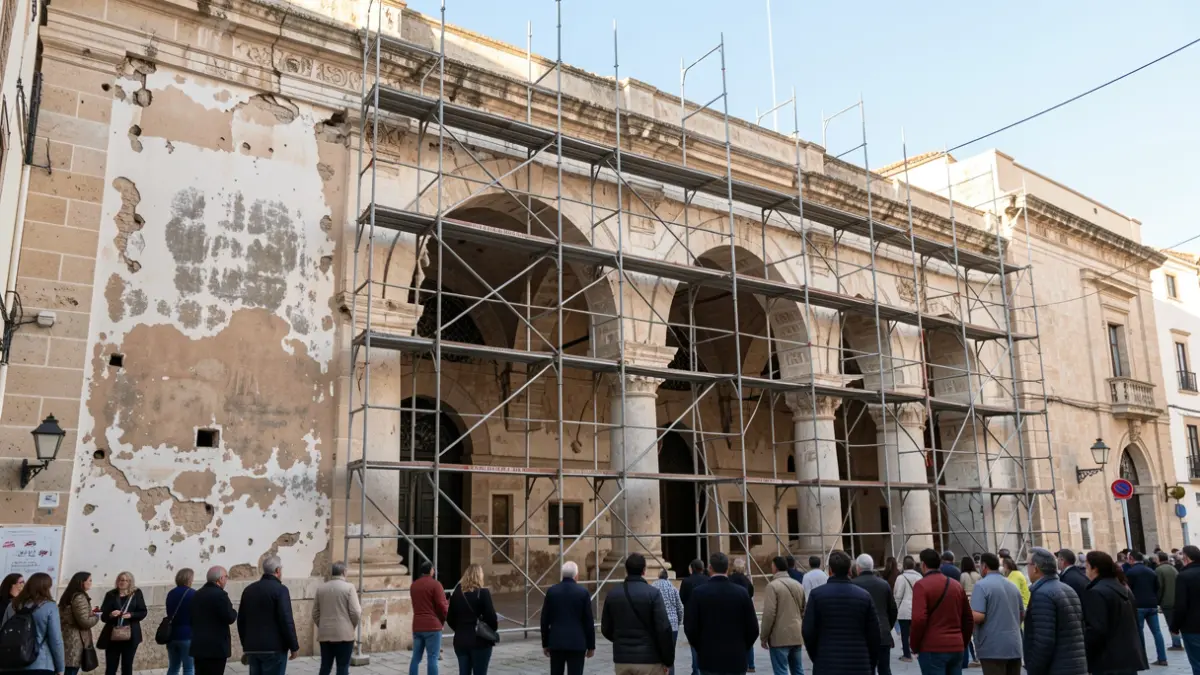
Llíria will carry out the restoration project of the Arab Baths. According to the Councilor for Historical Heritage, Reme Tordera, “the main objective of the action designed by the council is focused on solving the causes that have led to the degradation of the space due to leaks and the passage of time”.
Tordera recalled that this local heritage asset was restored and rehabilitated in 2008. Since then, due to its basement location and poor ventilation, the monument's remains have deteriorated due to excessive humidity, showing various pathologies.
Another cause of deterioration is the poor waterproofing of the terraces in the interior courtyards of the upper residential building, with water leaks that damage the monument and the premises, adding more humidity to the interior environment, as the remains of the Arab Baths are located in a basement level, more than 5 meters below street level, under a newly constructed residential building.
The Arab Baths are declared a Local Heritage Asset and are part of Valencia's cultural heritage. The building, although constructed in the Islamic era, was in operation until the end of the 15th century, later changing its use to become another part of the Barulles tannery. Currently, it is a mandatory point of attraction and tourist visit in the municipality of Llíria.
The new intervention planned will be carried out with a direct subsidy of 136,942.36 euros approved by the València Provincial Council through the Plan of Works and Investments, which the city council will soon put out to tender.
The Councilor for Historical Heritage expects that by 2026 this heritage space will be rehabilitated and in use again, similar to the ongoing work at the Oracle Sanctuary and the Roman Baths of Mura, and the medieval wall in the Vila Vella area. These latter two actions are being executed with aid from European funds.
“The city council is making a significant commitment to the rehabilitation and recovery of the municipality's heritage spaces, with actions that already exceed 3 million euros and which will represent a qualitative leap, both in conservation and in its dissemination and promotion,” pointed out Tordera.