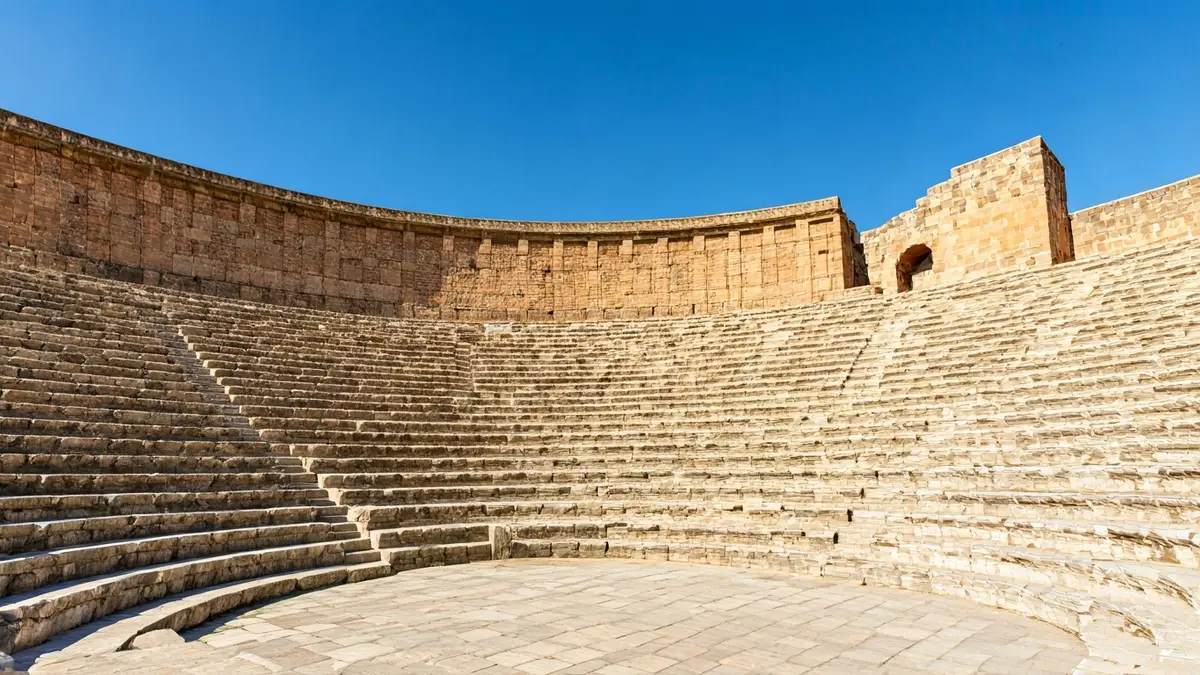
Next week, Sagunto will welcome thousands of students as part of the new Ludi Saguntini festival, an initiative that will allow them to learn about life more than 2,000 years ago. The event will once again fill the streets with workshops and the Roman Theater with classical plays, but it will do so with continued capacity limitations. This situation occurs despite the high demand from schools and the fact that the city council recently completed works that will allow the monument to recover its full capacity.
The mayor, Darío Moreno, highlighted the council's effort to complete the emergency exits of the upper cavea of the Roman Theater a few weeks ago. This environmental improvement, valued at 300,000 euros, is an important step. Moreno stated that they are "very close to recovering full capacity," although, as it is an installation managed by the Ministry of Culture, he could not specify concrete dates for its full opening.
“"It's a shame that an activity like this cannot accommodate more students. There is still the feeling that the work involved in organizing the festival is not considered sufficient."
The president of the theatrical festival's organizing association, Prósopon Sagunt, Isabel Pérez, lamented that caveas C and part of B "will be empty" while many schools have been unable to attend the plays. She urged institutions to "continue working" to promote this initiative, which celebrates its XXIX edition this year. The general director of Educational Innovation, Xaro Escrig, guaranteed her department's support for the event, organized by two teacher associations in collaboration with the city council and other entities.
The event will begin next Monday, the 20th, and will run until Friday, the 24th. The plays at the Roman Theater have been carefully chosen with international current events in mind, with groups from various parts of Spain reflecting on values such as peace. Additionally, workshops throughout the city will teach aspects of daily Roman life, such as epigraphy, jewelry, cooking, clothing, hygiene, and cosmetics. In Glorieta Square, activities can be carried out without prior registration.