The political group believes that the work carried out at the station has “ignored basic needs” of the taxi collective and has failed to fulfill previously acquired commitments, such as the creation of a dedicated access for service professionals.
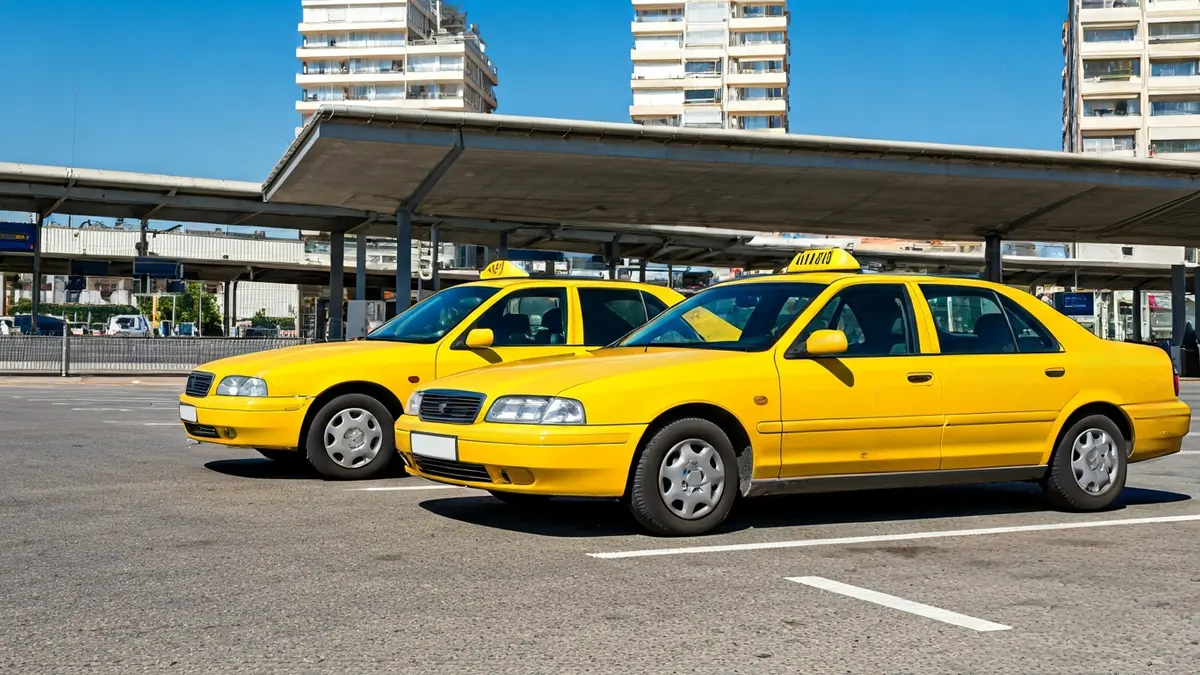
The popular party members denounce that the new configuration of the spaces, arranged in a row and facing outwards, exposes taxi drivers to the sun for a significant part of the day. “We are talking about professionals who spend many hours behind the wheel, providing an essential service for mobility. It cannot be allowed for them to do so under such harsh conditions, especially in summer,” they state.
This situation affects both the well-being of the workers and the development of their activity, as many are forced to keep their vehicles running to withstand high temperatures, with the consequent increase in economic expenditure.
Furthermore, the Popular Party highlights the absence of exclusive access for taxis, a historical demand from the collective that, they assure, was promised years ago without being materialized. “The reform has fallen short and has not resolved structural problems. A specific access was promised that would facilitate daily work and avoid traffic conflicts,” they criticize.
Adding to this situation, according to the municipal group, is the lack of sufficient space. Currently, there are five waiting lines for a service that exceeds ten operational vehicles, which generates saturation and complicates organization at a strategic point like the station.
The PP believes that the solution involves “simple” actions such as the installation of a porch, improved access, and the expansion of available space, measures that, in their opinion, would significantly improve the working conditions of the collective.
Therefore, the party urges the municipal government to convey this demand to the Ministry of Transport and Sustainable Mobility, as the competent administration for railway infrastructure. “We ask them to defend the interests of those who sustain essential services in the city,” they conclude.