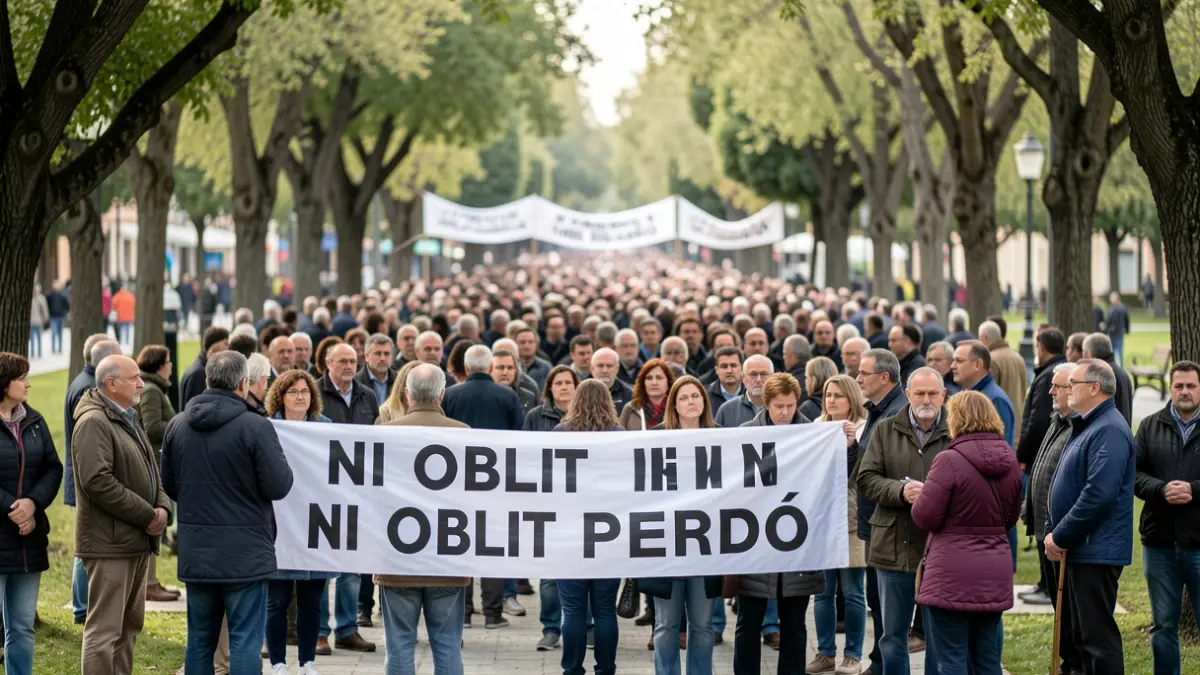
The decision, supported by 267 men against 114 dissenting votes, is based on the statutes of the Cofradía de la Puríssima Sang del Nostre Senyor Jesucrist, which stipulate the exclusive admission of male members. This stance has triggered a wave of reactions and highlighted the tension between tradition and principles of equality.
The debate has revealed that the brotherhood's position clashes with current legislation, including the Constitution, and with rulings from the Constitutional Court. Furthermore, it contrasts with the widespread presence of women in many other brotherhoods, where they participate on equal terms. Some critics have suggested that behind the argument of tradition, intentions closer to sexism than genuine traditionalism might be hidden.
To deny half of the human universe the right to participation grossly clashes with the obvious fact that every male owes his life to the woman who gave birth to him.
The notion of tradition, often invoked in these cases, is questioned. It is recalled that many traditions are, in reality, past innovations or customs adapted to a specific moment. More than four centuries of history do not, by themselves, confer moral superiority to a rule. If tradition does not evolve with the times, it becomes an obsolete element, a mere object of historical curiosity.
The ecclesiastical hierarchy has shown a response that many consider ambiguous or indolent. Instead of directly intervening in the modification of the brotherhood's statutes, they have opted for "pastoral accompaniment" based on "dialogue and maturation," without a clear deadline. This stance has been surprising, especially considering the prominent role the Church attributes to women in the life of Jesus and, in particular, to his mother, with recently introduced Marian dogmas such as the Immaculate Conception (1854) and the Assumption of Mary (1950).