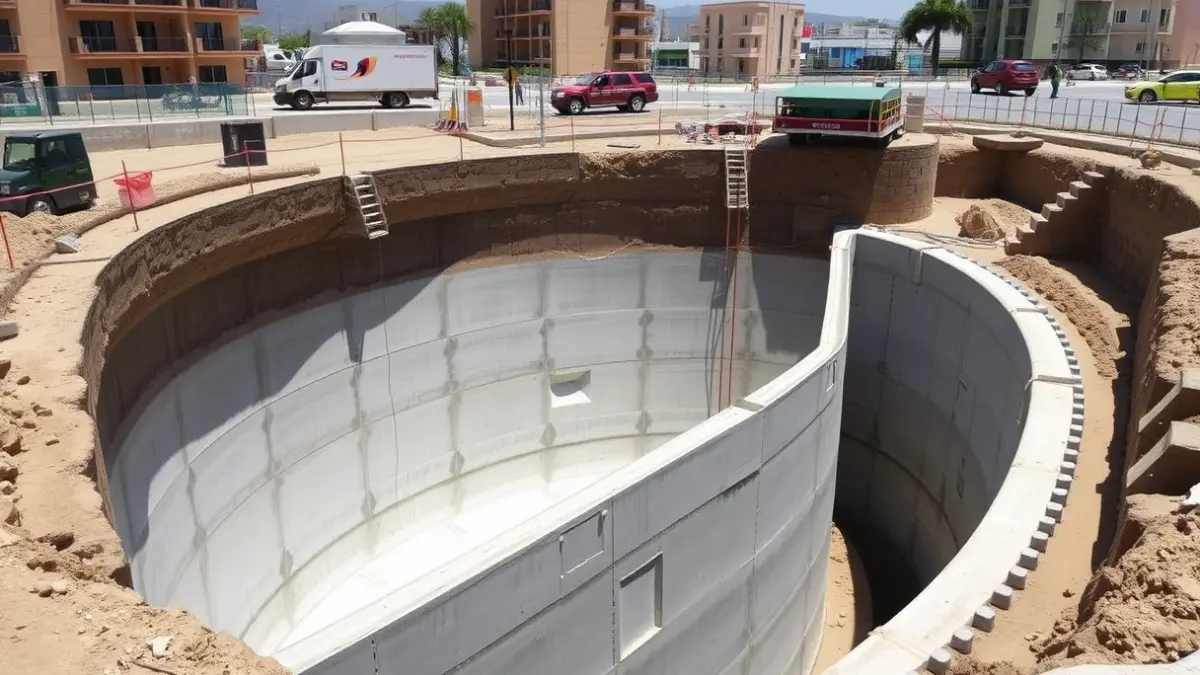
This project, included in the joint company's Rainwater Plan, is located on Avenida San Bartolomé de Tirajana. The new infrastructure will have a capacity of one million liters of water, and its main objective is to retain excess flow during intense rainfall events, thus preventing overflows in the sanitation system, especially on the avenue itself and in the coastal area.
“"The objective is to solve the pluvial problems that existed in Arenales del Sol, but this project also commits to the reuse of regenerated water, which will be destined for the Clot de Galvany."
Once each rainfall event concludes, the water stored in the reservoir will be pumped through the existing pumping station to the Arenales Wastewater Treatment Plant for treatment. Subsequently, the regenerated water will be used for reuse, specifically for the maintenance of the artificial ponds of the Clot de Galvany and also for agricultural use.
The mayor highlighted that this is the first storm tank of its kind in the municipality, a strategic action to reinforce the sanitation network in an area particularly sensitive to heavy rains. In addition to hydraulic improvement, the project includes the installation of an outdoor calisthenics area, which will create a new space for sports practice in the district.
Furthermore, it has been noted that the future storm tank planned in the vicinity of the San Antón ravine is already in the project drafting phase, and subsequently, the tender process will begin, with works expected to start by the end of the year. The manager of Aigües d’Elx indicated that during abundant rainfall episodes, the collectors were insufficient to handle the entire volume of rainwater, so this infrastructure will allow retaining that flow, preventing its overflow, and also promoting its reuse.