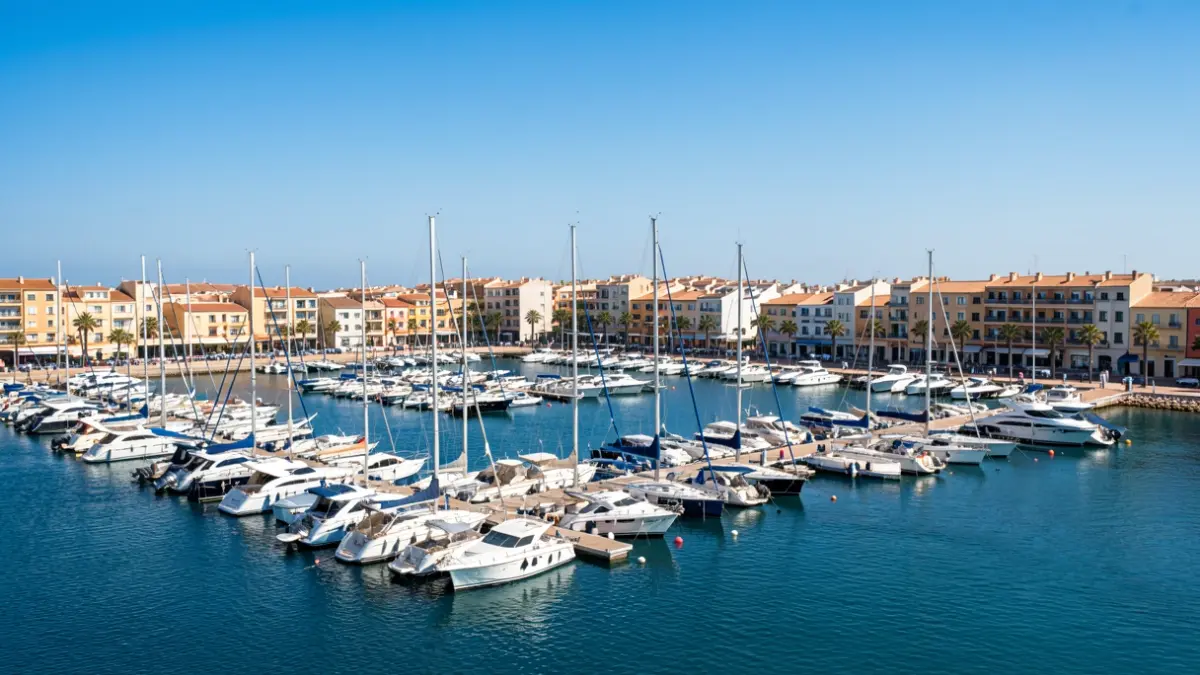
The municipal marina [Marina de las Dunas (Madusa) in Guardamar del Segura reaches July with the end of the 30-year concession from the Generalitat](https://www.informacion.es/vega-baja/2026/03/29/guardamar-invertira-5-millones-de-euros-prorrogar-concesion-marina-deportiva-generalitat-128539830.html) on the table and with an open conflict over new mooring fees. Users with preferential use rights claim that the municipal company Madusa is applying a nearly 70% increase to make transit moorings cheaper. The delegate councilor, Pablo de Miguel Pradillo, argues that as the current concession ends, preferential rights lapse, and a common fee based on water surface area should apply during the transitional period, without profit motive or losses for the City Council.
Between the end of the concession and a potential extension or new award, a temporary authorization from the Conselleria is needed for the current operator, the [Ayuntamiento de Guardamar](https://www.informacion.es/vega-baja/guardamar-del-segura/), through a municipal company, to continue operating the port. This authorization would allow Madusa to continue managing, paying expenses, and collecting fees while the new concession is resolved.
The City Council indicates that 75% of the 485 moorings belong to concessionaries with preferential use rights, but this right expires when the concession ends. According to the council, these individuals paid less due to an initial contribution, but that period is over, and if they wish to enter the new 15-year phase, they will have to consider whether it is worthwhile to make a new investment or remain as transit users.
The majority of concessionaries reject this approach. They argue that equality cannot mean lowering transit moorings by about 50% while increasing those for existing concessionaries by 70%. Their proposal is to maintain current fees for concessionaries, updated by 3%, and slightly increase new transit fees so that the burden does not fall on former preferential right holders.
The City Council is working with the prospect of a temporary authorization process between the end of the current concession and a new 15-year concession or extension, for which it will present a viability plan with an investment forecast of five million euros. Pradillo adds that the intention is to submit the project and viability study so that the process takes as little time as possible. 'Handing it over fully prepared to the Generalitat so they can resolve it as soon as possible,' he told INFORMACIÓN. He also maintains that he does not anticipate the Generalitat putting the port out to tender, as he believes the municipal project meets the necessary conditions to continue.
The controversy is not so much about the immediate continuity of the port, but about the fees Madusa intends to apply during that period. Madusa's Board of Directors met on May 28 and approved new monthly mooring fees for the period after the concession ends – with favorable votes from PSOE councilors and abstention from the PP, without the Vox councilor attending. These fees were communicated to users by email. Madusa reportedly based its calculations on 2025 revenue from mooring fees, approximately 760,000 euros, updated them by 3% to around 783,000 euros, and then distributed them across the total water surface area of the moorings.
The result would be a monthly fee per square meter. The councilor points out that with temporary authorization, differences between users cannot be maintained. Therefore, he advocates for a 'flat rate' per square meter of water surface, calculated based on the length and beam of each vessel. According to his explanation, the goal is to maintain projected revenues, 'to neither gain nor lose.' For transit users, who previously paid higher fees, the new system would represent a significant reduction. For concessionaries, who for years have paid lower fees because they made an initial payment at the start of the concession, the new distribution implies an increase that the lawyer estimates at around 69% or 70%.
The main users of the Marina question this increase as 'abusive' considering the services, which they deem very deficient, especially due to the lack of services, the state of the facilities, and particularly the navigation limitations caused by the insufficient depth of the port entrance. Users have a meeting scheduled for this Saturday. They plan to propose that if Madusa does not reconsider the fees before the July deadline, concessionaries should stop paying. They even mention the possibility of organizing a judicial deposit of rents to avoid legal problems. This same Saturday, concessionaries are scheduled to meet to discuss what to do in response to this municipal decision.
Another important issue – and one that underlies the discontent among concessionaries – is the subletting of moorings. Concessionaries claim that the operating regulations allowed subletting the preferential use right with express authorization from [Madusa](https://www.marinadelasdunas.es/). However, they also acknowledge that the municipal company can revoke these authorizations before the concession ends. Based on this, they estimate that only about 139 holders with their own boats in concession moorings would remain in the situation intended to be protected by current fees; the rest of the moorings would be treated as transit moorings as subletting authorizations disappear.
The councilor, for his part, clarifies that the elimination of subletting is not a possibility; it will be a reality. He points out that they have never been expressly authorized – and in no case by the Generalitat, which is now very restrictive about the holders of mooring points and water surface being those who appear administratively – but he admitted that it is a historically tolerated situation because when the port began its journey, the initial fear was that the moorings would remain empty, and a single concessionary was allowed to monopolize several. This subletting has become a lucrative business for some concessionaries. The councilor states that it will not be permitted again, neither during the temporary authorization nor in the future concession.
Councilor Miguel Pradillo and the concessionaries agree on one point. The depth limitations at the entrance of the marina due to sediment accumulation are the main limitation of these facilities, and resolving it must be a priority. For sailboats and medium-length and draft boats, entering or exiting the marina's pontoons has become a risky maneuver. Periodically, images of stranded vessels due to lack of depth appear. The marina was built by modifying the right bank of the Segura River's mouth, an area where sediment accumulation from the river itself and easterly storms is constant.
The City Council has informed users that once the current dredging of the old riverbed is completed and the new one begins, the local administration wants to take advantage of the machinery's presence to contract Acciona's dredge, already in the area, and award an emergency dredging operation to provide a channel with a depth of more than two meters. Pablo de Miguel Pradillo notes that one of the contributions of the economic viability report presented to the Generalitat includes the acquisition of a mini-dredger to carry out continuous dredging work without relying on extraordinary operations. He indicated that for the currently planned dredging, sediments have already been analyzed, as environmental impacts must also be considered. Depending on their characteristics, the extracted sludge can be used to regenerate beaches, fill plots, or end up in authorized landfills if heavy metals are present – the latter being the most expensive option. Users doubt that this proposal will be operational before July.