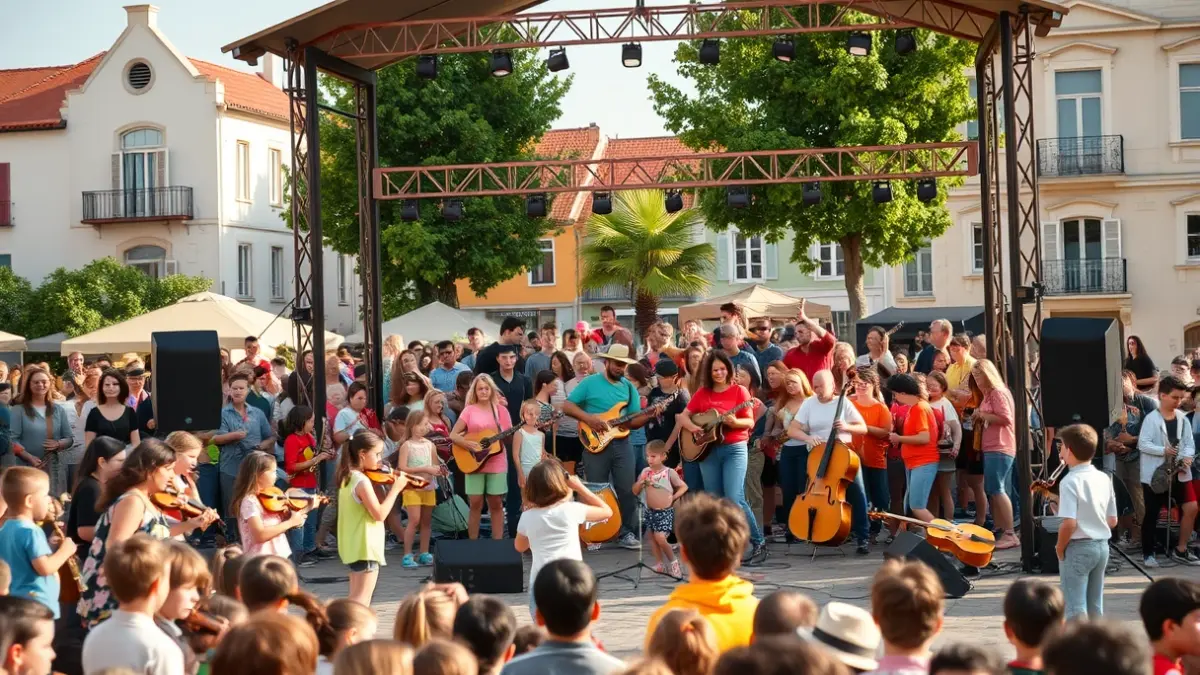
Hundreds of children, accompanied by their teachers, participated in a collective performance marked by rhythm and emotion. The proposal was based on active musical practice, with pieces inspired by modern African rhythms and performed with instruments and everyday objects.
This event, open to all citizens, featured the students as the main protagonists. The activity allowed showcasing the work carried out in classrooms over recent weeks and highlighting music as an educational, creative, and social tool.
'Som Música Gandia' celebrated its third edition this year with the aim of integrating music into the educational process in a practical and participatory way. The project combined teacher training with direct classroom work and culminated in this final concert, where the centers shared a common experience outside the school environment.
“"This project strengthens the role of education as a driver of social cohesion and is committed to innovative, inclusive, and participatory methodologies."
The initiative sought to foster creativity, teamwork, and emotional expression among students, in addition to strengthening coexistence between centers and the participation of the educational community in shared activities. The Councilor for Education positively assessed the development of this edition and thanked the involvement of students, teaching teams, and families, as well as the work of the About de Beat collective, responsible for the design and development of the project.