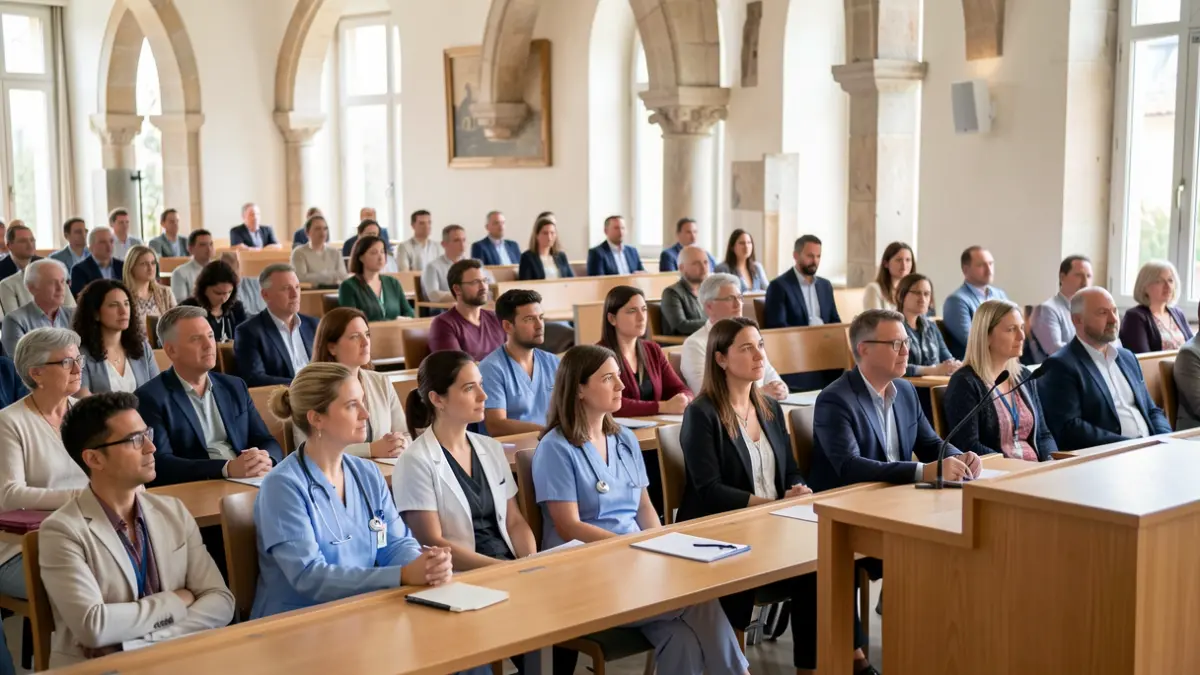
Today, the conversation about education goes beyond grades and methodologies. At centers like Escolapias Gandia, there's a growing emphasis on how to support families and students in a rapidly changing social context, which often generates uncertainty and many questions. This approach is part of the school's daily life, where student well-being is the primary objective.
The school's work strategy is based on key concepts such as family, security, information, protection, prevention, and support. These elements help define an approach that goes beyond academic activities, seeking to address the reality that many problems affecting minors do not arise exclusively in classrooms nor can they be addressed solely from them. The school understands that it cannot live in isolation from society and that external factors influence its daily life.
Prevention plays a central role in this structure. Instead of acting only when a serious problem arises, the goal is to detect early signs, better interpret what is happening, and create an environment where students, families, and teachers know there are channels to express their concerns. The VOL project, meaning “Living is Opening Limits,” groups various lines of work under the ideas of support, well-being, and sustainability, aiming to equip students with resources to face reality.
Another fundamental pillar is the care of the teaching staff and school personnel. The school recognizes that a healthy environment cannot be built if those who work there daily do not feel supported. Therefore, they discuss compliance, teacher support, and stress prevention among educators, as a supported teaching staff can intervene and communicate better with students and families.
Information gathering is essential for understanding and improvement. The school uses surveys and SWOT analyses to obtain indicators that allow for better support. This part, less visible from the outside, is crucial for translating the concept of well-being into concrete data, trends, and diagnoses that enable informed decision-making rather than relying solely on impressions.