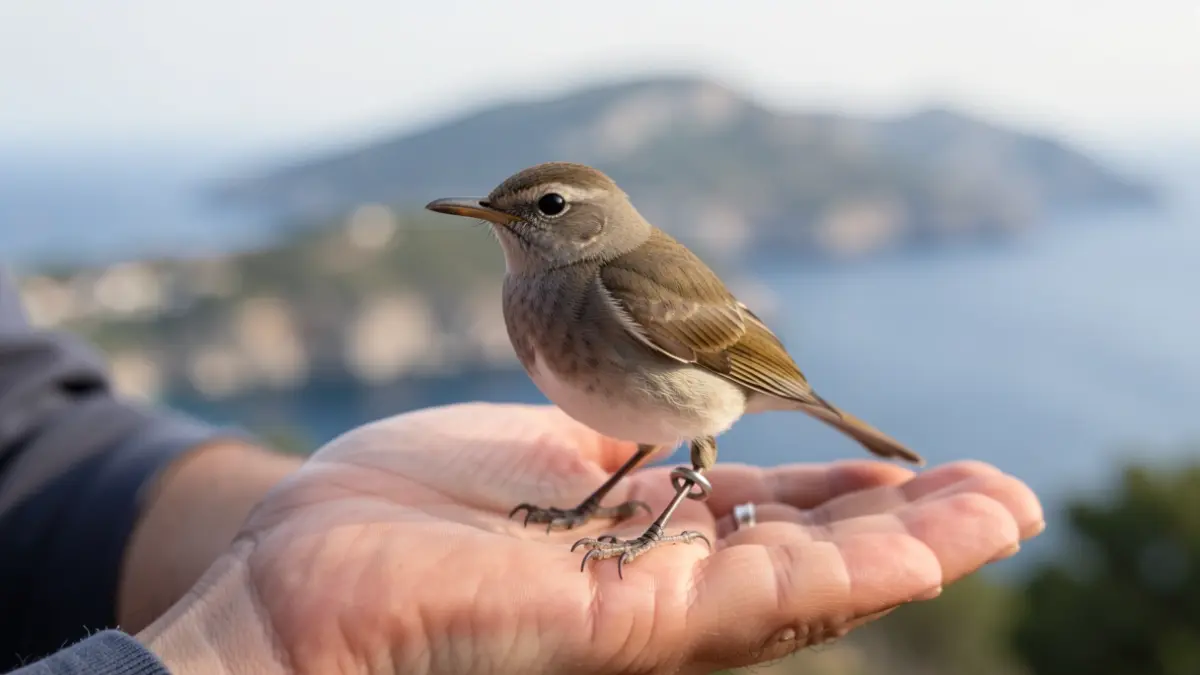
The Councilor for Environment of Castellón, Gonzalo Romero, has presented the results of the bird ringing campaign carried out this spring in the natural park and marine reserve of the Columbretes Islands. The initiative, accompanied by Joan Castany, the project manager, took place over three fortnights between March 25th and May 6th, recording a total of 2,117 captures.
This scientific monitoring initiative has been conducted in Columbretes since 1994, now totaling 32 consecutive seasons. Romero highlighted the scientific and environmental importance of the project, emphasizing the City Council of Castellón's commitment to the protection and conservation of this natural space, considered an "authentic environmental jewel".
Joan Castany explained that the main objective is to study trans-Saharan birds, welcoming those arriving from the south of the desert and bidding farewell to those from North Africa. Data from each captured specimen are collected and analyzed.
The campaign is part of the international project Piccole Isole, which studies the migratory movements of birds across the Mediterranean. Columbretes, along with Tabarca (Alicante) and Illa Grosa (Murcia), is among the most western participating stations, providing key data for migration analysis.
The scientific ringing method, using Japanese nets, allows for the collection of valuable information on bird biology, migration, and conservation. One of the objectives is to understand the role of the Columbretes Islands as a resting and refueling area during migration.