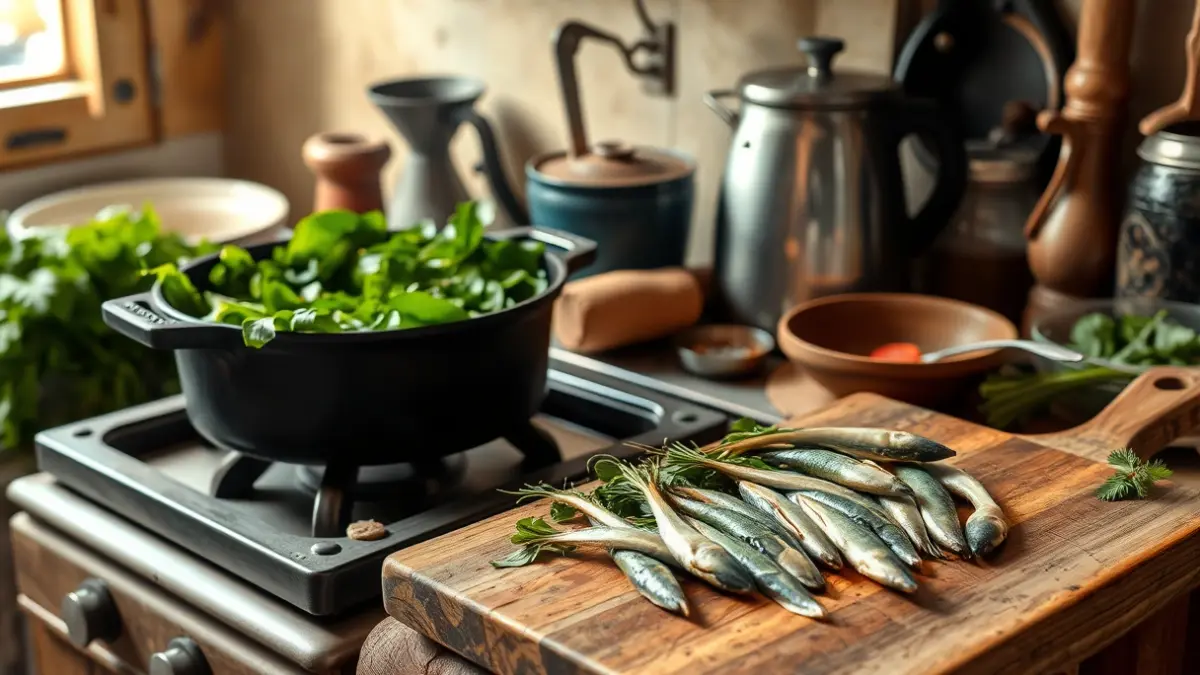
Every Wednesday night, chef Rubén Fenollar and Àlex Blanquer present the program 'Sabors de sempre' on À Punt, which this week stops in Benidorm. Here, they will cook rice with spinach and anchovies, a traditional seafood recipe, very typical of the Marina Baixa. As usual, guests from different generations will prepare the dish in a traditional way and, at the same time, offer an innovative and modern reinterpretation. The appointment will be this Wednesday, April 29 at 10:45 PM.
Rice with spinach and anchovies has its roots in the gastronomic tradition of coastal towns, where salted blue fish, such as anchovies, was a common ingredient in family kitchens. This dish was typical of sea workers, who took advantage of the simplest and most available products: salted fish, seasonal spinach, and rice, which was easy to preserve and cook in a casserole.
“"I will cook my dish at L’Hort de Colon, a historic building that remains intact in the city center, just as it was when I went there every day as a child to study."
A 93-year-old cook will be in charge of preparing the traditional version, offering a window into the memories of a small Benidorm, with no more than eight hundred inhabitants, where everyone knew each other. She will cook at L’Hort de Colon, a historic building that remains intact in the city center. On the other hand, a chef with a decade of experience, who has achieved a high culinary level, will be responsible for the reinterpretation of the dish. Since taking over his restaurant, La Fava, he has continuously trained.
In the program, this chef will present a contemporary version using modern cooking techniques. His proposal includes a creamy rice with a broth of mantis shrimp and crab, semi-salted and smoked anchovies, spinach cream, and a citrus air of lime. To finish the dish, grated fish roe will be added, which Àlex Blanquer will obtain at La Retora, a local establishment specializing in salted products.
'Sabors de sempre' is a journey through our towns, through the stories told by the kitchens of our elders. It vindicates the value of tradition, gastronomic culture, and the transmission of these values between generations.