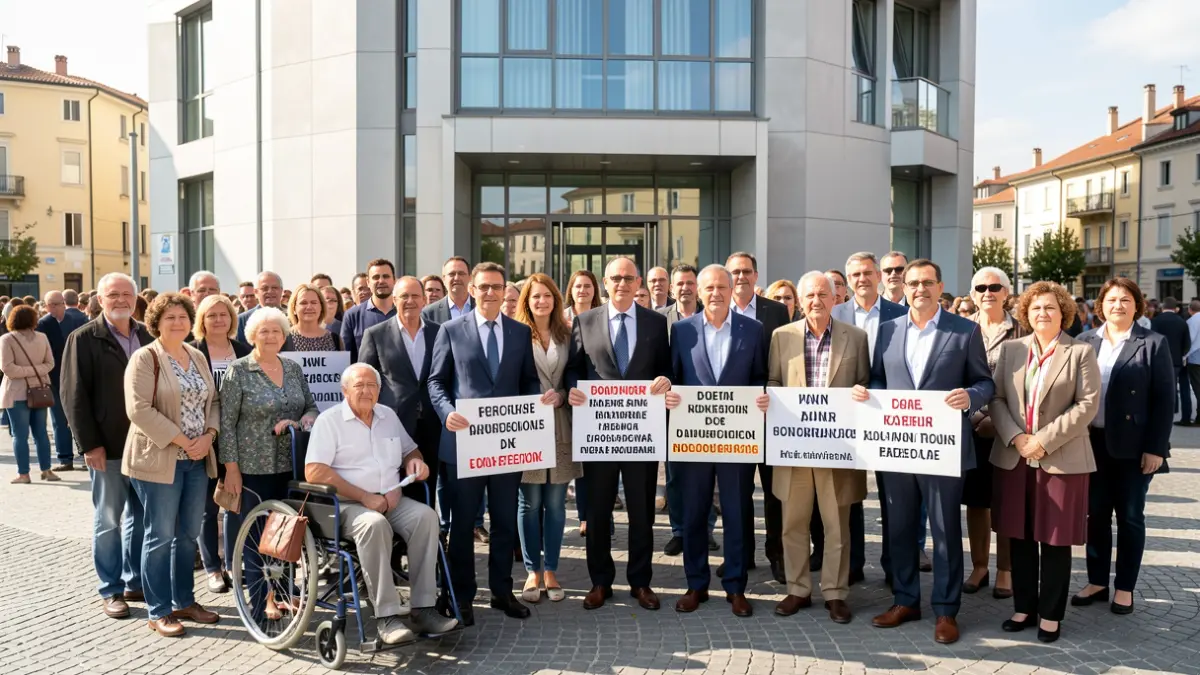
Concern over the state of services for the most vulnerable has united entities, families, and politicians in Marina Alta. A long-term plan is requested to address the growing needs in the region.
Aprosdeco, an organization supporting 94 individuals with disabilities from twelve municipalities, highlighted financial difficulties due to payment delays from the Conselleria de Servicios Sociales, Igualdad y Vivienda. Accumulated debt reached 571,842 euros, with outstanding payments for several months totaling 359,245.53 euros.
The lack of funding and the Conselleria's non-compliance have forced user families to bear extraordinary economic burdens to maintain the association's activities and ensure staff salaries. Although the situation has improved, clarity on future payment schedules and measures to prevent further delays is lacking.
Beyond payment delays, Aprosdeco points to a structural issue: funding modules have remained unchanged since 2019, despite rising labor costs and inflation, creating a gap between service demands and available financing.
The problem affects all disability resources in Marina Alta, with insufficient places, a scarcity of specialized services, and long waiting lists. Students from the Raquel Payà Special Education Center and users of the La Xara Occupational and Day Center face uncertainty about future support. There are also no residences in the region, forcing families to seek placements elsewhere, with waiting lists of up to 10 years.
Organizations such as ADIMA, LUDAI, Cerebrum, TDAH +16, and AMADEM share similar challenges due to a lack of sustained resources and investment.
The manifesto calls for real planning of social and socio-health resources, new infrastructure, more places, adapted services, and adequate funding. A plea is made to the Conselleria to engage in dialogue and joint work to address urgent needs and plan for the future.
Mayors and councilors from various towns have supported the demands, including a significant presence from the Dénia City Council, with Mayor Vicent Grimalt and Deputy Mayor Rafa Carrió. Mayors from Pedreguer (Sergi Ferrús), Gata (Toni Signes), and El Verger (Basili Salort) were also present.
The possibility of organizing protests at the Conselleria's headquarters was discussed. The exception was the president of the PP of Dénia, Pepa Font, who favored exploring other communication channels with the regional administration.