The startup Gravity Wave, dedicated to collecting and transforming marine plastic, has organized this mission for World Oceans Day, celebrated on June 8th. The initiative aims to remove a significant amount of debris accumulated over decades.
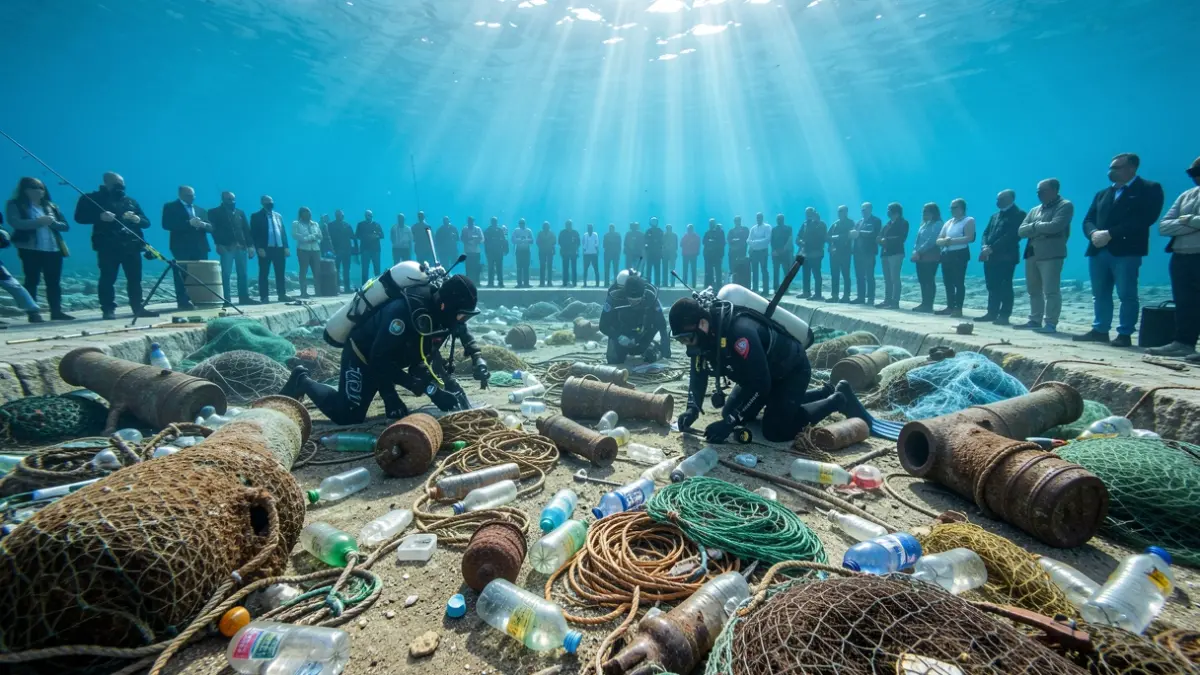
The operation will not only focus on removing plastics and ghost nets but will also involve the handling and documentation of historical artifacts, such as sunken cannons. For this specialized task, professional underwater archaeologists will participate to ensure the proper treatment of the submerged heritage.
Diving teams will face an ecosystem of waste including abandoned fishing nets, various containers, and old metal objects. Additionally, marine species entangled in nets will be freed, with support from marine biologists integrated into the operation.
This ambitious operation involves local fishermen, professional divers, scientists, marine biologists, and citizen volunteers. Gravity Wave, which converts extracted plastic into raw material, emphasizes that this action highlights marine plastic pollution, one of the major environmental challenges of our time.
The company has warned that over 70% of ocean plastic ends up on the seabed, and ghost nets are a primary cause of marine fauna mortality. The Mediterranean is one of the world's most plastic-polluted seas. The action is supported by B100, Visa, the Calp City Council, the Calpe Fishermen's Guild, Dive & Dive Diving Center, and IMEDMAR.