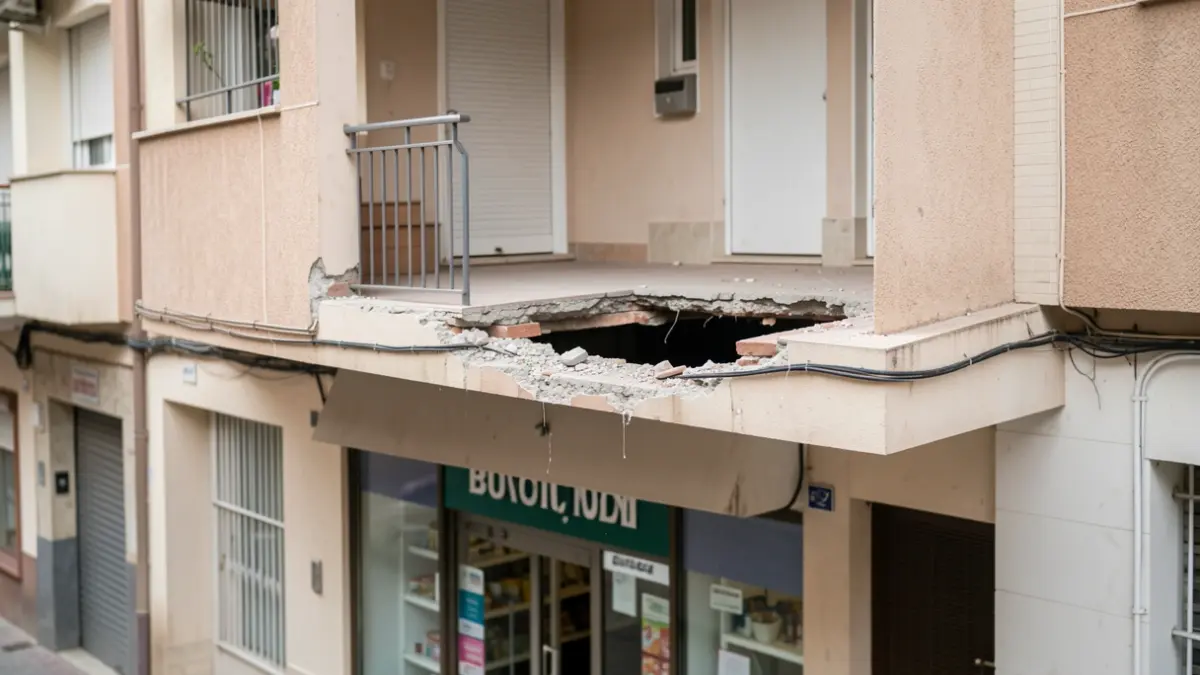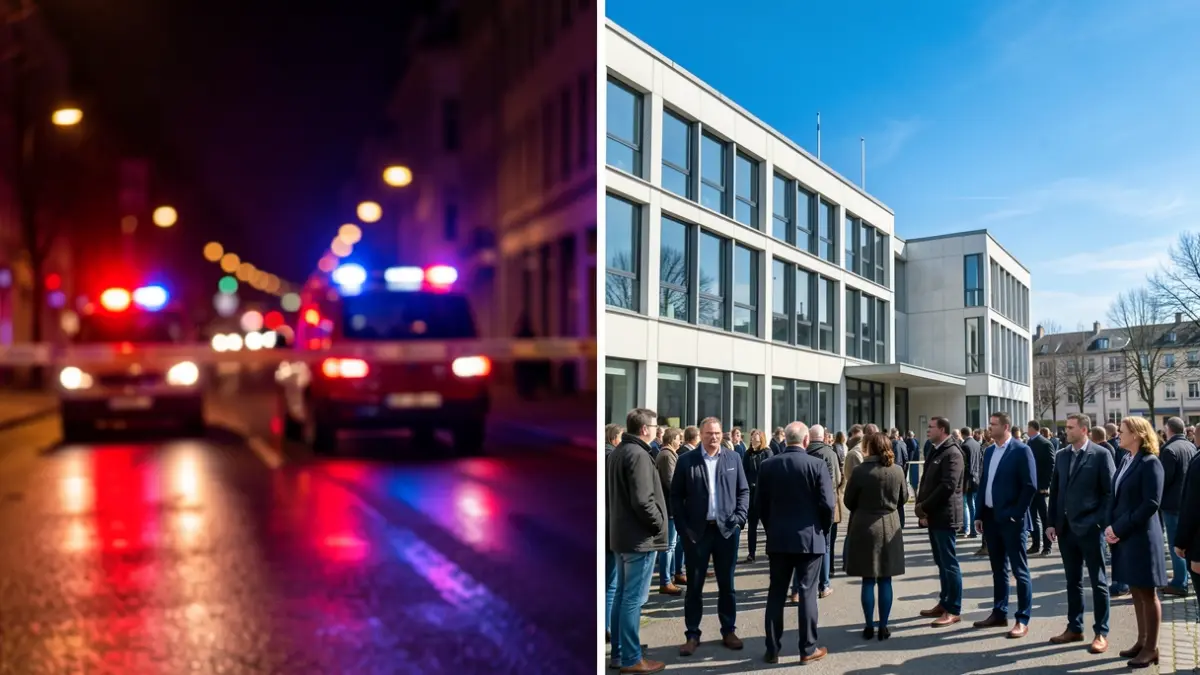
Two altercations that occurred two weeks ago in Aldaia, one resulting in a fatality from a stabbing and another in an occupied warehouse nearby, have once again put the spotlight on the municipality's safety. This occurs amidst a context of rising criminality, as Aldaia led the increase in offenses among municipalities in l'Horta with over 20,000 inhabitants during the first quarter of 2026.
According to Ministry of the Interior records, criminal offenses grew by 90% compared to the same period last year, marking the most significant increase in the region. Out of 17 municipalities in l'Horta with over 20,000 inhabitants, criminality rose in 13, with an overall increase of 8.45%, although Aldaia and Picassent saw the most pronounced spikes (90% and 53.7% respectively).
The Aldaia City Council urges caution in analyzing these figures, as a significant portion of the increase in criminal offenses corresponds to thefts recorded around the Bonaire shopping center. Therefore, they deem it necessary to segment the statistics to precisely understand the types of crimes driving the increase and their concentration. To this end, a Local Security Board has been convened, involving representatives from the National Police, the Civil Guard, and the Government Delegation.
The security debate has also reopened the issue of the Local Police force's staffing. Some residents believe the number of officers is insufficient. The City Council states its desire to increase personnel, but new hires are constrained by state regulations on public employment and the 'replacement rate' mechanism. Consequently, the council believes that reinforcing security also depends on strengthening the work of the National Police and the Civil Guard.
The municipal government also notes that Aldaia's Local Police numbers are similar to those in neighboring municipalities like Alaquàs or Xirivella. Lluís Granell, spokesperson for Compromís in the City Council, explains that the force currently has 39 officers serving a population of around 34,000 inhabitants spread across three urban centers, a circumstance that, in his and some residents' view, hinders response capacity for certain incidents.
Valencian regulations do not mandate a minimum number of officers based on population but rather regulate the structure and command categories of each police force. In municipalities with 20,001 to 100,000 inhabitants, like Aldaia (34,000), the highest rank should be commissioner, with each council approving the number of positions based on budget, service needs, municipal area size, or the existence of multiple urban centers.
With its current staff, Aldaia has an approximate ratio of 1.15 local police officers per 1,000 inhabitants. While there is no mandatory figure, various technical studies often use ratios between 1.5 and 2 officers per 1,000 inhabitants as a reference, placing the municipality's staffing below these indicative parameters.
The City Council acknowledges the difficulty in hiring more local police officers due to the Montoro Law and the replacement rate, stating that even if they wanted to, they cannot hire 10 to 15 new officers. The head of the Local Police force recognizes the need to increase staff by approximately one-third to handle all incidents occurring in the municipality.