The song '[Gallo rojo, gallo negro](https://www.youtube.com/watch?v=k7KmM8cwiZM&list=RDk7KmM8cwiZM&start_radio=1&pp=oAcB)', performed by Silvia Pérez Cruz, opened the ceremony for the handover of the remains of ten men executed in 1939 and 1940. These ten individuals, mostly farmers, were sentenced to death by military tribunals in summary trials, and now, thanks to the perseverance of their descendants and the support of institutions, they have returned to their families and had their dignity restored.
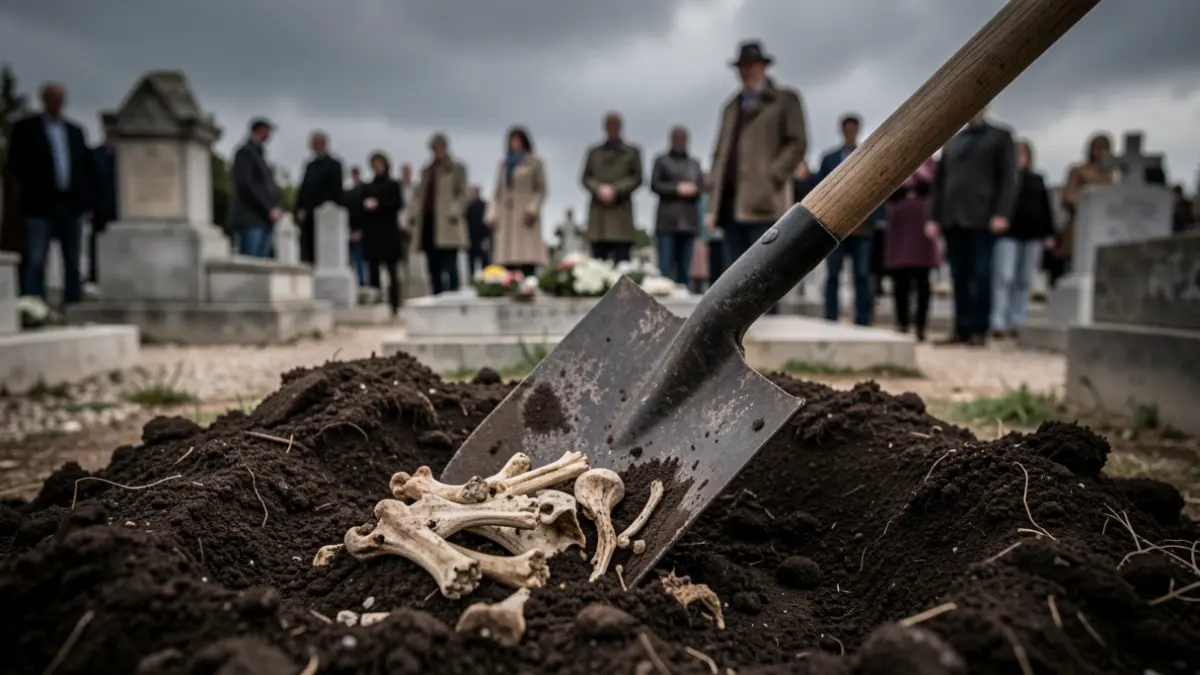
The exhumations correspond to pit 112 and pit 126, known as 'the earth pit' due to the high number of farmers buried there. Following excavations and DNA testing, the remains were handed over today to the surviving family members, many of them second or third generation. María Navarro, president of Fosa 126, highlighted the significance of the event: "Here lie 2,283 people buried, murdered after the war had ended, in peacetime. This is an act of reunion, it is an honor to have you here because you are the remaining part of all of them".
From Pit 112, the remains of Amadeo Lechiguero Ferrando, Francisco Folch Peris, Juan Bautista Boloix Llop, Miguel Miralles Serer, Salvador Oller Piera, and Vicente Salón de las Nieves have been recovered. From Pit 126, those of Eliseo Garrido Benavent, Francisco Garrigós Cremades, Pedro Senabre Hernández, and Salvador Fuertes Llorens. Carmen Gómez, president of Fosa 112, asserted that their stories "can no longer be erased, because today we return their dignity after decades of imposed silence".
The great-granddaughter of Vicente Salón de las Nieves and journalist for Levante-EMV, Mónica Ros, recalled how Francoism "executed them so that misery would finish them off," forcing her family to flee and live without support.
The ceremony took place at the 'Memorial 2238', a space designated for tributes and for interring unidentified victims. However, the interpretation center and the official inauguration have not yet been launched due to the "neglect" of the Generalitat and the Paterna City Council. Navarro emphasized that "a memorial without names is not a memorial at all" and called for the installation of the central sculpture and the mural with the names of the 2,238 victims.
Family members carried the boxes with the victims' remains to the main stage, where each was given a photograph and a 'taulell' (plaque) for their burial. Afterwards, in the laboratory, the remains and found items, such as 'espardenyes' (esparto shoes) or buttons, were examined, thanks to the references that the gravedigger Leoncio Badía had included for identification.
Carmen Gómez pledged to continue fighting "so that no oblivion buries the memory of the 2,000 executed in Paterna." The event concluded with 'Diguem no' by Raimon, recalling that "a people that remembers the pain of the Civil War is capable of rejecting other armed conflicts".