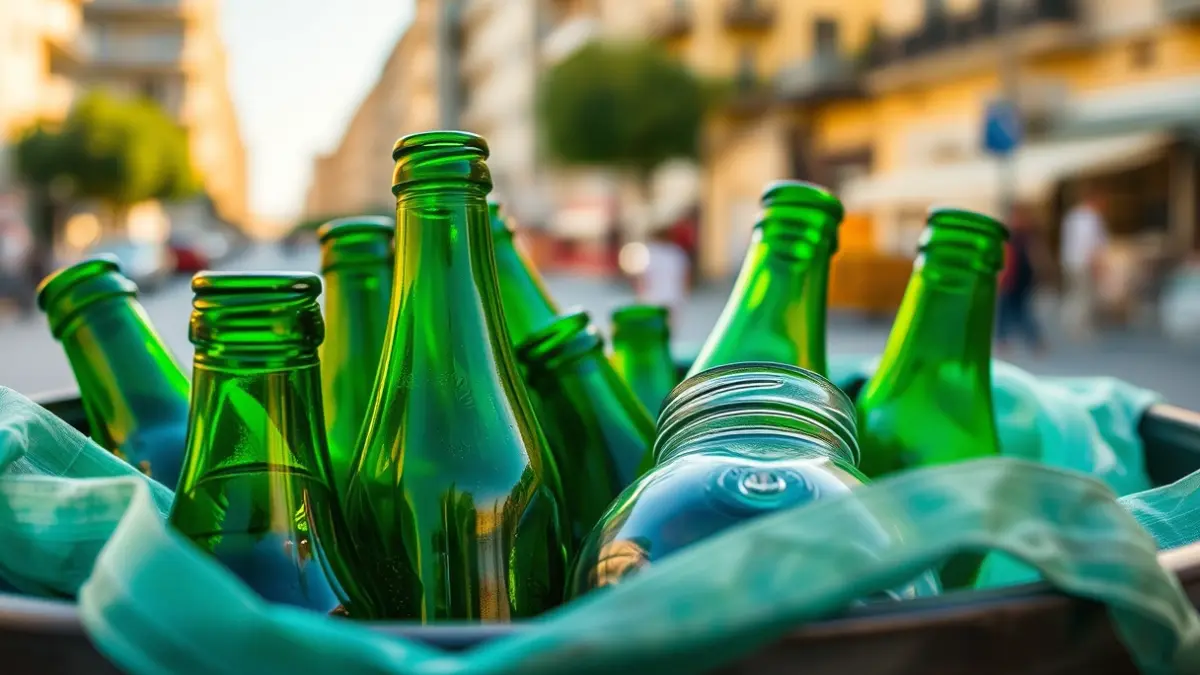
Each citizen in the province deposited 13.9 kilograms of glass, equivalent to 47 containers per person. This data contrasts with the 20 kilograms and 68 containers per inhabitant recorded across Spain. Despite these figures, Ecovidrio, the only specialized collective extended producer responsibility system (SCRAP) for glass, warns that the interpretation of these results must consider several factors that influenced 2025.
“"We are in a trend of declining consumption that impacts the market placement of glass-packaged products."
The entity's manager in the Valencian Community, Manuel Sala, points out that reduced consumption led to fewer glass containers in circulation and, consequently, less recyclable waste generated. Within the province, diverse behaviors were observed. Municipalities such as Xeraco (24.44 kilograms per inhabitant), El Puig (23.05 kilograms), and Oliva (21.30 kilograms) exceeded the provincial and even national average.
The city of València reached 19.11 kilograms per inhabitant, equivalent to 65 containers per person, positioning it as the provincial capital in the Valencian Community with the highest citizen contribution to glass recycling. However, a key factor in understanding the 2025 balance was the impact of the DANA storm on October 29, 2024.
In many of the towns affected by the DANA, glass container collection significantly decreased, with drops of up to 50%. The lack of containers and the impossibility of normal collection for months were the main reasons. Municipalities such as Sedaví, Alfafar, Carcaixent, Paiporta, Catarroja, and Manises, mostly in the area most affected by the flood, recorded the worst results.
Throughout 2025, Ecovidrio worked with local councils to replace and relocate nearly 700 containers in affected municipalities, 400 of them in the so-called 'ground zero'. The operation adapted to each locality's situation, waiting for councils to indicate when certain streets could be accessed again.
Sala emphasizes the importance of shared responsibility among citizens, hospitality businesses, and administrations. Almost 50% of collected glass comes from the hospitality sector, which is why Ecovidrio conducts specific campaigns during mass events like the Fallas. Looking ahead to 2026, the entity is working on a plan to increase container provision and improve selective collection levels, trusting in the normalization of the situation in the localities affected by the DANA.