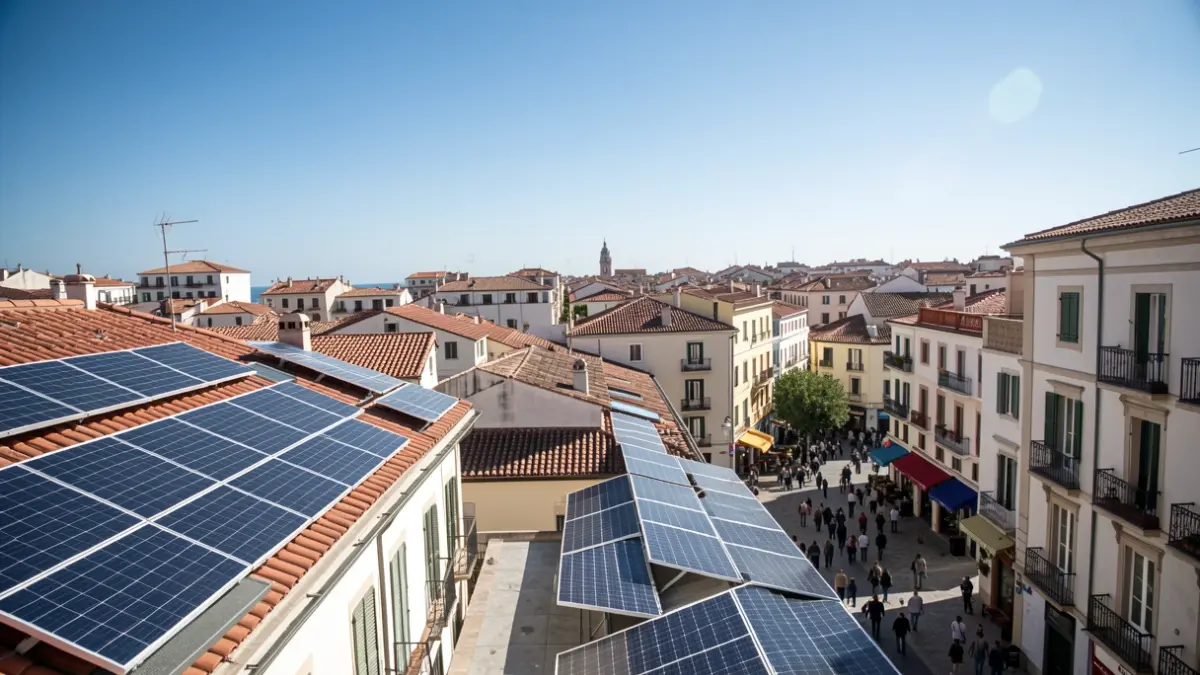
The trend of self-consumption in the Valencian Community has withstood the challenges of the energy sector, with a spectacular 237% increase in the residential and business photovoltaic park. This growth has brought the number of users to 120,612, tripling the figure of 35,820 recorded in 2022.
This boom responds not only to the more than 3,000 annual sunshine hours but also to an ecosystem of incentives. Notable are the 40% deduction in the regional IRPF tax bracket, direct aid from the Generalitat for energy communities, and up to 50% IBI tax bonuses applied by municipalities such as Valencia, Castelló de la Plana, and Alicante.
The Generalitat has processed over 20,000 self-consumption aid applications in three years. However, the proliferation of zero and negative prices in the electricity market has affected surplus compensation, reducing return expectations for new installations. Despite this, the Valencian sector has not stopped.
Red Eléctrica data shows continuous growth, with 70.8 MW connected this year, 319.8 MW in 2025, and a peak of 462.4 MW in 2024. The total accumulated power so far in 2026 amounts to 1,595 MW.
Faced with the reduced attractiveness of simply feeding surplus energy into the grid, the market has shifted towards smart management and storage. The installation of physical batteries now allows storing cheap midday energy for consumption at night, when prices rise. In parallel, 'virtual batteries' offered by energy retailers help offset fixed bill charges and months with less solar radiation.
Currently, there are 111,362 self-consumption installations in the Valencian Community. By province, Castellón leads with 52,466 installations, while Valencia holds the largest power capacity with 753,919.49 kilowatts.
The Minister of Environment, Vicente Martínez Mus, has highlighted the need to streamline administrative procedures given the sector's growth, acknowledging 'significant bottlenecks' while defending the speed in processing subsidy applications.
The growth is supported by European incentives (Next Generation EU, managed by IVACE and the Ministry of Ecological Transition, with over 67 million euros), IRPF deductions (regional and state), and municipal bonuses on IBI and ICIO taxes, which reduce costs and accelerate investment returns.
Sixty-seven percent of the new solar power installed in 2025 corresponded to self-consumption, reaching 1,241.376 MW of accumulated power. Solar installations now represent 46.3% of the Valencian generation park.
Despite the increase in panel capacity, renewable energy generation fell by 12.6% in 2025, placing the share of renewables at 20.2% of the electricity produced. The decline in wind (-14.9%) and hydro (-37.8%) was partially offset by the increase in solar photovoltaic (+14.6%).