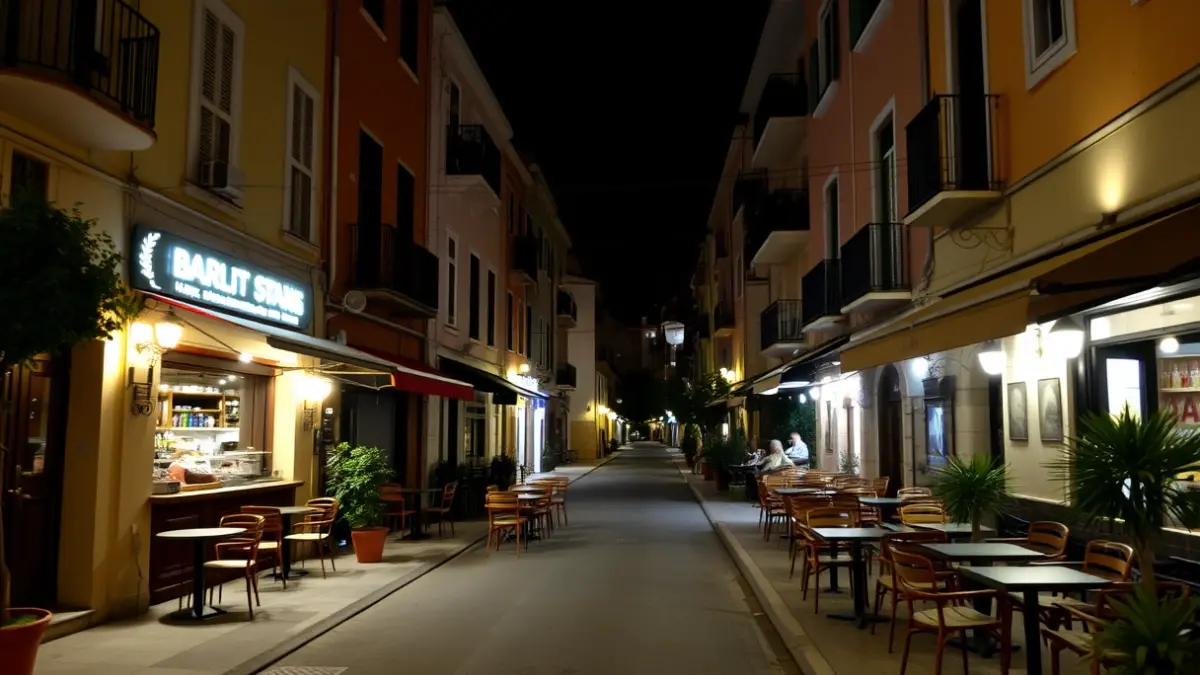
The decision, which received votes in favor from the government team (PP and Vox) and rejection from the opposition (Compromís and PSPV), will come into force immediately after its publication in the BOP. This regulation aims to reduce noise levels in an area of 18 streets, directly affecting the granting of licenses and operating hours.
Among the most notable limitations, the granting of new opening licenses or extensions for existing premises is suspended. Regarding terraces, their expansion in public spaces is prohibited, and closing times are set at 00:30 (1:30 on holidays) during high season, and at midnight on weekdays during winter. Nightclubs must close between 03:30 and 04:30, depending on the day of the week, and the installation of new background music systems is prohibited.
“"The application of the ZAS is an unavoidable judicial mandate that the current executive has had to execute to comply with legality."
Despite the approval, the measure lacks the support of the involved parties. The Associació de Veïns Russafa Descansa considers it insufficient to guarantee the right to rest, as noise levels still exceed legal limits in streets such as Centelles or Literato Azorín. Meanwhile, the business sector, represented by the Asociación de Ocio y Hostelería de los Barrios de Valencia, denounces an "attack" on SMEs and warns of a negative impact on the city's tourism and culture. From PSPV and Compromís, the regulation has been described as "cosmetic" and the lack of dialogue to find root solutions to the coexistence problem has been criticized.
The Councillor for Climate and Acoustic Improvement, Carlos Mundina, has defended that the application of the ZAS is an "unavoidable judicial mandate" that the current executive has had to execute to comply with legality, completing pending sound studies. To try to bring positions closer in the future, the creation of a permanent working group has been announced, in which the administration, residents, and entities from the hospitality sector will participate.