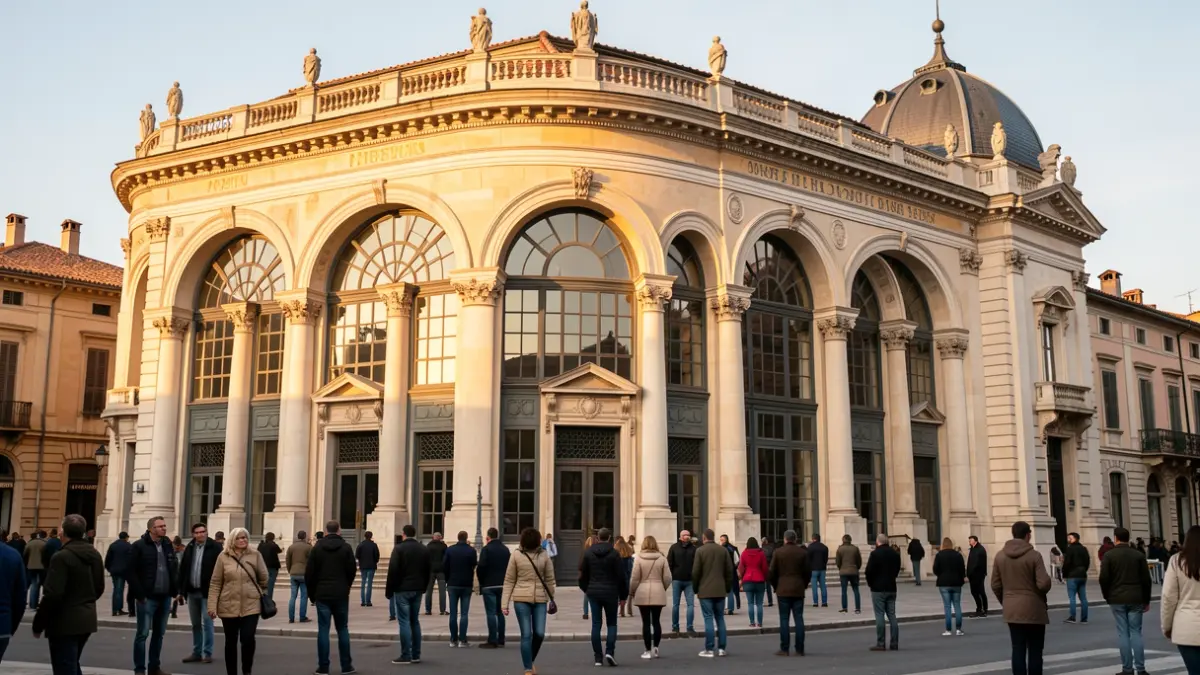
The former Post Office building in Valencia, a unique property acquired by the Valencian Generalitat from the State for 24 million euros in 2021, is in a situation that could affect plans for a major Joaquín Sorolla exhibition. The public tender for the adaptation of the building, described as grand, invasive, and 'kitsch', has been declared void, casting doubt on the exhibition's feasibility.
The People's Party, with Juan Fran Pérez Llorca and mayor María José Catalá, had hoped to inaugurate the exhibition before the upcoming regional elections. The idea was to rent around 200 works from the Hispanic Society of New York, the largest holder of Sorolla's art. A similar exhibition in 2009 at Fundación Bancaja, led by José Luis Olivas, was a major success, including 14 pieces from the same North American society.
Sorolla has become a political instrument for mass culture, with works reflecting a rural and bucolic society. As a late Impressionist painter, his work does not always highlight his connection to European avant-gardes, despite its intrinsic value. His art resonates with identity-based regionalism, appealing to conservative sectors and the masses for its pleasant aesthetics and search for 'lost paradises'.
In Alicante, 'Sorollism' is also anticipated with the inauguration of a temporary exhibition space at Las Cigarreras. Candidate Luis Barcala has confirmed a Sorolla exhibition, alongside works by Chagall, Balenciaga, and Baroque masters, with outsourced management. This initiative is part of a business model for touring art, similar to medieval markets, aiming for popular success.