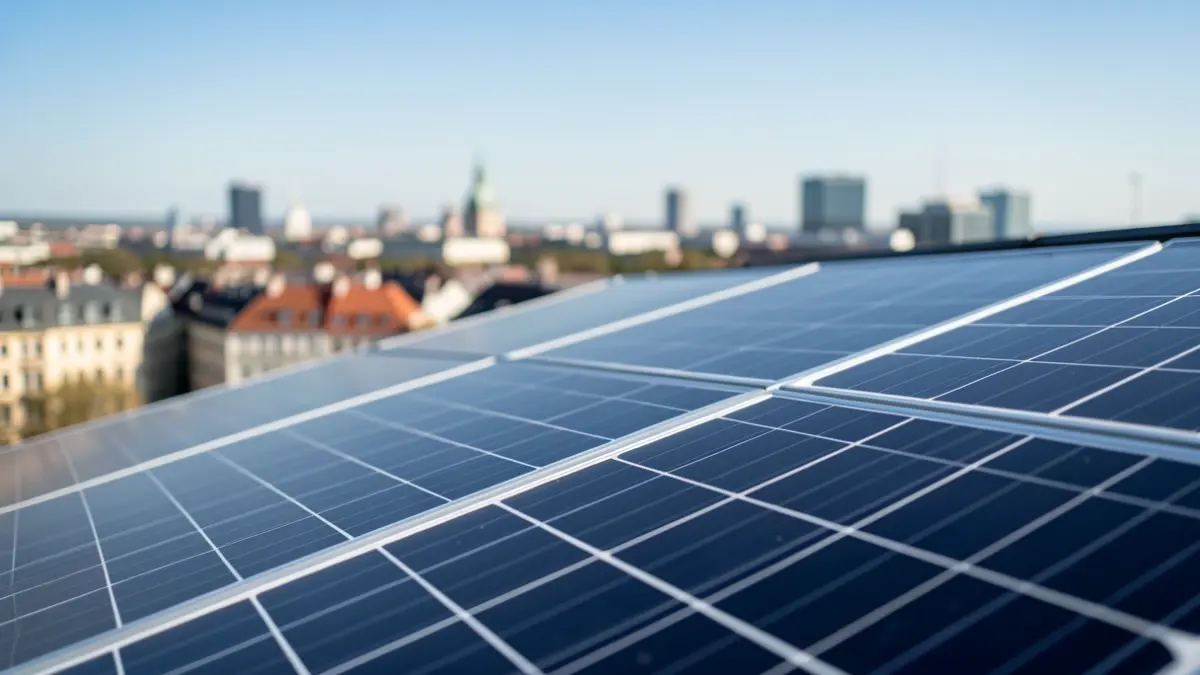
A project awarded by the ENIA-UPV Chair has created a system capable of analyzing the photovoltaic solar potential of a municipality on a large scale. The methodology combines high-definition orthophotos, LIDAR 3D point cloud data, and public cadastral information, along with energy generation data from the PVGIS web tool.
The research integrates various computer vision and geospatial processing software. The result is a tool that automatically identifies the most efficient urban rooftops for renewable energy production. It also calculates the optimal panel arrangement based on solar radiation, shadows, inclination, and orientation to maximize annual output.
According to Vicent Botti, director of the ENIA-UPV Chair, the research demonstrates that «artificial intelligence is consolidating as the optimal technology to respond to the challenges of sustainable cities» in the face of complex climate change issues.
The study addresses the issue of insufficient suitable surfaces for urban solar energy. In an application to the Valencian neighborhood of Illa Perduda, an annual generation capacity of 4.45 GWh was estimated. The research concludes that the ideal panel inclination is around 35 degrees and that adapting them to the building's architectural layout can be more efficient than a purely south-facing orientation.