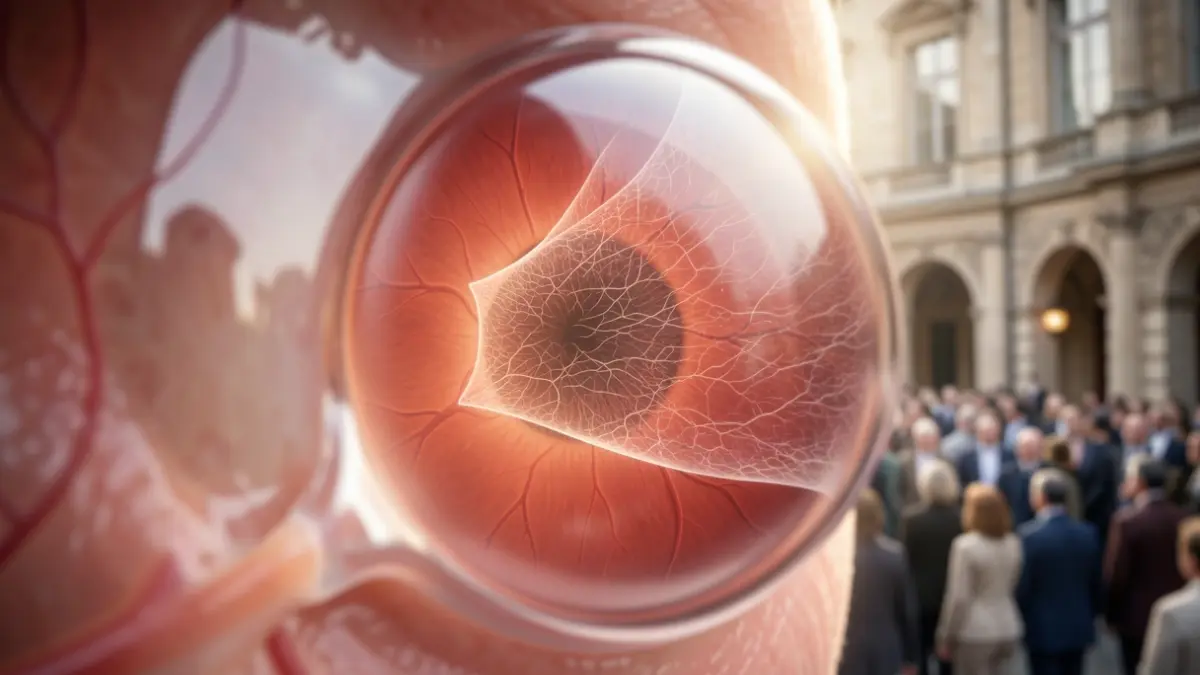
The epiretinal membrane (ERM), also known as macular pucker, forms when a layer of fibrous and cellular tissue grows on the surface of the retina, specifically on the innermost layer called the epiretina. This membrane can lead to vision problems and image distortion.
According to Dr. Julián Zarco, an ophthalmologist at Vithas Valencia 9 de Octubre, Vithas Valencia Consuelo, and Vithas Aguas Vivas hospitals, part of the Vithas Ophthalmological Institute (INOV), the formation of this thin layer on the macula affects detailed vision. When the membrane contracts, it can cause blurred vision or visual distortion (metamorphopsia). The most frequent causes are age-related, being more common in individuals over 50, with a prevalence rising to 20% in those over 75.
Other causes include eye trauma, such as intraocular wounds, and diseases like diabetic retinopathy, macular degeneration, or uveitis. Cataract surgery or other retinal interventions using argon laser can also increase the risk of developing this condition.
Diagnosis is made through a detailed ophthalmological examination, including a fundus examination with a dilated pupil, optical coherence tomography (OCT) to measure the membrane's thickness, and the Amsler grid test to assess central vision.
Treatment depends on the severity of symptoms. In mild cases, symptoms are managed, while in more severe cases, vitrectomy surgery with membrane peeling is performed to restore vision. The prognosis varies, and although surgery can improve vision, it does not always completely eliminate the ERM. It is crucial to follow medical advice and attend follow-up appointments.
Dr. Zarco concludes that "it is essential to consult an ophthalmologist for a personalized diagnosis and treatment. Early detection is key."