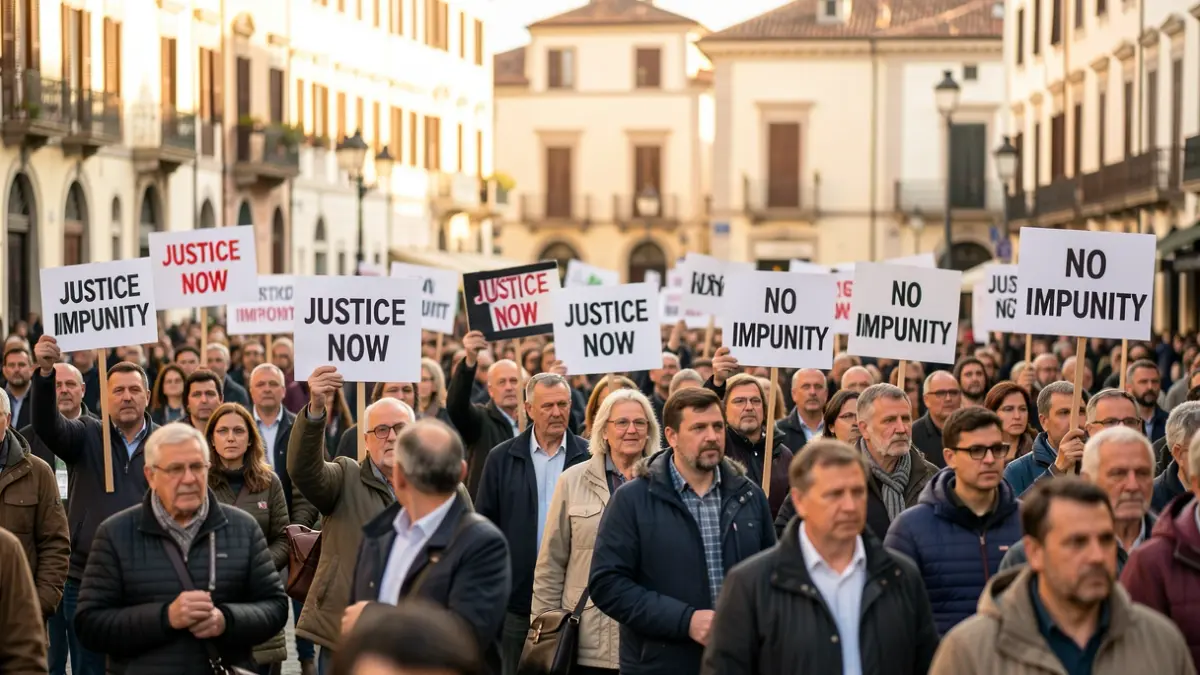

The magistrate has rejected the proceedings requested by one of the private accusers, who sought criminal responsibility for the mayors of the towns affected by the floods on October 29, 2024, a day that ended with 230 deaths. This stance has already been endorsed by the Provincial Court of Valencia.
Conversely, the judge recalls that the competent councilor for civil protection, Salomé Pradas, along with the regional secretary for Emergencies, Emilio Argüeso, were directing the Special Plan for Flood Risk. The ruling emphasizes the "radical difference" in the plan's management competence compared to the local administration, referring to the "handling of information" and the Generalitat's "multiple tools" from the Emergency Coordination Center.
The resolution states that those in command of the regional emergency "had an extensive flow of information," including data from Aemet, the Valencian Association of Meteorology (Avamet), media outlets, and the Júcar Hydrographic Confederation, as well as calls to 112. They could also have received assistance from more qualified emergency personnel at the Cecopi.
The judge considers "especially significant" the telephone information that the mayor of Torrent, Amparo Folgado, conveyed to the president of the Provincial Council of Valencia, Vicente Mompó, regarding the overflow of the Horteta stream. Mompó, who participated in the Cecopi and maintained communication with councilor Pradas, was summoned to testify again after this warning.
The ruling highlights a second call from Folgado at 7:10 PM directly to the regional secretary for Emergencies, Emilio Argüeso. The judge finds the thesis that the Cecopi was unaware of the Poyo stream's condition "difficult to sustain," as well as the "lack of instructions" to the Emergency Center, evidenced by the response of a Generalitat technician to a call from the Utiel City Council: "We never coordinate on anything."