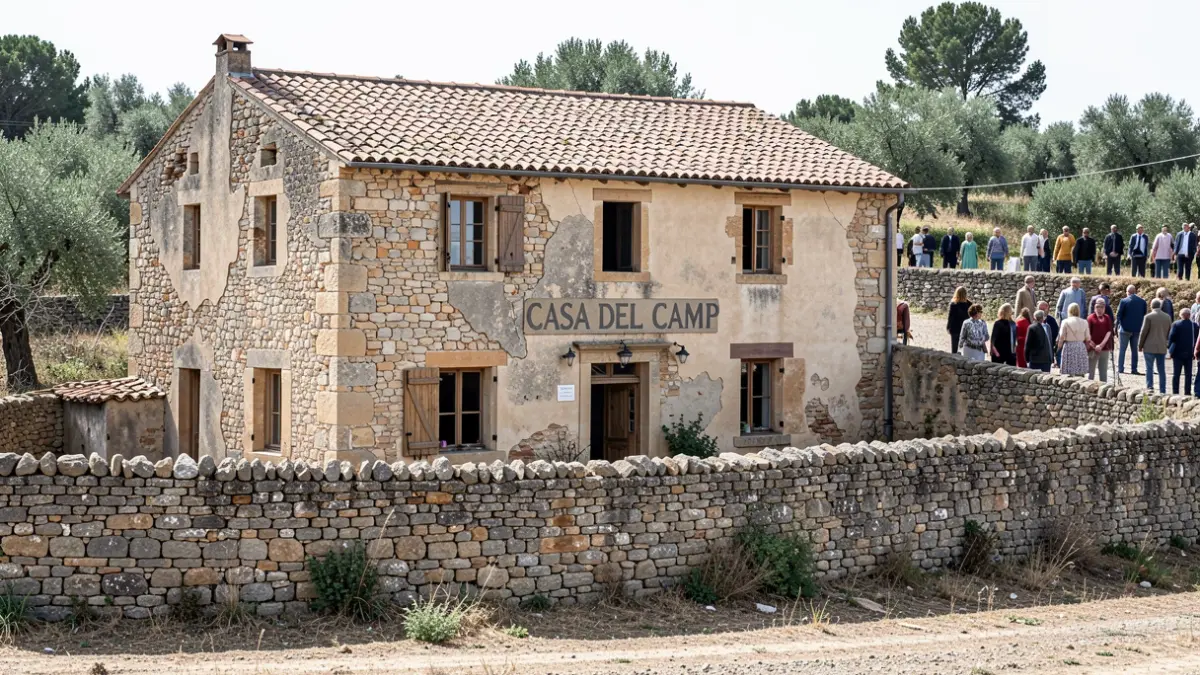
The Casa del Camp in Llíria, described as one of the most significant architectural complexes in the Camp de Túria region and a testament to the evolution of Valencian agricultural exploitation from the Middle Ages to the 19th century, has been included in the Hispania Nostra Red List. With this new addition, the Valencian Community now has 112 assets cataloged on this list. By province, Valencia accounts for 80 assets, followed by Alicante with 23, and Castellón with nine.
This inclusion is part of the latest update to the Red List, which highlights the need to promote measures to ensure the protection and conservation of Spanish cultural heritage. The Casa del Camp, built in the 15th century by order of the Carthusian Monastery of Portaceli, remained under its ownership until the Mendizábal disentailment. It later passed to the Ybáñez family, who continued the agricultural and livestock exploitation focused on Mediterranean dryland crops.
Over the centuries, the property was expanded to accommodate both agricultural activity and residential use. During the Spanish Civil War, the complex even housed a hospital. The property, also known as Masía del Camp, covers 12,480 square meters and consists of buildings surrounded by a masonry walled enclosure. The main building, rectangular in plan, retains two original turrets.
Although its structure and much of its original appearance are preserved, including the tower and walled enclosure, the lack of comprehensive maintenance has led to progressive deterioration. According to Hispania Nostra, some roofs and interior spaces have collapsed, and several walls and stairs are at risk of collapse. The tower also shows damage and has begun to suffer detachments. The property, owned by the Llíria City Council, is cataloged as a Site of Cultural Interest.
With this update, the Hispania Nostra Red List now includes 1,636 heritage assets at risk across Spain. The association emphasizes the precarious situation of Spain's cultural and natural heritage, exposed to neglect and deterioration. The initiative aims to raise awareness about the need for preservation and foster collaboration for its protection.