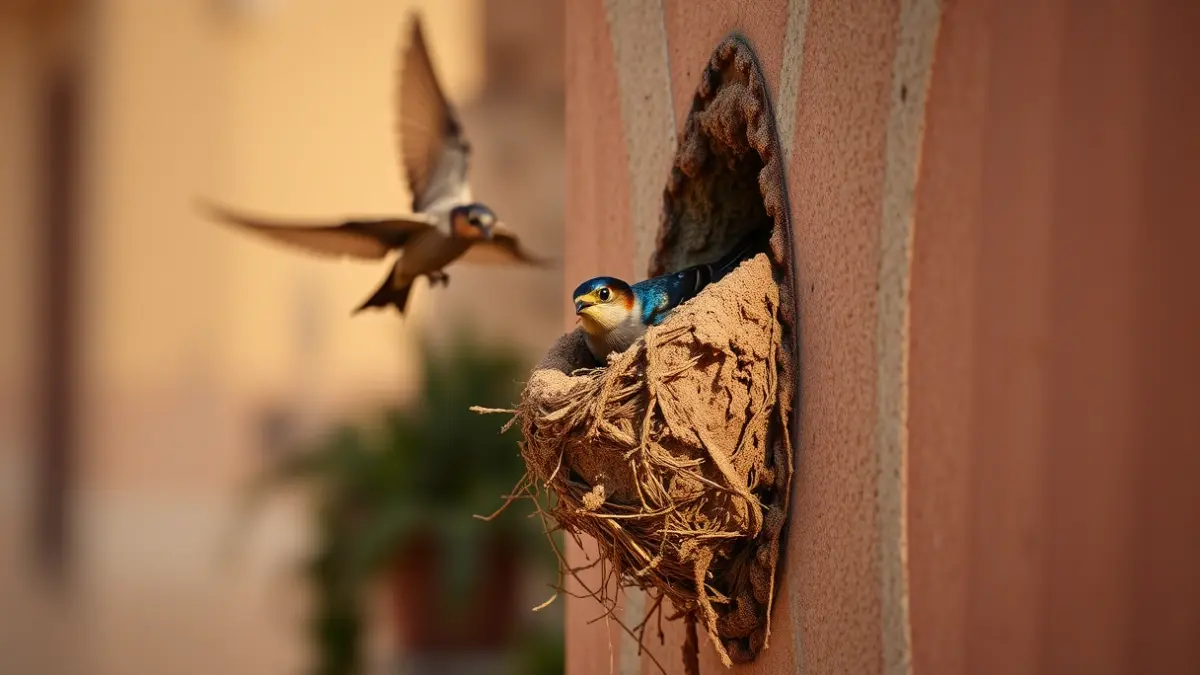
During the peak nesting and breeding season, swallows, which are protected and endangered birds, return to the same nest each year. Their removal or destruction can lead to very high economic penalties, potentially reaching 200,000 euros.
In the urban core of València, such as on Ausiàs March Avenue, colonies of swallows have been nesting in the same building for over twenty years. Despite the inconveniences they may cause, such as dirt, they play a key role in controlling pests like mosquitoes.
“"It is a philopatric species, meaning that year after year it returns to the same nest. If we are lucky enough to have this natural insecticide, we will have it not for one year, but for many."
SEO/BirdLife reminds us that the swallow is a species faithful to its breeding site. The delegate in the Valencian Community has explained that removing a nest constitutes an illegality. For easier coexistence, it is recommended to place a tray below the nest and remove it once the season is over.
Swallows will remain here until July, when they will return to Africa. Throughout this period, and even after they have left, the nests remain protected. In the case of building renovations, it is necessary to inform the Conselleria to determine how and when nests can be removed. A new pressure factor for these birds is the presence of parakeets, an invasive species that also acts as a predator.