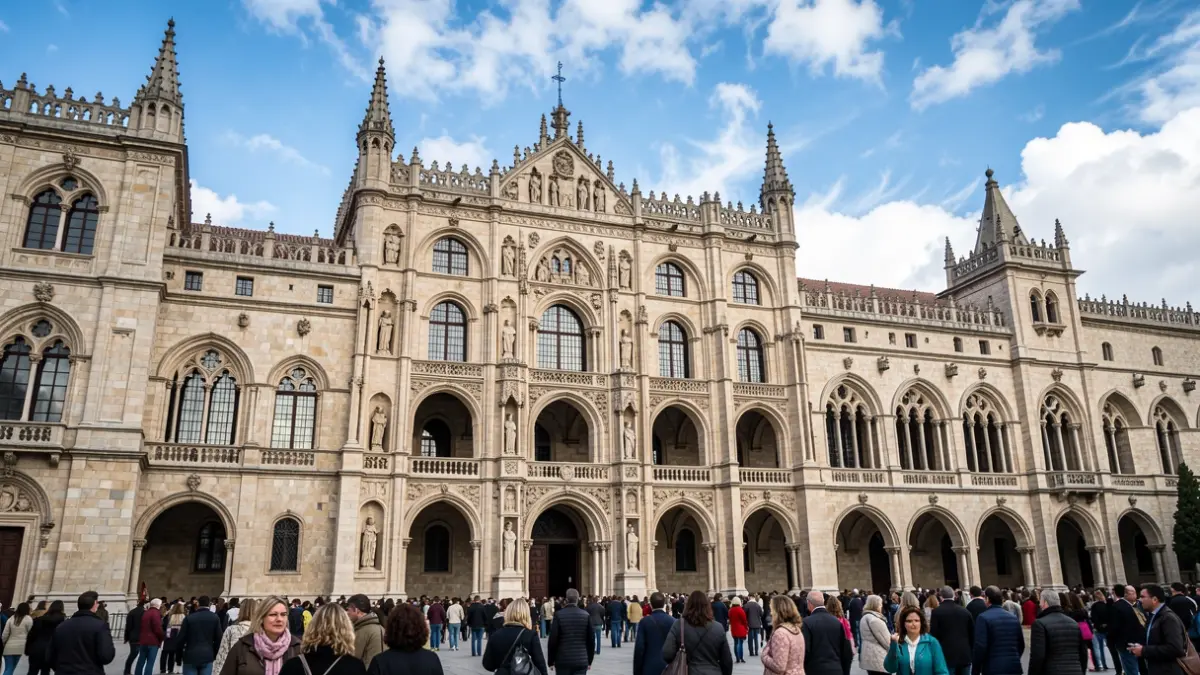
The Royal Monastery of Santa Maria de Valldigna will be the venue this Saturday, May 23rd, at 7:00 PM, for a new session of the Medieval History Conference Cycle. The event, promoted by the Mancomunitat de la Valldigna and the Grup Harca, will feature historian Amadeo Serra Desfilis, Professor of Art History at the University of Valencia. His presentation, titled “Court and King's Palace: The Royal Palace of Valencia in the Medieval Era,” will offer a historical and symbolic journey through the lost Palau del Real.
This palace, one of the grand constructions of medieval and modern Valencia, was demolished in 1810 during the Peninsular War. For centuries, it was a central space for political power, courtly representation, and Valencian ceremonial life. The Palau del Real served as an occasional residence for the monarchs of the Crown of Aragon when they visited the city and as the usual dwelling for the viceroys of the Kingdom of Valencia. Its role extended beyond residential function, becoming a political and visual reference of royal power before the city.
Based on the research by Amadeo Serra, the conference will delve into the Andalusian origins of the complex, located outside the city walls, across the Turia river, and its progressive transformation into a royal residence after the conquest by James I. Serra Desfilis has highlighted that the Royal Palace was not merely a residential structure but also “the architectural image of the Crown” to the city of Valencia, a key theme of the talk that will illuminate how architecture, ceremony, and politics intertwined in one of the great lost spaces of Valencian history.
The talk will also address the palace's representative function during the reigns of Peter IV of Aragon and Alfonso V of Aragon, periods when the complex underwent significant expansions and renovations. Its grand halls, chapels, gardens, and reception areas were used to stage monarchical majesty and consolidate the relationship between the Crown and the city.
Among the most unique aspects of the conference is the coexistence of Islamic and Christian architectural traditions, as well as the role of Valencian master builders in the constructive innovation of the 15th century. Serra Desfilis has analyzed the circulation of technical knowledge, the mobility of architects, and the sophistication of late medieval Valencian architecture. Amadeo Serra Desfilis is considered an authority on the history of Valencian medieval architecture, and his works on the Palau del Real and the Casa de la Ciutat are fundamental references.
The conference is part of the Royal Monastery of Santa Maria de Valldigna's commitment to the rigorous dissemination of Valencian heritage and history. The cycle, dedicated to Valencian and Mediterranean medieval history, brings together specialists to present fundamental episodes and spaces from the past to the public. The session will offer an opportunity to rediscover the memory of a lost building that shaped the city's monumental image.