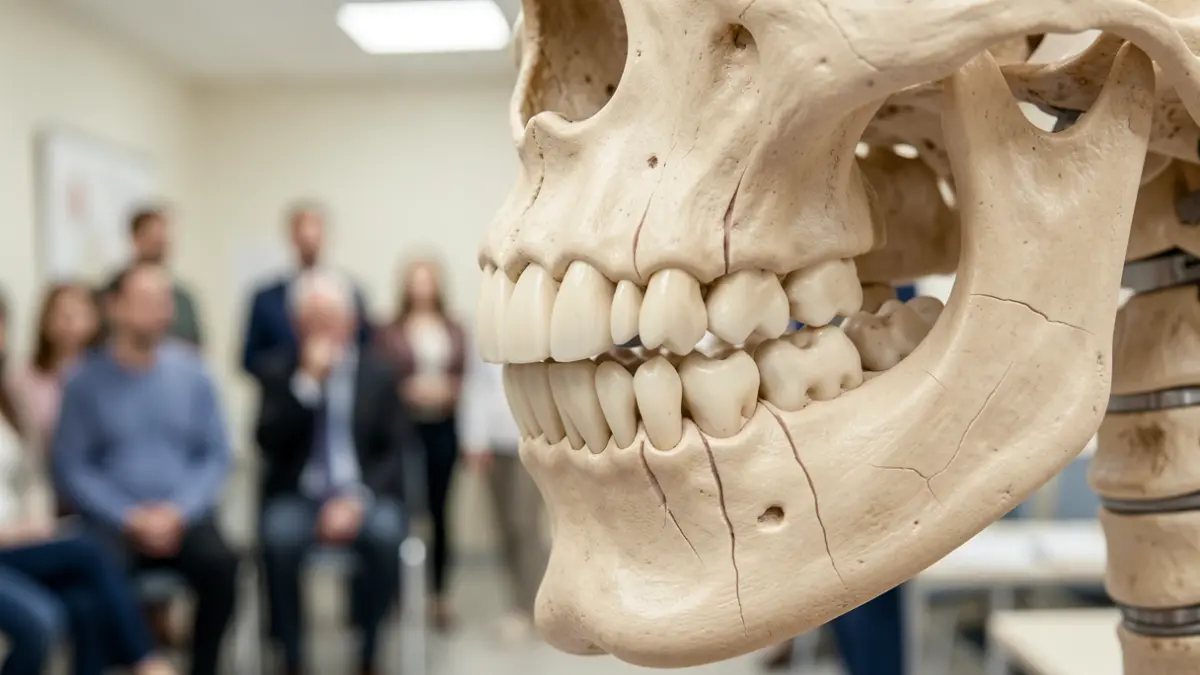
Bruxism, a condition characterized by the involuntary clenching or grinding of teeth, continues to grow among the young and adult population and has become an increasingly common consultation in healthcare centers in the Valencian Community.
The rise in stress and anxiety is behind many cases, leading more patients to seek consultation for jaw pain, tension headaches, neck tension, clicking, or functional jaw locking. According to data from the General Council of Dentists of Spain, bruxism has increased from affecting 6% of the population in 2019 to 23% currently, ranking it among the top three most frequent oral health problems.
Alberto Sáez, a physiotherapist at Vithas València 9 d'Octubre and Vithas Castellón, warns that this surge, "closely linked to the increase in stress and anxiety in society," has also led to a rise in temporomandibular joint (TMJ) disorders.
Untreated bruxism can cause dental wear, fractures, headaches, neck pain, temporomandibular disorders, and functional limitation of the jaw. Therefore, the specialist emphasizes the importance of early detection and comprehensive management, including TMJ physiotherapy, to prevent symptoms from becoming chronic.
The temporomandibular joint, one of the most complex structures in the human body, can manifest with jaw or facial pain, difficulty opening the mouth, neck tension, tension headaches, clicking, or a feeling of locking.
Specialized TMJ physiotherapy addresses the joint, as well as the cervical and craniomandibular musculature, to reduce pain, improve jaw mobility, and correct functional alterations.
The physiotherapy treatment combines manual therapy, motor control exercises, postural guidance, and patient education. Results are particularly positive when coordinated with dentistry and psychology, given the significant role of stress.
Key benefits include the reduction of jaw and facial pain through intraoral and extraoral manual therapy techniques, as well as decreased tension in the masseter, temporal, and associated cervical muscles.
Physiotherapy also helps prevent dental damage and the progression of bruxism through motor control exercises and guidance for patients to better identify moments of jaw tension.
The approach is understood as part of a multidisciplinary strategy that, when necessary, combines physiotherapy with dentistry and psychological support for a more complete and effective treatment.