The majority of Valencians, 86.9%, oppose the possibility of smoking on bar and restaurant terraces. Furthermore, 73.6% believe that new consumption devices, such as vapes or heated tobacco, increase the likelihood of smoking conventional tobacco. These figures emerge from the '2026 Smoke-Free Week Survey' of the Valencian Community, conducted during March and April.
The campaign, promoted under the slogan 'Inhale Life, Take a Breath,' highlights "broad social support for tobacco control measures and growing concern about the impact of new nicotine products on the younger population." In this regard, 88.6% of respondents believe there is a misconception that these new products "are not harmful," particularly among young people.
Public support for prevention measures is "majority": 78.9% support expanding smoke-free spaces, and 77.2% call for more awareness campaigns. The Valencian Community thus shows "a clear social trend towards the denormalization of tobacco consumption and increasing concern about the rise of new nicotine devices."
The survey, conducted among 753 people in the Valencian Community, had a majority of female participants (78%), with the most represented age group being 50-64 years old (39.3%). It is part of a national campaign by the Spanish Society of Family and Community Medicine (SEMFYC), which collected 9,375 surveys nationwide.
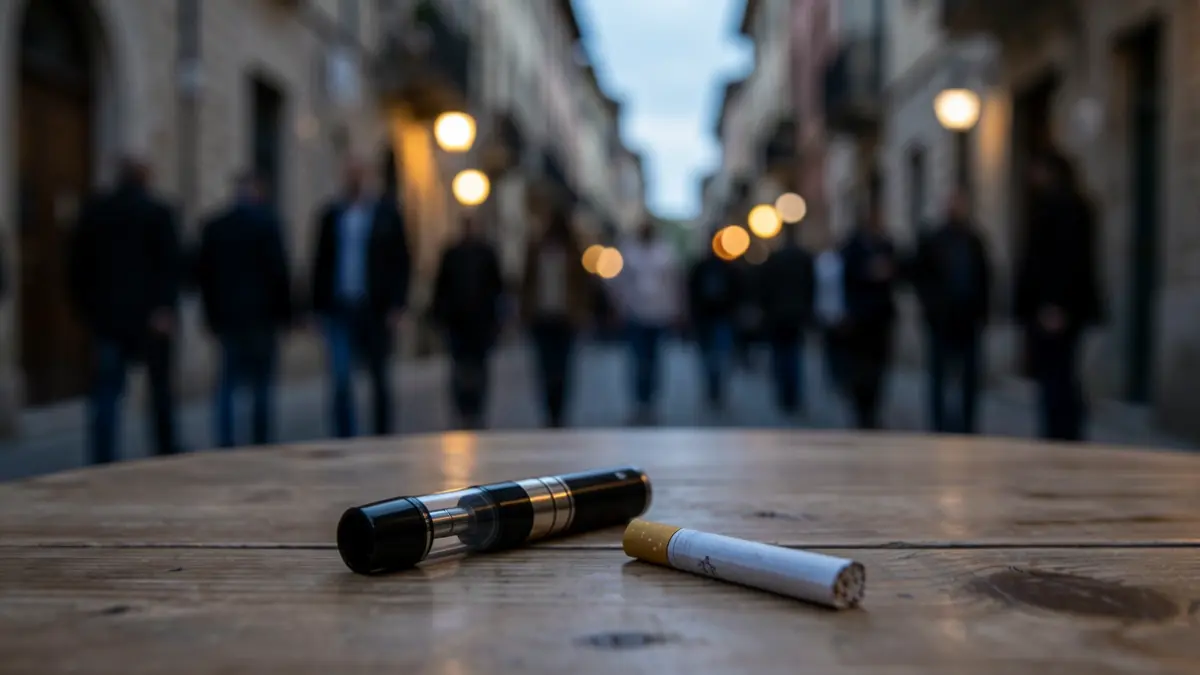
The results warn about the increasing presence of new consumption formats, especially among young people. Electronic cigarettes and heated tobacco devices are associated with younger ages and dual consumption. Among young smokers aged 19 to 24, vape usage reaches 50%. One of the "most striking" points of the study is "the broad social consensus regarding the need to strengthen protection measures against smoke."
Fashion, attractive flavors, and device design are identified as key factors for attracting users to these products, particularly among adolescents and young adults. Over 68% consider these products are used due to trends, and nearly 60% point to flavorings as a main attraction. Regarding attempts to quit smoking, over 70% of surveyed smokers claim to have tried, but only 20% have used funded pharmacological treatment, highlighting "the need to strengthen access to and dissemination of health resources for smoking cessation."
Joan Antoni Ribera Osca, coordinator of the Smoking Cessation Working Group at the Valencian Society of Family Medicine (SOVAMFYC), emphasized that the results "reinforce the idea that Valencian society maintains a high sensitivity towards smoking and demands new protection measures, especially in the face of the expansion of emerging nicotine products among the young population."