
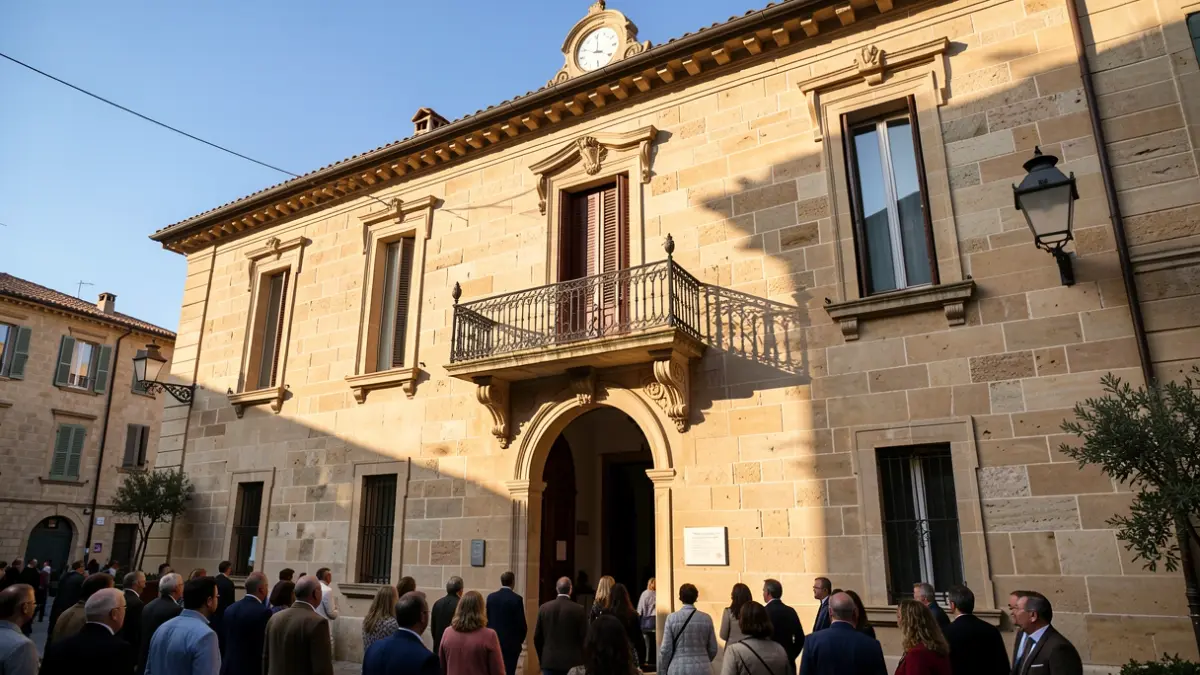
The Universitat Popular de València sees its fifth director-manager this legislative term. The Local Government Board approved on Friday the appointment of Dolores Romero as the new director of the Universitat Popular, following the resignation last May of the previous manager, Alfonso Benaches, who had held the position for only about five months. With this new addition, the municipal autonomous body changes its technical direction once again amidst a continuous reshuffling of names since 2023.
After the municipal elections and the political shift in the València City Council, the new coalition government dismissed the official who came from the previous administration. Upon Vox assuming responsibility for the area, Ricardo Belda, a Vox councilor in the Alzira City Council, was appointed to lead the institution.
However, in April 2025, following a government reshuffling due to the crisis involving Juanma Badenas (Vox), the mayor María José Catalá removed the Universitat Popular's responsibilities from Vox, transferring them to the PP.
This move forced Belda's departure; he was relocated to the Municipal Agrarian Council, an organization that remained under Vox's control. At that time, the PP took charge of the educational entity and appointed María del Carmen Ortí, the current Minister of Education, Culture, and Universities of the Generalitat Valenciana, as director. Her tenure was brief: in December of that same year, 2025, Ortí left the council after being appointed minister by President Juanfran Pérez Llorca.
To fill her vacancy mid-term, the City Council appointed Alfonso Benaches on December 12, 2025. Benaches, a biologist and education inspector for the Generalitat, like Ortí, resigned just five months later and has now been replaced by Dolores Romero.
Following this latest appointment, Compromís councilor Eva Coscollà stated that it reflects the "alarming instability and lack of transparency" of the municipal government. Coscollà criticized the local executive for "deliberately hiding" Benaches' resignation at the Rector Council meeting on May 20, nine days after it occurred. Compromís warns that this "institutional lack of control" is directly impacting the service's operations and the neighborhoods.
Among the most serious consequences, the councilor points to the paralysis of the enrollment process for the 26/27 academic year—the start date of which is still unknown despite classes scheduled to begin in September—the shortage of teachers due to unfilled vacancies throughout the year, and the failure to hire necessary staff for new planned training activities.
“They are turning the Universitat Popular into a political chessboard,” lamented Coscollà, insisting that “due to their incompetence, the next academic year is uncertain, classrooms are without teachers, and the promised new activities are mere smoke.” The opposition party has demanded immediate explanations, greater clarity, and the stability deserved by "both the workers and the users of the service".