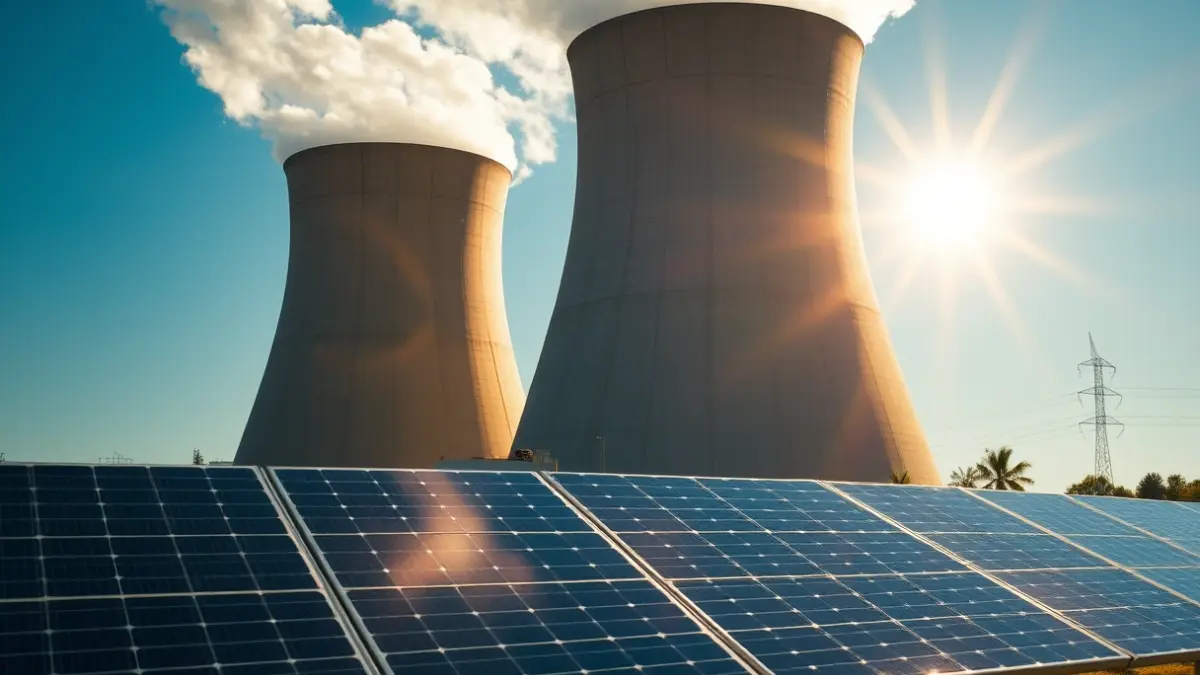
The central point of discussion is whether the nuclear closure schedule agreed upon in 2019 between the Government and plant owners should be modified due to recent geopolitical and energy changes. It is crucial to approach this debate from a technical, economic, and strategic perspective, avoiding sectarian positions.
Spain possesses one of the world's largest solar resources, with an exceptional combination of radiation, temperature, and available surface area. The combination of renewables and storage is the cheapest, fastest, and most flexible form of electricity generation. Technological advancements have allowed modern renewables to provide grid services and dynamic control with rapid response times.
Today we know that if renewables had been allowed to perform voltage control, the blackout probably would not have happened.
The energy context of 2019 and the present are very different. Spain already has over 100 GW of installed renewables and tens of GWh of storage under development. Various studies conclude that the system can absorb the planned closure of Almaraz in 2027 without compromising supply security or structurally increasing gas dependence.
In fact, keeping more nuclear energy active than planned could compromise competitive advantage. At certain times, renewable generation curtailments and technical restrictions are already being recorded due to a lack of sufficient storage and flexibility. This means that part of the renewable energy, which required significant effort and investment, is being wasted.
In global energy terms, Almaraz could have been shut down all of 2025 and the system would not have noticed.
Defending a system based primarily on nuclear generation against hybrid renewables with storage is like defending the gramophone against streaming. Nuclear is a rigid model with dangerous waste, while hybrid renewables are part of a new energy architecture based on flexibility, storage, and digitalization, necessary for a modern economy.
The current debate on the energy model is legitimate, but data indicates that continuing with the agreed schedule should not have a negative impact on the Spanish electricity system. On the contrary, reversing it could send the wrong signal at a time when Spain is attracting industrial investment thanks to the competitiveness of its renewable energy.
In the Valencian Community, the agreed closure of Cofrentes is scheduled for 2030. It is necessary to be vigilant in case, when the time comes, that calendar needs to be reviewed, but advancing this debate three years in advance, given the speed of events and technological evolution, is premature.