Bronze, an alloy of copper and tin, exemplifies how the sum of humble elements can lead to a new substance with its own qualities, such as hardness and sonority. This transformation not only marks the beginning of a new historical era but also suggests that things are not always faithful to their origin.
This idea extends to human relationships, where the union of individuals, even those who might individually be considered 'ordinary' or 'mediocre,' can generate unexpected intensity or a 'third being.' Similarly, some conversations function as alloys, transforming participants into something unrecognizable.
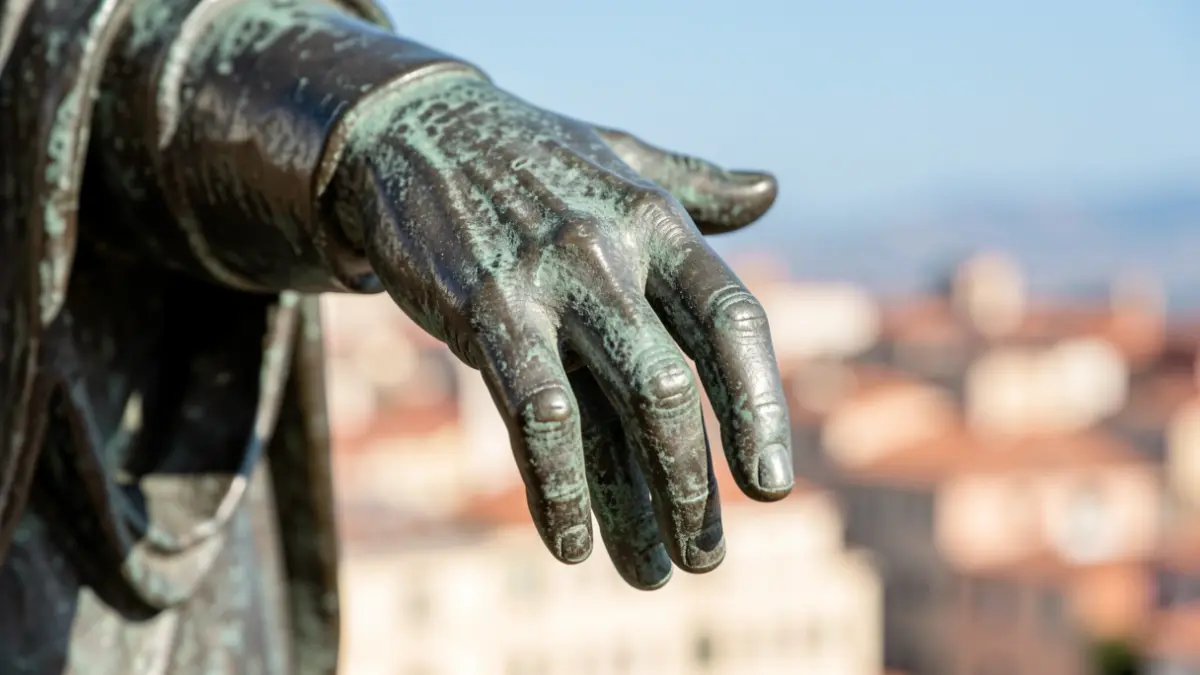
The term 'bronze' carries an epic resonance, associated with statues, bells, and medals, contrasting with the prosaic nature of the words 'copper' and 'tin'. This difference evokes the surprise we feel when children don't seem to resemble their visible parents, as if inheriting genes from an unknown ancestor.
The chemical miracle of creating new substances, like water from hydrogen and oxygen, demonstrates that the universe allows for qualitative leaps. Chemistry, in this sense, presents itself as a form of 'fantastic novel' that we name to reassure ourselves. Bronze, and its sculptural representations, remind us that apparent identities often hide more complex realities, and that deep down, we are all alloys.