This initiative positions the Valencian park as a strategic ally in saving one of the planet's most endangered birds. This collaboration is crucial to reversing the historical loss of this species, primarily caused by human activity.
To launch this recovery program, coordinated by the European Association of Zoos and Aquaria (EAZA), Bioparc has received four pairs of northern bald ibises. These specimens come from the zoos of Vienna and Zurich and can now be observed by the public in the Kopje area, a space that recreates granite formations and simulates their natural habitat.
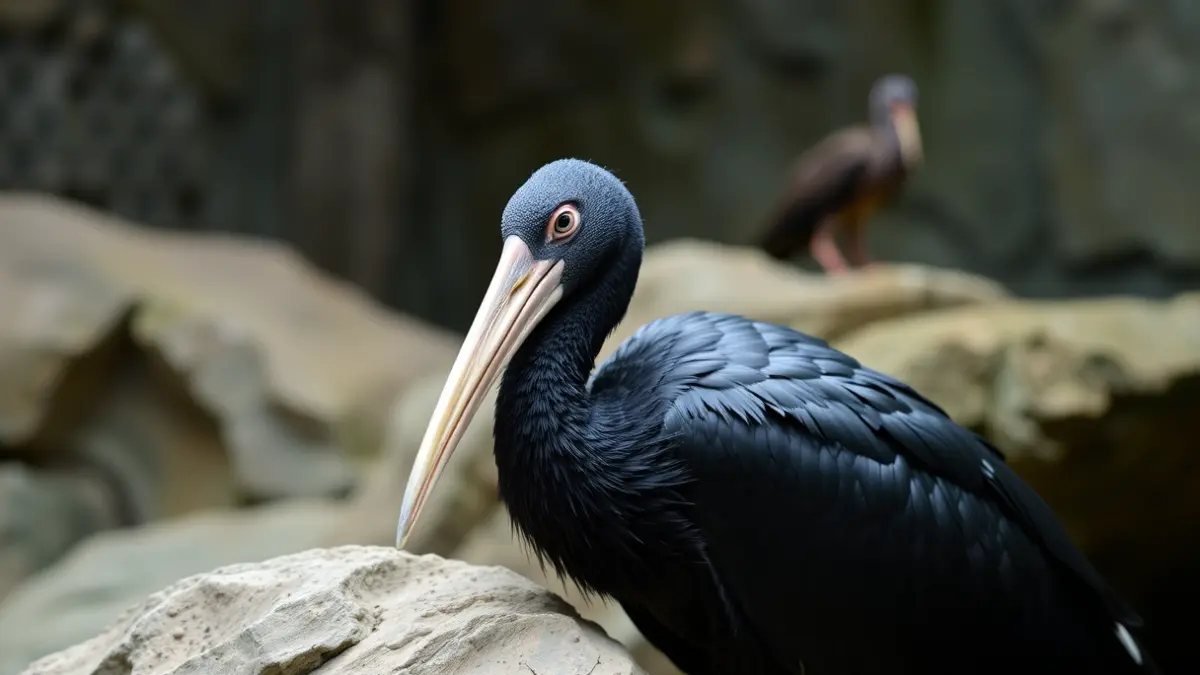
The northern bald ibis is easily recognizable by its exotic appearance, featuring black plumage with metallic reflections, a bare head, and a long, curved beak. Its presence in València offers a unique opportunity for visitors, as it is one of the world's rarest birds, and its observation in the wild has been impossible on the European continent for the past 400 years.
Bioparc's participation in this international conservation network is based on several key pillars: fostering controlled reproduction to strengthen the species' genetic diversity, conducting scientific research and raising public awareness about the importance of biodiversity, and cooperating with other European centers to reverse the loss of this bird. Through this action, Bioparc València reinforces its position as a leader in animal protection.