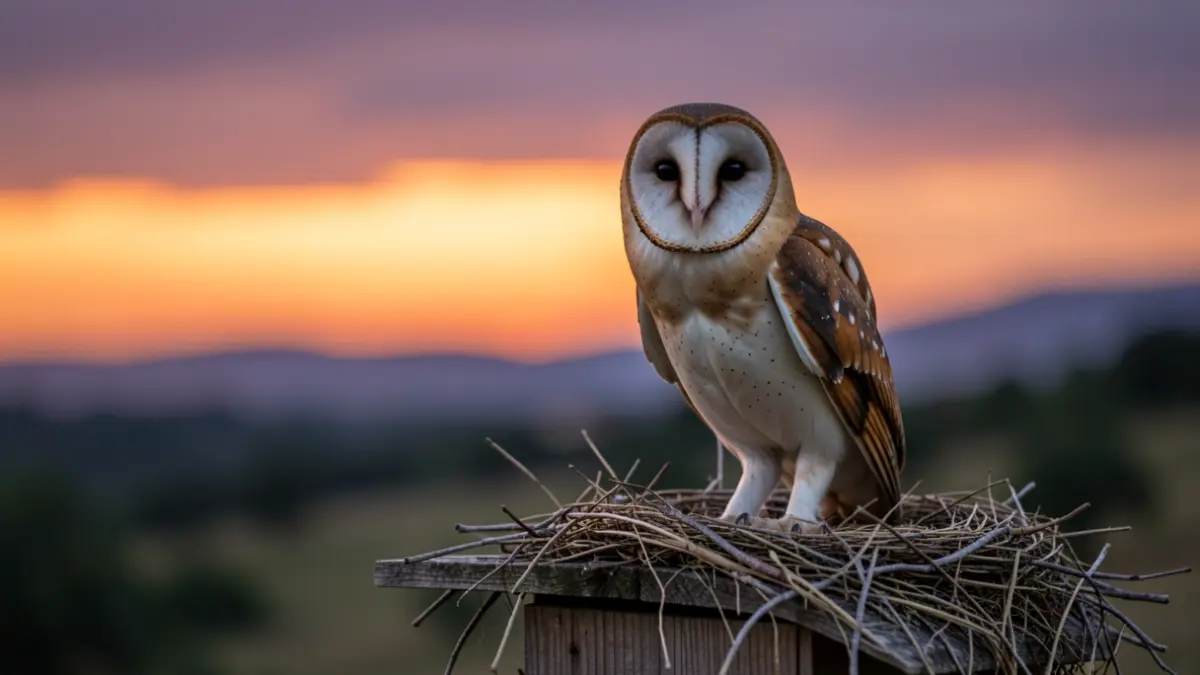
The Third Vice Presidency and Ministry of Environment, Infrastructure, Territory, and Recovery, along with the Bioparc Foundation, have launched the final stage of the barn owl (Tyto alba) reintroduction program in the peri-urban area of Valencia. The goal is to aid the recovery of this species, which can capture up to 1,000 rodents annually.
Chicks born within the controlled breeding program are now in the 'hacking' phase. This technique involves keeping the young owls in specially adapted nest boxes, where they continue their development without direct human contact, preparing them for life in the wild and the development of necessary behaviors.
The project began last autumn with the setup of facilities for five breeding pairs of barn owls. As a result of this work, the first chicks were born in March. They will now remain in the nest boxes until they achieve sufficient autonomy to feed themselves before their definitive reintroduction.
The facilities are equipped with a video surveillance system that allows continuous monitoring of the birds without interfering with their behavior, a key element for observing their natural adaptation.
The barn owl is listed as Vulnerable in the Valencian Catalogue of Threatened Fauna Species. Factors contributing to its status include agricultural transformation, reduction of nesting sites, use of biocides, and road accidents. Beyond its value to biodiversity, its role in controlling rodent populations makes it an important natural ally.
This initiative is part of the collaboration agreement signed in 2024 between the Generalitat Valenciana and the Bioparc Foundation for the protection and recovery of threatened native fauna in the Valencian Community.