The regeneration of degraded urban environments represents one of the greatest challenges for public administrations, going beyond mere architectural rehabilitation. The economic and social implications of these operations, especially in a context of more difficult access to housing, require innovative solutions. For this reason, the III Mediterranean Forum, an initiative by Prensa Ibérica, has highlighted the case of the San Antón neighborhood in Elche as an example of good practices.
The San Antón neighborhood, created in 1959 to address rural immigration during the “desarrollismo” period, consisted of 16 blocks of small-sized homes. The lack of investment in services and buildings led to its degradation. The recovery of an entire neighborhood like this involves great difficulties, such as obtaining financing, managing permits, and especially, agreement with the residents, a crucial aspect for the success of the Elche project.
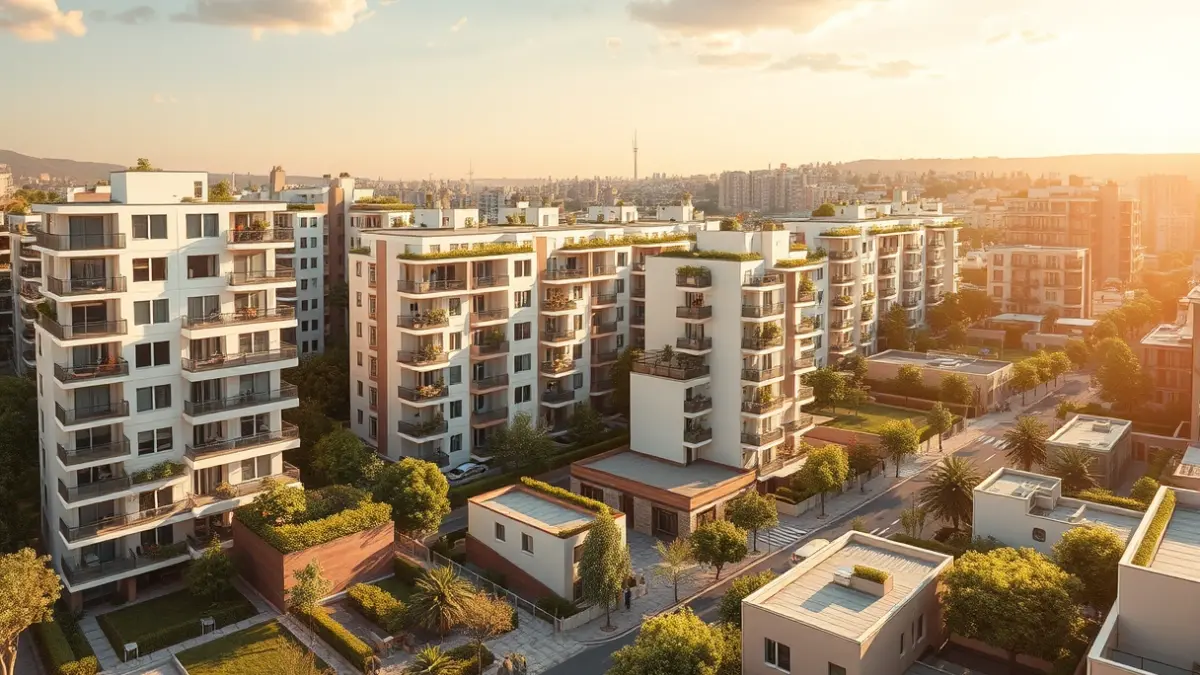
The urban regeneration and renewal project in San Antón aimed to recover four buildings with a total of 338 protected homes, housing 290 families. The initiative began with a Bilateral Commission Agreement in 2014, which established a legal and financial framework. This framework allowed for the construction of 338 new homes and the rehousing of hundreds of families, managed by Pimesa, the public development company.
The experts' document highlights three critical aspects. First, the technical criterion of “substandard housing” justified the demolition of old buildings due to their structural deterioration, lack of insulation and accessibility, and the risk of social exclusion. Second, the innovative property management, where the intervening company acquires 100% of the old homes to free up land. This has allowed adding 28 new homes to the public housing stock for rent. Third, the temporary management of the project, with phases in 2014, 2018, and a third phase starting in late 2025, demonstrates the model's continuity over 11 years.
Tripartite funding, with the participation of the Government of Spain, the Generalitat Valenciana, and the Elche City Council, along with European aid and cost-sharing with homeowners, has been fundamental. The new homes, with 2 and 3 bedrooms, have an energy rating of B or higher, reducing maintenance costs and energy poverty, and comply with universal accessibility regulations.
The San Antón experience is a success story for 21st-century social urbanism. With public and private investment of over 20.4 million euros since 2014, the concept of “substandard housing” has been transformed into dignity. 338 protected homes have been built, allowing 290 families to move from obsolete structures to modern and accessible homes. Land and property management, with the acquisition of old homes for demolition, has been key. This model guarantees the right to rehousing, preventing gentrification and ensuring the inclusion of original residents.