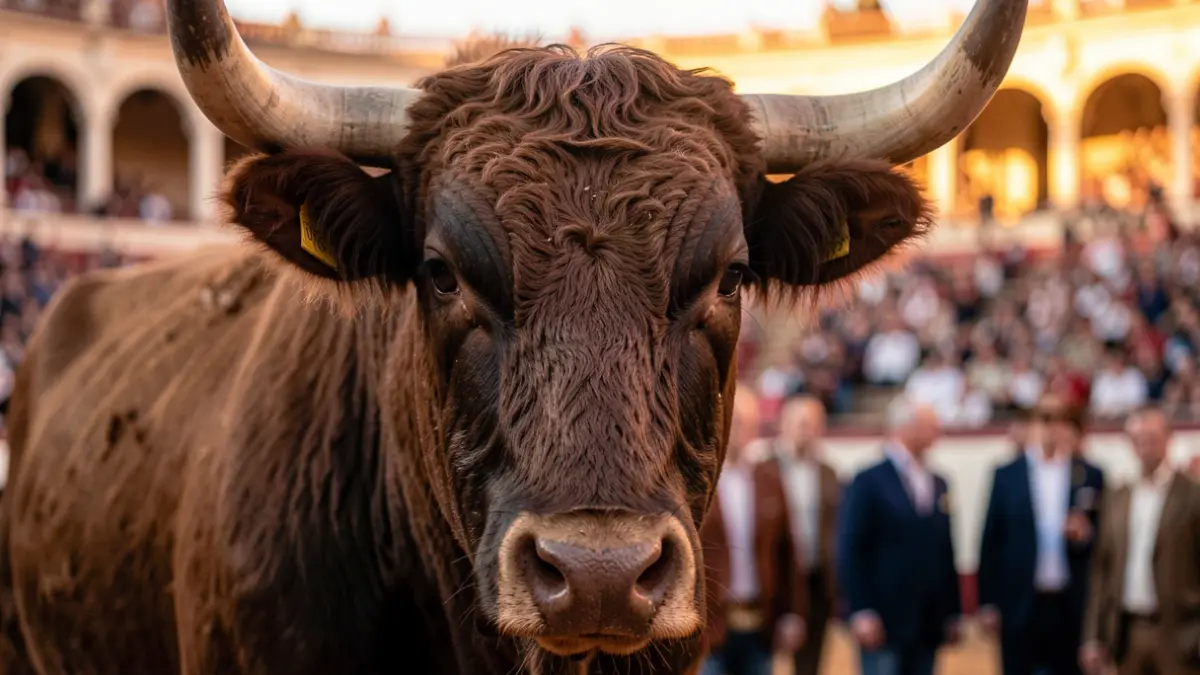
The afternoon was marked by the art of Morante de la Puebla, who achieved one ear from each of his two bulls, specimens from an extraordinary herd by Santiago Domecq. However, the bullfighter left the ring on foot, while the presidential box awarded two trophies to Alejandro Talavante, despite a performance considered by many as 'half-hearted' on the most complete bull of the corrida.
The commendable herd from Santiago Domecq presented serious, noble, and demanding animals, with great bravery and spirit. In this context, the presidency's decision to distribute trophies raised doubts due to its 'double standard'.
Morante, who opened the bill, set a high artistic level from the beginning. With his first bull, Madrugador, he took on the challenge without speculation, showing bullfighting of great depth from the initial passes. His proposal, based on command and caress, was pure bullfighting artistry.
After an intense fight in the picador's charge, where picador Germán González stood out, Morante executed a luminous chicuelina pass. In the banderillas, a pair by José María Amores and a masterful capote pass by Fernando del Toro were notable.
Morante's muleta work with Madrugador was composed, serious, and very skillful. He began with assisted, tight, and baroque passes, leaving a trincherilla described as 'pharaonic'. The bull charged with seriousness, and the bullfighter, dressed in Alicante blue and gold, opted for round passes, always keeping the bull's charge under control. Despite a slip on the left, he concluded a high-level performance with a dry and serious sword thrust, earning a significant ear.
With his second bull, Duermevela, Morante once again captivated the audience. He began the greeting with very tight delantales. The muleta work was very personal, linking passes with great connection and timing, especially on the right. He removed his shoe to better feel the bull's charge. The bullfighting flowed vertically, slowly, and with great presence, with very delicate and long natural passes. The final manoletinas closed an act that confirmed his artistic moment. A prior miss before a lethal sword thrust limited the prize to a single ear, leaving the grand slam in the air.
The corrida from Santiago Domecq was notable, well-presented, and with serious animals. Most of the attendees, around 9,000, observed a minute of silence in memory of the Alicante bullfighter Manolo Carrillo.
The awarding of two ears to Alejandro Talavante with the fifth bull, Revolucionario, was seen by many as a jarring inconsistency. Although the bull showed great depth, Talavante's performance, which included a spectacular start on his knees, was considered by part of the audience as 'half-hearted', seeking proximity rather than exploiting the bull's potential. The sword thrust was deficient, requiring the use of the descabello.
The presidency also did not grant a lap of honor to Revolucionario, despite its bravery, a fact criticized by some fans. The two ears awarded to Talavante were interpreted by numerous attendees as a disservice to the prestige of the Alicante bullring.
Juan Ortega closed the trio with a pair of bulls of good depth, but did not quite round off his performances. After tight veronicas with his first bull, his muleta work became muddled by several snags. With the sixth, he showed temperament and potential, but his ideas faded. Ortega's most notable aspect was his purity in the final sword thrust, killing the sixth bull well on the second attempt, which earned him an ear.
In the cuadrillas section, Javier Ambel stood out, dismounting after banderillas on the fifth bull, being the only silver-})(torero) to receive an ovation for his work in banderillas so far in the fair.
Beyond the trophies and controversies, the fifth event of the Hogueras Fair of Alicante highlighted the potential of Santiago Domecq's livestock and confirmed the artistic moment of Morante de la Puebla, whose afternoon surpassed the final distribution of ears.